
Catalogue Search | MBRL


Are you sure you want to remove the book from the shelf?

{{itemTitle}}
17
result(s) for
"Utilitarianism England History."
Sort by:


A Shrinking Island
This book describes a major literary culture caught in the act of becoming minor. In 1939, Virginia Woolf wrote in her diary, \"Civilisation has shrunk.\" Her words captured not only the onset of World War II, but also a longer-term reversal of national fortune. The first comprehensive account of modernism and imperialism in England,A Shrinking Islandtracks the joint eclipse of modernist aesthetics and British power from the literary experiments of the 1930s through the rise of cultural studies in the 1950s.
Jed Esty explores the effects of declining empire on modernist form--and on the very meaning of Englishness. He ranges from canonical figures (T. S. Eliot and Virginia Woolf) to influential midcentury intellectuals (J. M. Keynes and J.R.R. Tolkien), from cultural studies pioneers (Raymond Williams and E. P. Thompson) to postwar migrant writers (George Lamming and Doris Lessing). Focusing on writing that converts the potential energy of the contracting British state into the language of insular integrity, he argues that an anthropological ethos of cultural holism came home to roost in late-imperial England. Esty's interpretation challenges popular myths about the death of English literature. It portrays the survivors of the modernist generation not as aesthetic dinosaurs, but as participants in the transition from empire to welfare state, from metropolitan art to national culture. Mixing literary criticism with postcolonial theory, his account of London modernism's end-stages and after-lives provides a fresh take on major works while redrawing the lines between modernism and postmodernism.
eBook

Excess and the Mean in Early Modern English Literature
This book examines how English writers from the Elizabethan period to the Restoration transformed and contested the ancient ideal of the virtuous mean. As early modern authors learned at grammar school and university, Aristotle and other classical thinkers praised \"golden means\" balanced between extremes: courage, for example, as opposed to cowardice or recklessness. By uncovering the enormous variety of English responses to this ethical doctrine, Joshua Scodel revises our understanding of the vital interaction between classical thought and early modern literary culture.
Scodel argues that English authors used the ancient schema of means and extremes in innovative and contentious ways hitherto ignored by scholars. Through close readings of diverse writers and genres, he shows that conflicting representations of means and extremes figured prominently in the emergence of a self-consciously modern English culture. Donne, for example, reshaped the classical mean to promote individual freedom, while Bacon held extremism necessary for human empowerment. Imagining a modern rival to ancient Rome, georgics from Spenser to Cowley exhorted England to embody the mean or lauded extreme paths to national greatness. Drinking poetry from Jonson to Rochester expressed opposing visions of convivial moderation and drunken excess, while erotic writing from Sidney to Dryden and Behn pitted extreme passion against the traditional mean of conjugal moderation. Challenging his predecessors in various genres, Milton celebrated golden means of restrained pleasure and self-respect. Throughout this groundbreaking study, Scodel suggests how early modern treatments of means and extremes resonate in present-day cultural debates.
eBook

Bovine Tuberculosis and Badger Culling in England: A Utilitarian Analysis of Policy Options
Bovine tuberculosis (bovine TB) is an important animal health policy issue in Britain, which impacts farmers, the public, domestic farmed cattle and the wild badger population. The Westminster government’s badger culling policy in England, which began in 2013, has caused considerable controversy. This is in part because the Independent Scientific Group advised against culling, based on the Randomised Badger Culling Trial. Those opposed to badger culling support more stringent cattle-based measures and the vaccination of badgers. This paper argues for ethical analysis of public policy options which impact sentient species. It provides a summary Animal Welfare Impact Assessment of (1) a do-nothing approach, (2) badger culling, and (3) badger vaccination. A utilitarian analysis is then applied to these policy options considering human wellbeing and animal welfare. The analysis compares a badger culling policy that achieves a 19% reduction in bovine TB incidence, a badger vaccination model achieving a 12.5% reduction, and a do-nothing approach. Policy options are assessed over 9 years and a longer timeframe, and uncertainty is considered. The analysis finds that non-culling approaches, particularly badger vaccination, result in greater total utility, compared to badger culling. Badger culling causes 30% reduction in the badger population in England as well as substantial harms due to the culling process. Culling is opposed by public opinion and is associated with considerable risks and uncertainty. In contrast, non-culling approaches, such as cattle-based measures and badger vaccination, are supported by public opinion and are not associated with such risks.
Journal Article
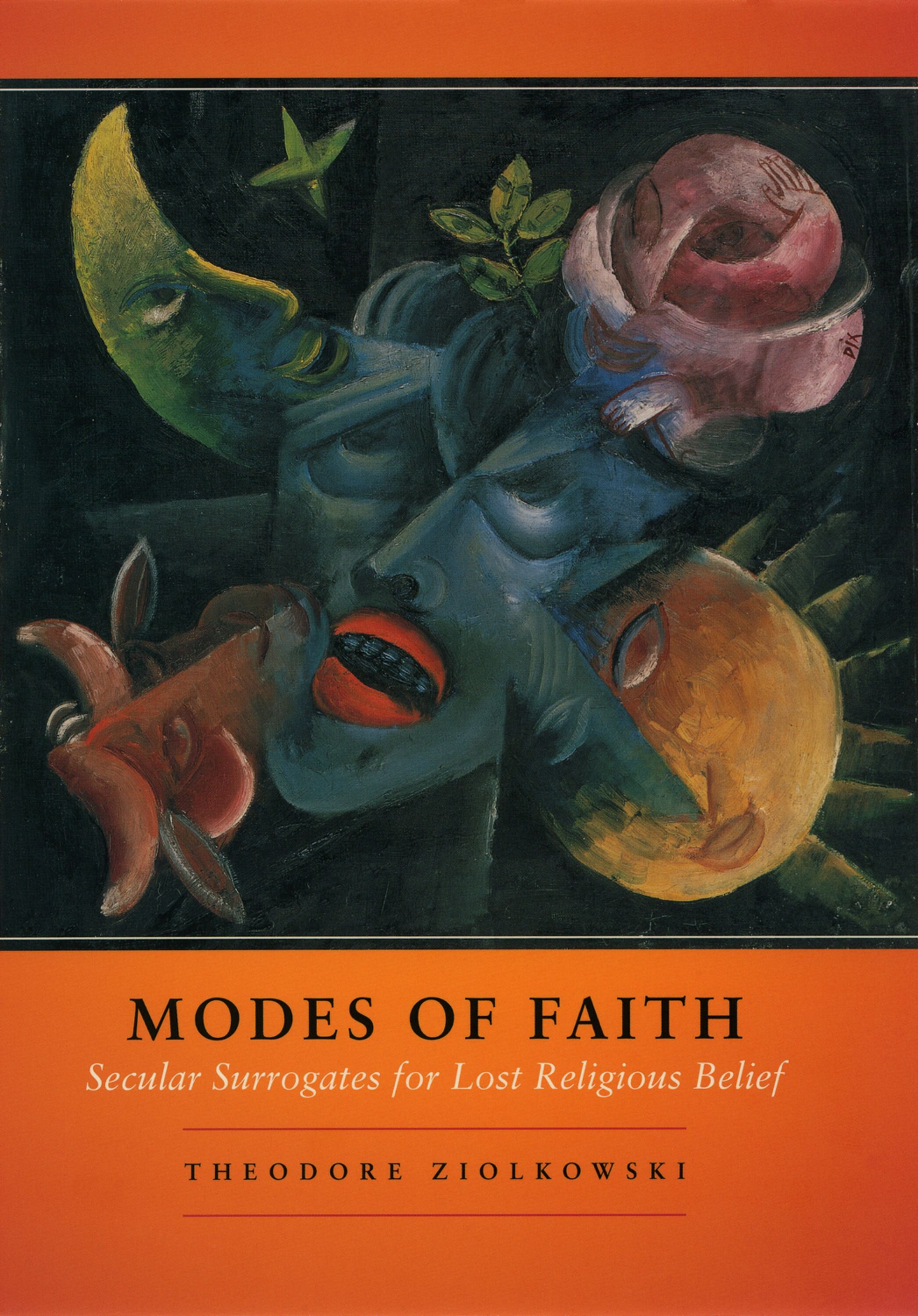
Modes of faith
In the decades surrounding World War I, religious belief receded in the face of radical new ideas such as Marxism, modern science, Nietzschean philosophy, and critical theology. Modes of Faith addresses both this decline of religious belief and the new modes of secular faith that took religion’s place in the minds of many writers and poets. Theodore Ziolkowski here examines the motives for this embrace of the secular, locating new modes of faith in art, escapist travel, socialism, politicized myth, and utopian visions. James Joyce, he reveals, turned to art as an escape while Hermann Hesse made a pilgrimage to India in search of enlightenment. Other writers, such as Roger Martin du Gard and Thomas Mann, sought temporary solace in communism or myth. And H. G. Wells, Ziolkowski argues, took refuge in utopian dreams projected in another dimension altogether. Rooted in innovative and careful comparative reading of the work of writers from France, England, Germany, Italy, and Russia, Modes of Faith is a critical masterpiece by a distinguished literary scholar that offers an abundance of insight to anyone interested in the human compulsion to believe in forces that transcend the individual.
eBook
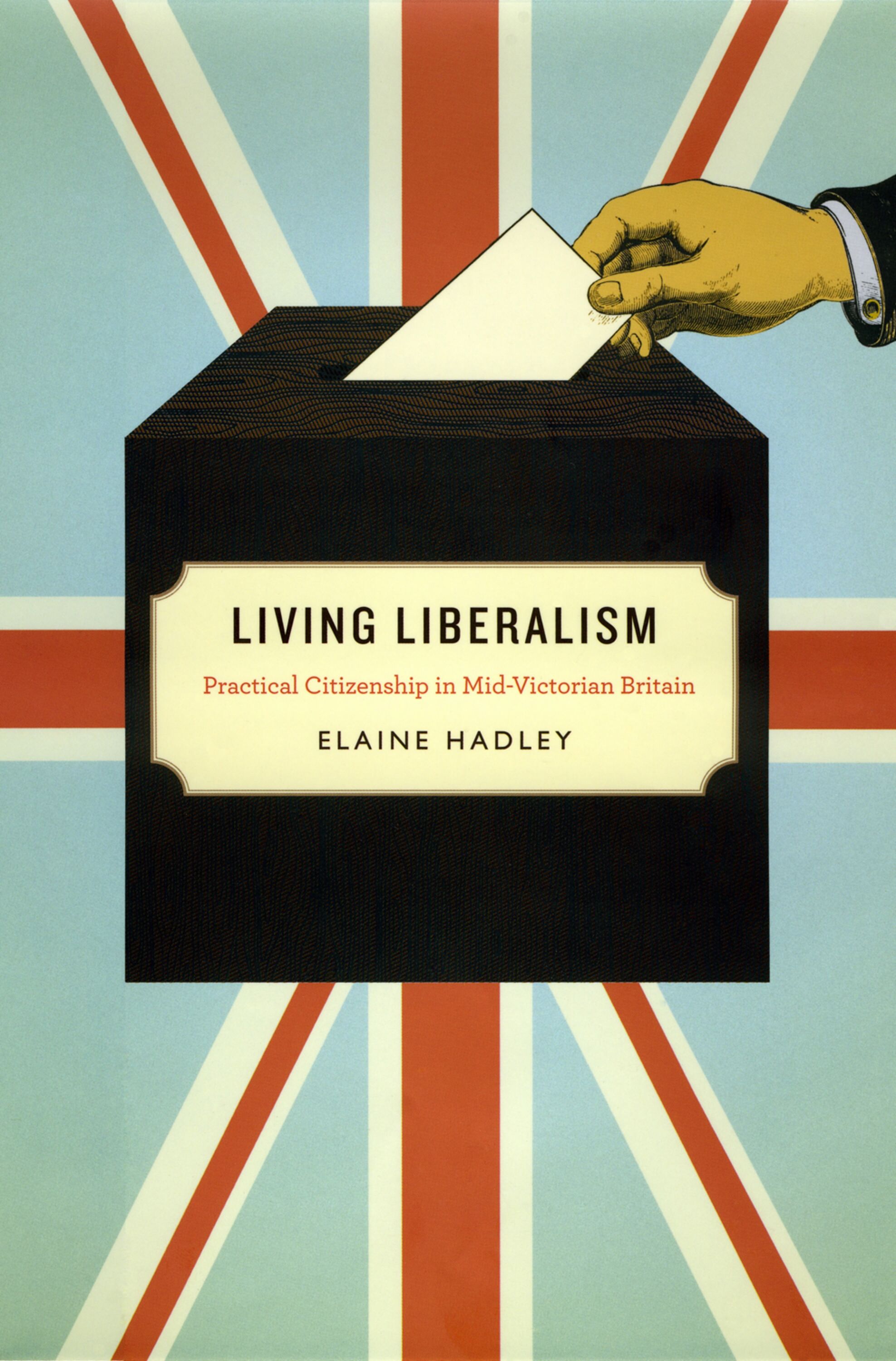
Living Liberalism
In the mid-Victorian era, liberalism was a practical politics: it had a party, it informed legislation, and it had adherents who identified with and expressed it as opinion. It was also the first British political movement to depend more on people than property, and on opinion rather than interest. But how would these subjects of liberal politics actually live liberalism? To answer this question, Elaine Hadley focuses on the key concept of individuation—how it is embodied in politics and daily life and how it is expressed through opinion, discussion and sincerity. These are concerns that have been absent from commentary on the liberal subject. Living Liberalism argues that the properties of liberalism—citizenship, the vote, the candidate, and reform, among others—were developed in response to a chaotic and antagonistic world. In exploring how political liberalism imagined its impact on Victorian society, Hadley reveals an entirely new and unexpected prehistory of our modern liberal politics. A major revisionist account that alters our sense of the trajectory of liberalism, Living Liberalism revises our understanding of the presumption of the liberal subject.
eBook
Hard times. Part three
This television series, by Peter Barnes, is based on the 1854 Charles Dickens novel of the same name, which examines English society and satirizes the working and economic conditions of its time.
Streaming Video
Hard times. Part two
This television series, by Peter Barnes, is based on the 1854 Charles Dickens novel of the same name, which examines English society and satirizes the working and economic conditions of its time.
Streaming Video
Hard times. Part one
This television series, by Peter Barnes, is based on the 1854 Charles Dickens novel of the same name, which examines English society and satirizes the working and economic conditions of its time.
Streaming Video
Hard times. Part four
This television series, by Peter Barnes, is based on the 1854 Charles Dickens novel of the same name, which examines English society and satirizes the working and economic conditions of its time.
Streaming Video