
Catalogue Search | MBRL


Are you sure you want to remove the book from the shelf?

{{itemTitle}}
22,710
result(s) for
"Vacation homes"
Sort by:

Vacation homes and perfect weekend hideaways
\"This stunningly illustrated book features 40 vacation homes from around the world, reflecting a wide range of cultures, styles and ways of life, and perfectly capturing the essence of vacation living. From Sweden to South Africa, New York to Mexico and Provence to Lamu, Vacation Homes and Perfect Weekend Hideaways reveals the extraordinary variety of places to which people go to get away from it all. While some of the properties are highly sophisticated, others are 'shabby chic' or echo the local vernacular, their individuality a testament to each owner's unique sense of style. From a luxury spa in the wilds of the Colorado mountains to a stone cottage on the Yorkshire moors, and from an iron-roofed cabin in the African bush to a farmhouse in Provence, and including the homes of such celebrated designers as Jasper Conran, Liza Bruce, Carolyn Quartermaine and Ou Baholyodhin, this beautifully illustrated book features every type of vacation home imaginable. There is also a useful directory providing contact details of the featured designers and information on all the houses that are available to rent.\" \"Elegantly written by interiors expert Karen Howes, and illustrated throughout by today's top interiors photographers, Vacation Homes and Perfect Weekend Hideaways will appeal as much to the armchair traveller as to those wishing to do up their own home-away-from-home in the sun.\"--Jacket.
Book

A WEB-BASED APPLICATION FOR MAKING LOW-COST VACATION RESERVATIONS FOR TOURISTS USING THE K-NEAREST NEIGHBORS ALGORITHM
An occasional recreational vacation is a necessity for many people. It provides a perfect opportunity for the body and the mind to get much-needed rest after weeks, months, or years of daunting tasks and a break from routine. It also gives people morale as they perform their usual tasks afterward. Unfortunately, many people are unable to afford a vacation not only internationally but also locally due to the high costs involved. This makes many people prefer spending their holidays with extended families, by, for instance, traveling to their rural homes as opposed to taking a vacation. To boost the tourism sector in our country that is being promoted by initiatives such as ‘Tembea Kenya’, we should encourage domestic tourism. Another challenge is the experience in hotels that some people do not like that would entirely cause them to opt to spend their holidays differently, for example, the lack of privacy in the shared accommodation facility, the limited space in hotels, the numerous restrictions, the level of cleanliness in the shared facility especially during the COVID-19 crisis, etcetera. The aim of this project was to solve the problem by coming up with a technological means of enabling people to make reservations for vacation homes with each other such that they mutually benefit from the program thus eliminating the fee for renting out the house. This solution was implemented using a web-based application and applied the K-Nearest Neighbors machine learning algorithm that was used to classify homes based on the features available.
Journal Article


The Influence of Vacation Home Rentals on Neighborhood Crime and Disorder
This study examines the association between vacation home rentals (VHR) and residential burglary, disturbances, and substance crimes from social disorganization and routine activity perspectives. Airbnb and crime data for 2018 in Austin, Texas, were analyzed spatially and with multivariate count regression models. Census block groups were used as the unit of analysis (N = 602). Other variables considered include socio-demographic variables, a spatial lag, and bar and nightclub locations. Negative binomial regression analyses revealed VHR properties to be significantly and negatively associated with residential burglary, substance crimes, and disturbances when the rental was the entire structure; however, VHR properties were associated with all crime types in a significant and positive manner when the rental was only for an individual room in the property. This is the second study to find negative associations between entire structure VHRs and crime, though this study varies from others in several aspects. VHRs do not appear to contribute to crime in all circumstances, and listing type matters. However, this is a newer research topic and future studies would benefit from using longitudinal methods, addressing the temporal order of VHR properties and crime in neighborhoods, as well as considering property management characteristics.
Journal Article

The house at Capo d'Orso : a sentimental autobiography of a holiday home built in the north of Sardinia in the early 1960s
\"The history of an unusual house built on a rocky outcrop on the Sardinian coast, designed by the author's mother in the 1960s. Through this history the author presents a text that is in part memoir but also in part advocacy for a closer relationship between architecture and landscape\"-- Provided by publisher.
BOOK

High Country Summers
High Country Summersconsiders the emergence of the \"summer home\" in Colorado's Rocky Mountains as both an architectural and a cultural phenomenon. It offers a welcome new perspective on an often-overlooked dwelling and lifestyle. Writing with affection and insight, Melanie Shellenbarger shows that Colorado's early summer homes were not only enjoyed by the privileged and wealthy but crossed boundaries of class, race, and gender. They offered their inhabitants recreational and leisure experiences as well as opportunities for individual re-invention-and they helped shape both the cultural landscapes of the American West and our ideas about it.Shellenbarger focuses on four areas along the Front Range: Rocky Mountain National Park and its easterly gateway town, Estes Park; \"recreation residences\" in lands managed by the US Forest Service; Lincoln Hills, one of only a few African-American summer home resorts in the United States; and the foothills west of Denver that drew Front Range urbanites, including Denver's social elite. From cottages to manor houses, the summer dwellings she examines were home to governors and government clerks; extended families and single women; business magnates and Methodist ministers; African-American building contractors and innkeepers; shop owners and tradespeople. By returning annually, Shellenbarger shows, they created communities characterized by distinctive forms of kinship.High Country Summersgoes beyond history and architecture to examine the importance of these early summer homes as meaningful sanctuaries in the lives of their owners and residents. These homes, which embody both the dwelling (the house itself) and dwelling (the act of summering there), resonate across time and place, harkening back to ancient villas and forward to the present day.
eBook


Mite bites, comet signs and possible mammary prosthesis rejection after returning to a vacation home: a diagnostic challenge
Pyemotes ventricosus is a free-living mite feeding on larvae or nymphs of insects, including moths, beetles, wasps and bees, that are usually found in grain, straw and firewood. When present in great number or when its food is lacking, it could accidentally bite mammals, including humans, causing a highly pruritic self-limiting dermatitis, sometimes followed by a lymphangitis known as “comet sign”.We present a singular case of mite lymphangitis that surrounds and delimitates breast prosthesis in a 30-year-old Caucasian woman. Other bite in the lower abdomen did not present comet sign. The patient got the infestation in her vacation home in the South of Italy, uninhabited for 10 months since COVID-19 confinement. We hypothesize that the previous surgery made the lymphatic vessels more prone to inflammation and we compare other insect bites that can occur vacationing in a long period uninhabited room.A delayed diagnosis of comet sign implies a retarded fumigation allowing new mite bites and, in this case, extends the patient’s preoccupation about the prosthesis rejection.
Journal Article

We'll always have summer : a Summer novel
The summer after her first year of college, Isobel \"Belly\" Conklin is faced with a choice between Jeremiah and Conrad Fisher, brothers she has always loved, when Jeremiah proposes marriage and Conrad confesses that he still loves her.
BOOK
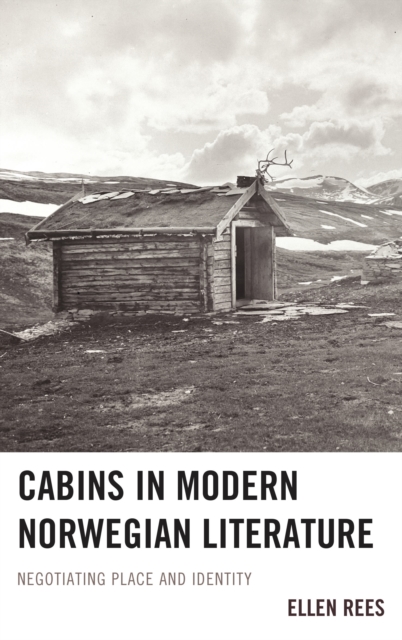
Cabins in modern Norwegian literature
This book examines the significance of cabins and other temporary seasonal dwellings as important symbols in modern Norwegian cultural and literary history. The author uses Michel Foucault’s notion of the “heterotopia”—an actual place that also functions imaginatively as a kind of real-world utopia—to examine how cabins have signified differently during successive periods, from an Enlightenment trope of simplicity and moderation, through the rise of tourism, into a period of increasing individualism and alienation from nature. For each period discussed, the author relates a widely recognized real world cabin to a cluster of thematically related literary texts from a wide variety of genres. Cabins in Modern Norwegian Literature considers both central canonical works, such as Camilla Collett’s The District Governor’s Daughters, Bjørnstjerne Bjørnson’s Synnøve Solbakken, Henrik Ibsen’s When We Dead Awaken, and Knut Hamsun’s The Growth of the Soil, as well as less widely known literary works and texts from marginal genres such as hunting narratives and crime fiction. In addition, the book contains analyses of a few key films from the contemporary period that also activate the cabin as a motif. The central argument is that while Norwegians today tend to think of cabin culture as essentially unchanging over a long span of time, it has in fact changed dramatically over the past two hundred years, and that it is an extremely rich and complex cultural phenomenon deeply imbedded in the construction of national identity.
eBook