
Catalogue Search | MBRL


Are you sure you want to remove the book from the shelf?

{{itemTitle}}
228
result(s) for
"Valparaíso"
Sort by:


Chilean modern architecture since 1950
Chilean architecture—along with that of São Paolo and Mexico City—sets a benchmark for the intersection of modernism with vernacular influences in Latin America. Culture, landscape, and the geology of this earthquake-prone region have all served as important filters for the practice of post-1950s design in Chile.
eBook
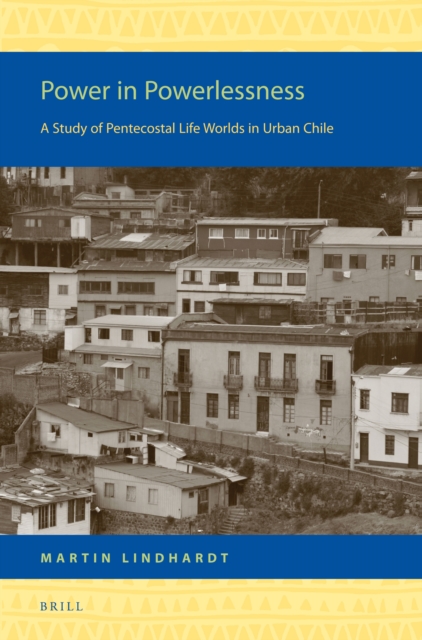
Power in Powerlessness
In this study of a Pentecostal denomination in urban Chile Martin Lindhardt steps back from classical instrumentalist explanations of Pentecostal growth in Latin America and offers a comprehensive analysis of the ritual and quotidian practices through which adherents live their religiosity on an everyday basis.
eBook

Tunga y la Escuela de Arquitectura de Valparaíso, Chile (1960–1970): una mirada sobre redes e intercambios poéticos a través de las cartas
Este estudio investiga las redes e intercambios poéticos entre el artista brasileño Tunga (1952–2016) y la Escuela de Arquitectura de la Pontificia Universidad Católica de Valparaíso (PUCV). El recorte abarca las décadas de 1960 y 1970, período en que Tunga, acompañando a su padre, el poeta Gerardo Mello Mourão, tuvo contacto con la escuela chilena, marcada por una pedagogía integradora entre arquitectura, artes visuales y poesía. La investigación se basa principalmente en el análisis de cartas recibidas por Tunga de profesores fundadores de la escuela, Alberto Cruz, Godofredo Iommi, Manuel Casanueva y José Vial Armstrong, complementadas con manuscritos y entrevistas del artista. El método combina el análisis de fuentes primarias con marcos teóricos de biografía intelectual (Dosse), biografemas (Barthes) y teoría actor-red (Latour, Lepetit), lo que permite mapear identificar interlocutores clave. El análisis evidencia que estas relaciones se prolongaron más allá de la juventud de Tunga, sosteniendo intercambios afectivos, pedagógicos y poéticos hasta las décadas de 1980 y 2000. A través de las cartas, se observa que la interacción con la Escuela de Valparaíso constituyó un fragmento esencial en el recorrido creativo de Tunga, destacando la importancia de experiencias formativas para comprender su trayectoria artística desde una perspectiva ampliada.
Journal Article
Recreate What Has Never Been Created. The Double Paradox of Reconstructing the Formworks of the \House in Jean Mermoz\ (1956-1961-1992)
Thirty years after its demolition, the House in Jean Mermoz (Fabio Cruz Prieto, 1956-1961), a foundational work of the Valparaíso School, regains substance thanks to a design investigation with the aim of recovering the invaluable experience of being on site. However, what was recreated in 2021 was not strictly a replica but rather what was never seen of the house: the formwork system of the concrete structure. In light of the paradox of replacement by Heraclitus and Plato, and Aristotle's causes, two referential cases are analyzed—the Ise Shrine (7th century) and the Barcelona Pavilion (1929). This raises the need for a fifth cause; the contextual one. Finally, the article presents a critical reflection on the case of the recreation of the House in Jean Mermoz within the issue of architectural reconstructions.
Journal Article

Malva multiflora (cav.) Soldano, Banfi Galasso (Malvaceae), una especie alóctona asilvestrada nueva para Chile
Se da a conocer a Malva multiflora, más conocida en la literatura como Lavatera cretica, como una nueva especie alóctona asilvestrada para Chile. Hasta ahora la especie es conocida para el litoral de la Región de Valparaíso, para las localidades de Valparaíso, Viña del Mar y Concón. Se entrega una descripción de la especie, fotografías y una clave para determinar las especies de Malva que se encuentran en el litoral de la Región de Valparaíso.
Journal Article

Glacier Retreat and Groundwater Recharge in Central Chile: Analysis to Inform Decision-Making for Sustainable Water Resources Management
Glaciers worldwide are in retreat, and their meltwater can modulate mountain aquifers. We examined whether mass loss of the Juncal Norte Glacier (central Chile) has affected groundwater storage in the Juncal River basin between 1990 and 2022. Recession-curve modeling of daily streamflow shows no statistically significant trend in basin-scale groundwater reserves (τ = 0.06, p > 0.05). In contrast, glacier volume declined significantly (−3.8 hm3/yr, p < 0.05), and precipitation at the nearby Riecillos station fell sharply during the 2008–2017 megadrought (p < 0.05) but exhibited no significant change beforehand. Given the simultaneous decreases in meteoric inputs (rain + snow) and glacier mass, one would expect groundwater storage to decline; its observed stability therefore suggests that enhanced glacier-melt recharge may be temporarily offsetting drier conditions. Isotopic evidence from comparable Andean catchments supports such glacio-groundwater coupling, although time lags of months to years complicate detection with recession models alone. Hence, while our results do not yet demonstrate a direct glacier–groundwater link, they are consistent with the hypothesis that ongoing ice loss is buffering aquifer storage. Longer records and tracer studies are required to verify this mechanism and to inform sustainable water resources planning.
Journal Article
Designing Accessible and Comfortable Bus Interiors for Sustainable and Smart Urban Mobility: A Pilot Experimental Ordinal Regression Study
Accessible and comfortable public transportation is a cornerstone of sustainable and inclusive urban mobility. However, there is a knowledge gap in how interior layout influences riders’ comfort perception under constant occupancy conditions. We conducted a pilot laboratory experiment in Valparaíso, Chile using a full-scale urban bus mock-up. Twenty-five participants each experienced four seating scenarios (yielding 100 total observations per outcome) that varied seat pitch (20, 30, 45 cm) and seat orientation (forward-facing vs. side-facing). Cumulative link mixed models were used to estimate seat pitch and orientation effects on the comfort outcomes, with participant-specific random intercepts. Increased seat pitch dramatically improved comfort ratings (e.g., virtually no participants felt comfortable at 20 cm, whereas nearly all did at 45 cm). Side-facing bench seating (longitudinal orientation) yielded significantly higher comfort, legroom, and ease-of-movement ratings than the forward-facing configuration at ~30 cm pitch (p < 0.001). Within the tested mock-up conditions, the results suggest that seat pitch is a major driver of perceived comfort and in-vehicle usability, and that a side-facing bench layout (tested at ~30 cm spacing) can improve perceived spaciousness relative to forward-facing seating. Because this is a small, non-probability pilot sample and a partial factorial design, these findings should be considered preliminary design sensitivities that warrant validation in larger, in-service studies before informing fleet-wide standards.
Journal Article

Mapping the Dream: Designing Optimal E-Bike Routes in Valparaíso, Chile, Using a Multicriteria Analysis and an Experimental Study
The city of Valparaíso, Chile, faces significant mobility challenges due to its steep slopes, complex urban infrastructure, and socioeconomic conditions. In this direction, this study explores the potential promotion of E-bike uses by identifying the optimal routes that connect metro stations to strategic hilltop streets in the city. A hybrid methodology combining a multicriteria GIS-based analysis and an experimental study was used to evaluate potential routes and the possibility of increasing the power limitations for non-motorized mobility in Chile. Fifteen routes were assessed based on criteria including the slope, traffic safety, directionality, intersections, and travel distance. The results indicate that routes such as Cumming from Puerto and Bellavista stand out as the most viable for e-bike use given their favorable characteristics. The experimental study revealed that higher-powered E-bikes (500 W and 750 W) would be more able to overcome the steep slopes of Valparaíso, with an average speed of 5.36 km/h and 9.52 km/h on routes with a 10.88% average slope. These findings challenge the current regulatory limit of 250 W for non-motorized vehicles in Chile, highlighting the potential benefits of increasing their power limits to enhance sustainable mobility in the hilly urban contexts of this country. This study highlights the need to adapt urban mobility policies to the unique topographical conditions of each city. Future research should build upon more experimental studies, develop specific street-scale analyses using audit methods, incorporate climate-related variables, and evaluate the economic viability of e-bike infrastructure. Addressing these aspects could position Valparaíso as a leading example of sustainable urban mobility for cities facing comparable challenges.
Journal Article
Built Environment Effect on Metro Ridership in Metropolitan Area of Valparaíso, Chile, under Different Influence Area Approaches
The growing relevance of promoting a transition of urban mobility toward more sustainable modes of transport is leading to efforts to understand the effects of the built environment on the use of railway systems. In this direction, there are challenges regarding the creation of coherence between the locations of metro stations and their surroundings, which has been explored extensively in the academic community. This process is called Transit-Oriented Development (TOD). Within the context of Latin America, this study seeks to assess the influence of the built environment on the metro ridership in the metropolitan area of Valparaíso, Chile, testing two approaches of influence area definition, one of which is a fixed distance from the stations, and the other is based on the origin and destination survey of the study area. The analysis is based on Ordinary Least Squares regression (OLS) to identify the factors from the built environment, which affects the metro’s ridership. Results show that the models based on the area of influence defined through the use of the origin and destination survey explain the metro ridership better. Moreover, this study reveals that the metro system in Greater Valparaíso was not planned in harmony with urban development. The models demonstrate an inverse effect of the built environment on ridership, contrasting with the expected outcomes of a metro station designed following a Transit-Oriented Development approach.
Journal Article