
Catalogue Search | MBRL


Are you sure you want to remove the book from the shelf?

{{itemTitle}}
21,705
result(s) for
"Values -- Case studies"
Sort by:

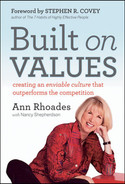
Built on Values
Most leaders know that a winning, engaged culture is the key to attracting top talent--and customers.Yet, it remains elusive how exactly to create this ideal workplace --one where everyone from the front lines to the board room knows the company's values and feels comfortable and empowered to act on them.
eBook


Sense of Their Duty
Industrial change, the expansion of government at all levels, and population growth all contributed to profound alterations in Ontario's social structure between the 1850s and the 1890s. The changing environment created new opportunities, new wealth, and new authority. In urbanizing Ontario, an identifiable and self-identified middle class emerged between the idle rich and the perennial working class. Using the towns of Galt and Goderich as case studies, Andrew Holman shows how middle-class identities were formed at work. He shows how businessmen, professionals, and white-collar workers developed a new sense of authority that extended beyond the workplace. As local electors, members of voluntary associations and reform societies, and breadwinners, middle-class men set standards of proper and expected behavior for themselves and others, standards for respectable behavior that continued to enjoy currency and relevance throughout the twentieth century.
eBook


Is a little pollution good for you? : incorporating societal values in environmental research
Could low-level exposure to polluting chemicals be analogous to exercise -- a beneficial source of stress that strengthens the body? Some scientists studying the phenomenon of hormesis (beneficial or stimulatory effects caused by low-dose exposure to toxic substances) claim that that this may be the case. Is A Little Pollution Good For You? critically examines the current evidence for hormesis. In the process, it highlights the range of methodological and interpretive judgments involved in environmental research: choices about what questions to ask and how to study them, decisions about how to categorize and describe new information, judgments about how to interpret and evaluate ambiguous evidence, and questions about how to formulate public policy in response to debated scientific findings. The book also uncovers the ways that interest groups with deep pockets attempt to influence these scientific judgments for their benefit. Several chapters suggest ways to counter these influences and incorporate a broader array of societal values in environmental research: (1) moving beyond conflict-of-interest policies to develop new ways of safeguarding academic research from potential biases; (2) creating deliberative forums in which multiple stakeholders can discuss the judgments involved in policy-relevant research; and (3) developing ethical guidelines that can assist scientific experts in disseminating debated and controversial phenomena to the public. Kevin C. Elliott illustrates these strategies in the hormesis case, as well as in two additional case studies involving contemporary environmental research: endocrine disruption and multiple chemical sensitivity. This book should be of interest to a wide variety of readers, including scientists, philosophers, policy makers, environmental ethicists and activists, research ethicists, industry leaders, and concerned citizens.
eBook

Limits to Value in Electronic Commerce-Related IT Investments
This paper extends the limits-to-value model of Davern and Kauffman to explore market and process-level factors that impact value flows to firms for their information technology (IT) investments. We characterize IT value in terms of potential value and realized value, and show how each is subject to different effects - limits to value - that diminish the benefits of the investment. Our typology identifies barriers specific to the valuation process (industry and organizational barriers), and to the conversion process (resource, knowledge and usage barriers). Following the development of our analytical framework from existing economic and organizational theories of IT valuation and technology adoption and diffusion, we analyze a series of case studies of Internet-based travel reservation systems in electronic commerce (EC). These cases provide evidence in support of the usefulness of the framework, and illustrate the extent of the difficulties faced by organizations in making their investments in EC systems pay off.
Journal Article

Exploring the impact of Lean Manufacturing on flexibility in SMEs
Purpose: This paper describes the use of simulation and case-study research to assess flexibility gains induced by the adoption of three Lean Manufacturing practices. Design/methodology/approach: We gather useful material and information about the manufacturing process of a selected Small-Medium Enterprise by adopting a case-research approach. The Value Stream Mapping is the method used for visualizing flows of products and information along the production system. Starting from the current arrangement of the company, computer simulation is used to assess the benefits arising from Cellular Manufacturing, Just-in-Time Delivery by Suppliers, and Single Minute Exchange of Dies. Findings: To investigate the flexibility improvements coming from the introduction of Lean Manufacturing, we present a simulation model of the described company on which we performed our analysis. We quantify the flexibility of different configurations according to the new 5-step approach in order to segregate the contribution of different lean techniques. Originality/value: We extend the combined use of Case Research and Computer Simulation to the research on Manufacturing Flexibility within Small-Medium Enterprises. We enhance the knowledge on this under investigated context collecting quantitative field data. Moreover, building on the factorial Design of Experiment, we introduce a new 5-step method to appraise the cost benefit ratio of lean techniques for flexibility. The managerial implication of this research is mostly related to the provision of a supporting method for the decision making process propaedeutic to Lean Manufacturing introduction.
Journal Article

Leapfrogging, Urban Sprawl, and Growth Management: Phoenix, 1950-2000
Through a case study of Phoenix, Arizona, this paper examines how urban sprawl is linked to opportunities for capital gains. It focuses on \"leapfrogging,\" in which developers skip over properties to obtain land at a lower price further out despite the existence of utilities and other infrastructure that could serve the bypassed parcels. The paper examines patterns of growth since 1950 and planners' efforts to structure that growth. It discusses two programs that addressed consequences of leapfrogging: development impact fees to help pay for infrastructure costs of new development and an Infill Housing Program to encourage residential development on vacant land. It concludes with a brief discussion of the future of growth management in Phoenix.
Journal Article

Effects of Path Dependence on Capabilities in Captive Global Value Chains
Global Value Chains (GVC) and their participants are dynamic. Events can provoke distinct strategic responses from different firms, even when they are part of a GVC. We investigated how both organizational and supply-chain path dependence can influence the capabilities that a firm needs to achieve a higher value-added position in a GVC. We have integrated three branches of theory, covering Global Value Chains, Organizational Capabilities, and Path dependence. We conducted a case study of a large Brazilian shoe firm, analyzing its relationships with buyers in GVCs. We found that path-dependent elements had locked-in the firm, preventing ascension to higher added value positions and keeping the organization in captive global value chain, even when it moved into new markets. Additionally, we propose a theoretical model that should prove fruitful in future research in other sectors and countries.
Journal Article