
Catalogue Search | MBRL


Are you sure you want to remove the book from the shelf?

{{itemTitle}}
344
result(s) for
"Values Study and teaching United States."
Sort by:

Widening the circle
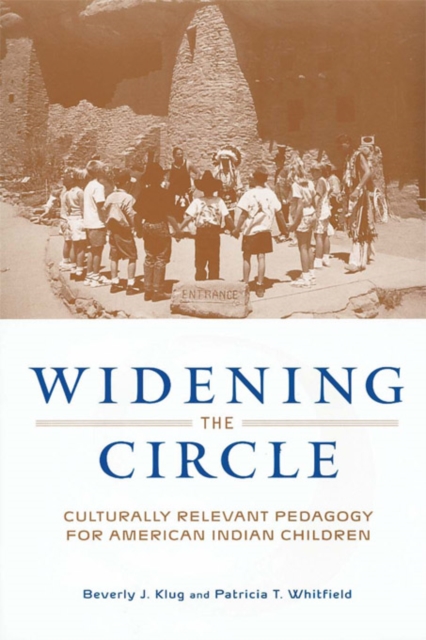
Recognizing the need for a pedagogy that better serves American Indian students, Beverly J. Klug and Patricia T. Whitfield construct a pedagogical model that blends native and non-native worldviews and methods. Among the building blocks of this new, culturally relevant education are language-based approaches to literacy development, the use of oral histories to supplement traditional texts, and a re-evaluation of the knowledge base these students need for success in tribal enterprises.
eBook
Critical Pedagogies of Consumption
\"Utopian in theme and implication, this book shows how the practices of critical, interpretive inquiry can help change the world in positive ways…. This is the promise, the hope, and the agenda that is offered.\"-- Norman K. Denzin, From the Foreword
\"Its focus on learning, education and pedagogy gives this book a particular relevance and significance in contemporary cultural studies. Its impressive authors, thoughtful structuring, wide range of perspectives, attention to matters of educational policy and practice, and suggestions for transformative pedagogy all provide for a compelling and significant volume.\"-- H. Svi Shapiro, University of North Carolina–Greensboro
Distinguished international scholars from a wide range of disciplines (including curriculum studies, foundations of education, adult education, higher education, and consumer education) come together in this book to explore consumption and its relation to learning, identity development, and education. Readers will learn about a variety of ways in which learning and education intersect with consumption. This volume is unique within the literature of education in its examination of educational sites – both formal and informal – where learners and teachers are resisting consumerism and enacting a critical pedagogy of consumption.
Jennifer A. Sandlin is Assistant Professor in the Division of Advanced Studies in Education Policy, Leadership, and Curriculum, Mary Lou Fulton Institute and Graduate School of Education, Arizona State University, Tempe.
Peter McLaren is Professor in the Division of Urban Schooling, the Graduate School of Education and Information Studies, University of California, Los Angeles.
Chapter 1: Introduction: Exploring Consumption’s Pedagogy and Envisioning a Critical Pedagogy of Consumption—Living and Learning in the Shadow of the \"Shopocalypse,\" Jennifer A. Sandlin, Arizona State University and Peter McLaren, UCLA
Part I: Education, Consumption, and the Social, Economic, and Environmental Crises of Capitalism
Chapter 2: Rootlessness, Reenchantment and Educating Desire: A Brief History of the Pedagogy of Consumption, Michael Hoechsmann, McGill University, Montreal, Canada
Chapter 3: Consuming Learning, Robin Usher, RMIT University, Melbourne, Australia
Chapter 4: Producing Crisis: Green Consumerism as an Ecopedagogical Issue, Richard Kahn, University of North Dakota
Chapter 5: Teaching Against Consumer Capitalism in the Age of Commercialization and Corporatization of Public Education, Ramin Farahmandpur, Portland State University
Part II: Schooling the Consumer Citizen
Chapter 6: Schooling for Consumption, Joel Spring, Queens College and Graduate Center, City University of New York
Chapter 7: Schools Inundated in a Marketing-Saturated World, Alex Molnar, Arizona State University, Faith Boninger, Arizona State University, Gary Wilkinson, University of Hull, England and Joseph Fogarty, Corballa National School, Sligo, Ireland and Chairperson of the Campaign for Commercial-Free Education
Chapter 8: Exploring the Privatized Dimension of Entrepreneurship Education and its Link to the Emergence of the College Student Entrepreneur, Matthew M. Mars, McGuire Center of Entrepreneurship, University of Arizona
Chapter 9: Framing Higher Education: Nostalgia, Entrepreneurship, Consumerism and Redemption, Gustavo E. Fischman, Arizona State University and Eric Haas, WestEd, Oakland, CA
Chapter 10: Politicizing Consumer Education: Conceptual Evolutions, Sue L. T. McGregor, Mount St. Vincent University, Halifax, Canada
Part III: Consumption, Popular Culture, Everyday Life, and the Education of Desire
Chapter 11: Consuming the All-American Corporate Burger: McDonald’s \"Does It All For You,\" Joe L. Kincheloe
Chapter 12: Barbie: The Bitch Can Buy Anything, Shirley R. Steinberg, McGill University, Montreal, Canada
Chapter 13: Consuming Skin: Dermographies of Female Subjection and Abjection, Jane Kenway, Monash University, Victoria, Australia and Elizabeth Bullen, Deakin University, Victoria, Australia
Chapter 14: Happy Cows and Passionate Beefscapes: Nature as Landscape and Lifestyle in Food Advertisements, Anne Marie Todd, San Jose State University
Chapter 15: Creating the Ethical Parent-Consumer Subject: Commerce, Moralities and Pedagogies in Early Parenthood, Lydia Martens, Keele University, UK
Chapter 16: Chocolate, Place, and a Pedagogy of Consumer Privilege, David A. Greenwood, Washington State University
Part IV: Unlearning Consumerism through Critical Pedagogies of Consumption: Sites of Contestation and Resistance
Chapter 17: Re-Imagining Consumption: Political and Creative Practices of Arts-Based Environmental Adult Education, Darlene E. Clover, University of Victoria, Canada and Katie Shaw, University of Victoria, Canada
Chapter 18: Using Cultural Production to Undermine Consumption: Paul Robeson as Radical Cultural Worker, Stephen D. Brookfield, University of St. Thomas, Minneapolis, MN
Chapter 19: Beyond the Culture Jam, Valerie Scatamburlo-D’Annibale, University of Windsor, Ontario, Canada
Chapter 20: Global Capitalism and Strategic Visual Pedagogy, David Darts, New York University and Kevin Tavin, The Ohio State University
Chapter 21: Turning America Into a Toy Store, Henry A. Giroux, McMaster University
Chapter 22: United We Consume? Artists Trash Consumer Culture and Corporate Green Washing, Nicolas Lampert, Visual Artist, JustSeeds Visual Resistance Artists’ Cooperative
List of Contributors
\"Utopian in theme and implication, this book shows how the practices of critical, interpretive inquiry can help change the world in positive ways…. This is the promise, the hope, and the agenda that is offered.\"-- Norman K. Denzin, From the Foreword
\"Its focus on learning, education and pedagogy gives this book a particular relevance and significance in contemporary cultural studies. Its impressive authors, thoughtful structuring, wide range of perspectives, attention to matters of educational policy and practice, and suggestions for transformative pedagogy all provide for a compelling and significant volume.\"-- H. Svi Shapiro, University of North Carolina–Greensboro
eBook
Standing together
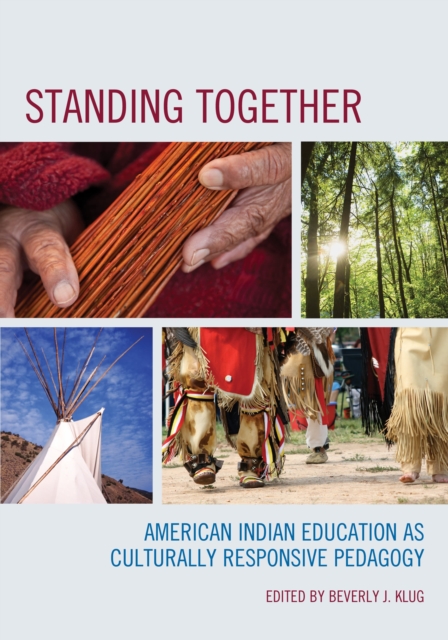
The majority of American Indian students attend public schools in the United States. However, education mandated for American Indian students since the 1800s has been primarily education for assimilation, with the goal of eliminating American Indian cultures and languages. Indeed, extreme measures were taken to ensure Native students would “act white” as a result of their involvement with Western education. Today’s educational mandates continue a hegemonic “one-size-fits-all” approach to education. This is in spite of evidence that these approaches have rarely worked for Native students and have been extremely detrimental to Native communities. This book provides information about the importance of teaching American Indian students by bridging home and schools, using students’ cultural capital as a springboard for academic success. Culturally Responsive Pedagogy is explored from its earliest beginnings following the 1928 Meriam Report. Successful education of Native students depends on all involved and respect for the voices of American Indians in calling for education that holds high expectations for native students and allows them to be grounded in their cultures and languages.
eBook

Design of a Pedagogical Model of Education for Environmental Citizenship in Primary Education
Education for Environmental Citizenship plays an important role in social change toward sustainable development, achieving economic, social, and environmental balance through informed, cooperative, and participative citizens. There are several pedagogical models with the potential to involve students in environmental activities, but no specific model suitable for primary education is found. This article describes the preliminary investigation phase of a Design-Based Research that resulted in the development of the first prototype of a Pedagogical Model of Education for Environmental Citizenship in Primary Education (students aged 6 to 10 years), in Portugal. This preliminary investigation phase was based on a systematic analysis and literature review on the topic (thesis, articles, projects, and curricular guidelines for primary education), seeking to answer the following research questions: (1) According to the current world characteristics, which learning outcomes should an environmental citizen achieve, and which of them can be promoted in primary education? (2) What are the most appropriate teaching methodologies and strategies for promoting environmental citizen learning outcomes in primary education? The methodology used is presented, and the proposed prototype is described, along with the desired learning outcomes that are considered necessary for the formation of an Environmental Citizen and the most appropriate methodologies and educational activities to promote them.
Journal Article
Teaching Ethics
Teaching Ethics: Instructional Models, Methods, and Modalities for University Studies encourages teachers and students to approach their work with a deep awareness that people, not as disinterested reasoners devoid of or effectively cut-off from passions, make ethical judgments.
eBook
Ethical Integration of AI and STEAM Pedagogies in Higher Education: A Sustainable Learning Model for Society 5.0
In the face of environmental degradation, social inequality, and technological change—acknowledged as defining challenges of the 21st century—Higher Education Institutions (HEIs) lead educational innovation, integrate sustainability as a transformative axis, and act as key actors in global responses. This study develops and validates a conceptual model that advances the goals of Society 5.0 through the integration of sustainability-oriented STEAM education and AI ethics as strategic drivers of a human-centered, socially inclusive, and technologically relevant learning ecosystem. The model rests on multidisciplinary and project-based learning and active engagement with society and industry. Its validation followed a Design Science Research approach supported by expert interviews, the Sustainable Classroom implementation, and international benchmarking with higher education cases from Indonesia, the United Kingdom, Australia, Uruguay, and the European Union. The combination of the constant comparison method of grounded theory with abductive reasoning ensured theoretical coherence and practical consistency. Triangulation across interviews, classroom implementation, and international cases reinforced robustness, while theoretical saturation, cross-validation, and reflexive safeguards strengthened credibility, controlled bias, and secured data management. Findings confirm that the ethical integration of advanced technologies strengthens citizenship, ecological literacy, and institutional innovation, and establishes a replicable and scalable framework that reorients higher education toward sustainability, ethics, and digital equity, positioning it as a cornerstone of education for Society 5.0 and as a global benchmark for achieving the Sustainable Development Goals.
Journal Article

Shareholder Primacy, Corporate Social Responsibility, and the Role of Business Schools
This paper examines the shareholder primacy norm (SPN) as a widely acknowledged impediment to corporate social responsibility and explores the role of business schools in promoting the SPN but also potentially as an avenue for change by addressing misconceptions about shareholder primacy and the purpose of business. We start by explaining the SPN and then review its status under US and UK laws and show that it is not a likely legal requirement, at least under the guise of shareholder value maximization. This is in contrast to the common assertion that managers are legally constrained from addressing CSR issues if doing so is inconsistent with the economic interests of shareholders. Nonetheless, while the SPN might be muted as a legal norm, we show that it is certainly evident as a social norm among managers and in business schools—reflective, in part, of the sole voting rights of shareholders on corporate boards and of the dominance of shareholder theory—and justifiably so in the view of many managers and business academics. We argue that this view is misguided, not least when associated with claims of a purported legally enforceable requirement to maximize shareholder value. We propose two ways by which the influence of the SPN among managers might be attenuated: extending fiduciary duties of executives to non-shareholder stakeholders and changes in business school teaching such that it covers a plurality of conceptions of the purpose of the corporation.
Journal Article

Engagement With Young Adult Literature: Outcomes and Processes
This study examines students' perceptions of the outcomes and processes of engaged reading in classrooms prioritizing engagement through self-selected, self-paced reading of compelling young adult literature. The primary data were 71 end-of-year student interviews, supported by end-of-year teacher interviews, biweekly observational data, on-the-fly conversations with students, and video/audio records of student-initiated book discussions. An inductive analysis yielded 15 main categories of outcomes, including changes in students' identities, in their sense of agency, and in their relational, moral, and intellectual lives. The web of relationships among the processes and outcomes is examined through 317 causal statements made by students in interviews. Finally, a case study illustrates the cascading and reciprocal effects of engaged reading on one student's development. These adolescents showed, to varying degrees, an awareness of these processes and self-transformations, and thus a sense of agency with respect to their own development-their personhood and future narratives. This study raises questions about the adequacy of existing models of engagement for explaining students' engaged reading experiences and about currently advocated approaches to teaching English language arts that (a) minimize the roles of engagement and fiction, (b) require students to read the same text, (c) focus on engaged reading as an individual cognitive act without regard for the social nature of literate and human development, and (d) expect uniform outcomes across students.
Journal Article

Historical Empathy: A Cognitive-Affective Theory for History Education in Canada
Historical empathy involves a process of attempting to understand the thoughts, feelings, experiences, decisions, and actions of people from the past within specific historical contexts. Although historical empathy has been a rich area of study in history education for several decades, this research has largely taken place outside of Canada. In this article, I argue that greater attention should be paid to historical empathy in Canadian history education research and curriculum because it can support learning outcomes related to historical thinking and historical consciousness, citizenship, and decolonizing and anti-racist approaches to history education. Drawing from and commenting on other scholarship, I present a cognitive-affective theory of historical empathy which includes five elements: (1) evidence and contextualization, (2) informed historical imagination, (3) historical perspectives, (4) ethical judgements, and (5) caring. Through exploring each element and some pedagogical considerations for educators, I emphasize the affective dimensions of history to centre their importance for history education in Canada.
Journal Article