
Catalogue Search | MBRL


Are you sure you want to remove the book from the shelf?

{{itemTitle}}
20,545
result(s) for
"Values in literature"
Sort by:

Courage
This book defines courage and describes ways to show courage within the family, at school, with friends, and in the community.
Book

Ethos and Narrative Interpretation
Ethos and Narrative Interpretationexamines the fruitfulness of the concept of ethos for the theory and analysis of literary narrative. The notion of ethos refers to the broadly persuasive effects of the image one may have of a speaker's psychology, world view, and emotional or ethical stance. How and why do readers attribute an ethos (of, for example, sincerity, reliability, authority, or irony) to literary characters, narrators, and even to authors? Are there particular conditions under which it is more appropriate for interpreters to attribute an ethos to authors, rather than to narrators? In the answer Liesbeth Korthals Altes proposes to such questions, ethos attributions are deeply implicated in the process of interpreting and evaluating narrative texts.
Demonstrating the extent to which ethos attributions, and hence, interpretive acts, play a tacit role in many methods of narratological analysis, Korthals Altes also questions the agenda and epistemological status of various narratologies, both classical and post-classical. Her approach, rooted in a broad understanding of the role and circulation of narrative art in culture, rehabilitates interpretation, both as a tool and as an object of investigation in narrative studies.
eBook

Values of literature
Why we read literature and why we should read literature are age-old questions that have, in recent years, gained unprecedented scope and intensity, against the backdrop of what has been perceived as a world-wide crisis in the humanities. While scholars frequently discuss different types of value separately, in this volume values of literature are approached in the plural: we argue that the ethical, aesthetic, cognitive, affective, social, historical, and existential values of literature should be explored in connection with each other. The three parts of the book explore the relationship between ethics and aesthetics; the cognitive, affective, and social values of literature; and the construction and questioning of literary values in society. Throughout the book, we discuss the different things literature can do, ranging from affirmation of social dogmas to its capacities for self-questioning and challenging of moral certainties, through the dynamic interplay of its ethical and aesthetic, cognitive and affective aspects.
Book
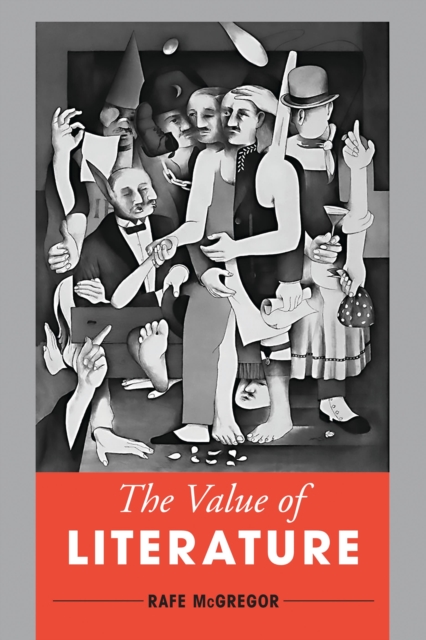
The value of literature
Smart, provocative, and engaging, The Value of Literature is a must-read for anyone with an interest in the philosophy of literature. McGregor reinvigorates debates on the cognitive value of literature, the ethical significance of narrative, the aesthetics of appreciation, and the nature of literary value itself. This book is a major achievement.
eBook


The Visnu Purana
Viṣṇu is a central deity in the Hindu pantheon, especially in his manifestation as the seductive cattle-herding youth, Kṛṣṇa. The purāṇas are sacred texts, which, as the Sanskrit name implies, are collections of narratives from 'long ago'.
eBook

The Cambridge introduction to literature and philosophy
\"Literature and philosophy have long shared an interest in questions of truth, value, and form. And yet, from ancient times to the present, they have often sharply diverged, both in their approach to these questions and in their relationship to one another. Moreover, the vast differences among individual writers, historical periods, and languages pose challenges for anyone wishing to understand the relationship between them. This Introduction provides a synthetic and original guide to this vast terrain. It uncovers the deep interests that literature and philosophy share while offering a lucid account of their differences. It sheds new light on many standing debates and offers students and scholars of literary criticism, literary theory, and philosophy a chance to think freshly about questions that have preoccupied the Western tradition from its very beginnings up until the present\"-- Provided by publisher.
Book

Pride, manners, and morals : Bernard Mandeville's anatomy of honour
In Pride, Manners, and Morals: Bernard Mandeville's Anatomy of Honour Andrea Branchi offers a reading of the Anglo-Dutch physician and thinker's philosophical project from the hitherto neglected perspective of his lifelong interest in the theme of honour. Through an examination of Mandeville's anatomy of early eighteenth-century beliefs, practices and manners in terms of motivating passions, the book traces the development of his thought on human nature and the origin of sociability. By making honour and its roots in the desire for recognition the central thread of Mandeville's theory of society, Andrea Branchi offers a unified reading of his work and highlights his relevance as a thinker far beyond the moral problem of commercial societies, opening up new perspectives in Mandeville's studies.
eBook


Victorian Literature and Finance
Victorian Britain offered the world an economic structure of unique complexity. The trading nation, at the heart of a great empire, developed the practices of advanced capitalism — currency, banking, investment, money markets, business practices and theory, intellectual property legislation — from which the financial systems of the contemporary world emerged. Cultural forms in Victorian Britain transacted with high capitalism in a variety of ways but literary critics interested in economics have traditionally been preoccupied either with writers' hostility to industrial capitalism in terms of its shaping of class, or with the development of consumerism. This book is the first extended study to take seriously the relationships between literary forms and those more complex discourses of Victorian high finance. The chapters move beyond the examination of literature that was merely impatient with the perceived consequences of capitalism to analyse creative relationships between culture and economic structures. Considering such topics as the nature of currency, women and the culture of investment, the profits of a modern media age, the dramatization of risk on the Victorian stage, the practice of realism in relation to business theory, the culture of speculation at the end of the century, and arguments about the uncomfortable relationship between literary and financial capital, this book sets new terms for understanding and theorizing the relationship between high finance and literary writing in the 19th century.
eBook