
Catalogue Search | MBRL


Are you sure you want to remove the book from the shelf?

{{itemTitle}}
19,097
result(s) for
"Values on television."
Sort by:


After the Break
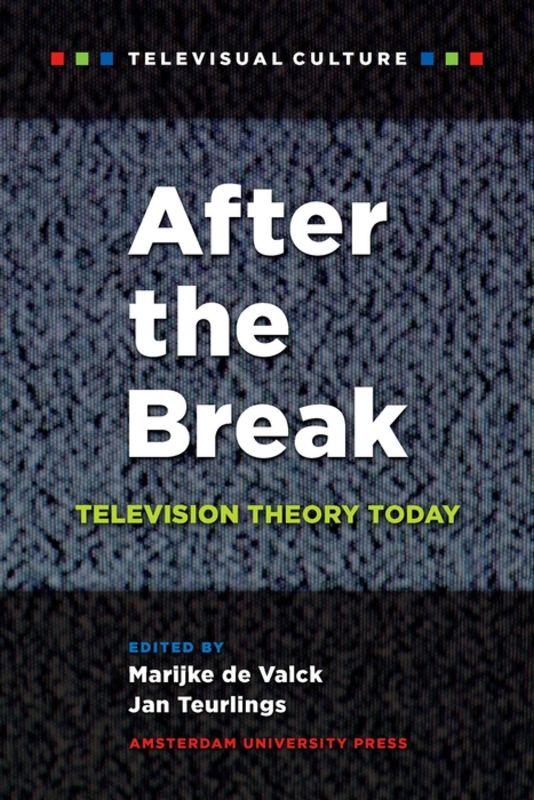
Television as we knew it is irrevocably changing. Some are gleefully announcing the death of television, others have been less sanguine but insist that television is radically changing underneath our eyes. Several excellent publications have dealt with television's uncertain condition, but few have taken the specific question of what television's transformations mean for the discipline of Television Studies as a starting point. The essays collected in this volume aim to fill this void. Two fundamental questions string the various contributions together. First, is television really in crisis or is the present not so extraordinary when revisiting television's development? Second, should we invent new theoretical concepts or are our old ones still perfectly relevant? To answer such questions the authors in this volume take up diverse case studies, ranging from the academic series Reading Contemporary Television to Flemish Fiction, from nostalgic programming on broadcast television to YouTube, from tell-sell television shows to public television art in the 1980s.
eBook
After the break
Television as we knew it is irrevocably changing. Some are gleefully announcing the death of television, others have been less sanguine but insist that television is radically changing underneath our eyes. Several excellent publications have dealt with television's uncertain condition, but few have taken the specific question of what television's transformations mean for the discipline of Television Studies as a starting point. The essays collected in this volume aim to fill this void. Two fundamental questions string the various contributions together. First, is television really in crisis or is the present not so extraordinary when revisiting television's development? Second, should we invent new theoretical concepts or are our old ones still perfectly relevant? To answer such questions the authors in this volume take up diverse case studies, ranging from the academic series Reading Contemporary Television to Flemish Fiction, from nostalgic programming on broadcast television to YouTube, from tell-sell television shows to public television art in the 1980s. This title is available in the OAPEN Library - http://www.oapen.org.
eBook

Advertising investments on television: real option estimation through Markov chains
We propose the valuation of a real option in the telecommunications industry. According to the probabilistic present worth approach, we estimate the value of a contract between a television network and a company willing to advertise its business on this network. We assume that the value of the contract depends on a time-dependent variable, i.e., the number of viewers tuned into the network, which behaves like a Markov process. After discretizing and converting this number into a monetary value through a specific function, we compute the nth-order moment of the total discounted earnings. The knowledge of the moments, and the application of the maximum-entropy approach, allows to find the probability distribution of the payoff function and the consequential pricing of the real option. Finally, we apply the proposed model to the real television audience data.
Journal Article

The Promotion of Traditional Values through Films and Television Programmes: The Moscow Patriarchate and the Orthodox Encyclopaedia Project (2005–2022)
On 26 May 2011, the Russian People’s World Council issued a document entitled The Basic Values: The Fundaments of National Unity. The document, prepared by the Synodal Department for Church–Society Cooperation, provided a catalogue of 17 traditional values whose general framework was constituted by a combination of freedom, unity, patriotism, family, and devotion. At that time, the Moscow Patriarchate considered religious faith to be the foundation of traditional values and it continues to do so. The defence and promotion of traditional Russian spiritual and moral values were also central in the Russian National Security Strategy (2015); this was the case in the updated version of this document as well, put out in July 2021. Furthermore, they have been the core of the Moscow Patriarchate’s participation in the Council of Europe and of Patriarch Kirill’s speeches about the war in Ukraine. Finally, on 9 November 2022, The Foundations Of State Policy For The Preservation Of Spiritual And Moral Values was approved. This framework permits us to understand the strict interplay between the Church and the State in the Russian Federation and to see why it is important to refer to the concept of post-secularism when talking about the role of religion in post-Soviet Russia. Proceeding from the Abstract, the present paper aims to analyse this interplay in a specific sector of visual culture: the cinema and television industries. Manuel Castells highlighted the relevance of cultural values in the age of information and the connection between the values and social mobilization that follows it. He pointed out that the Internet has become a way to render this connection predominant, inevitably leading to the development of social movements and networks that have a religious basis. This is unquestionably true; surveys conducted by the Russian Public Opinion Research Center (OJSC «VCIOM») and by Nevafilm Research confirm that a high percentage of Russians watch films not only at the cinema or on television (especially the older generations) but also on the Internet (as far as the younger generations are concerned). The importance of this market is also confirmed by the success of the cinema and TV distributor Orthodox Encyclopaedia (2005); in the words of the philosopher Sergei Kravets, who, commenting on it during an interview published in 2006 by the website Sedmits.ru, declared that the expression “orthodox cinema” can be understood as a way to express Russian culture. He asserts that “the fact that today Orthodox films have begun to appear on the central TV channels testifies that Russian film producers and viewers have apparently begun to be aware of themselves as Orthodox, to feel that they are bearers of a special Orthodox culture. [..]”. At the same time, consideration should be given to the importance of the Russian Orthodox Church and the Minister of Culture’s condemnation of films such as Matilda or Monastery. In addition, it is important to consider that, according to a survey conducted in 2022 by the Levada Center, Russian people consider television the most reliable source of information (54%). The long-term implications of this tendency may have very important effects, not only in terms of its objectives but also in terms of the consideration that, after the beginning of the war, many Western film distributors withdrew their licenses from Russia. This paper will analyse “the effect of religion on the institutional system, the regulatory environment of the media and the public sphere” by studying the features of films and TV programs distributed by Orthodox Encyclopaedia, their relations with traditional values promoted both by the Kremlin and the Church, how these have contributed to strengthening the interplay between the Minister of Culture and the Moscow Patriarchate, and the impact this process has had on Russian society and Russia’s relations with the European and Western World in the 2005–2022 period. A list of the films and TV programs being discussed will be provided, and then statements about the project and reviews of the serials and films will be analysed. The analysis will be conducted mainly through the official sites of the Russian Orthodox Church and the Kremlin and by browsing the Integrum database.
Journal Article

Restricting child-directed ads is effective, but adding a time-based ban is better: evaluating a multi-phase regulation to protect children from unhealthy food marketing on television
Background
As childhood obesity rates continue to rise, health organizations have called for regulations that protect children from exposure to unhealthy food marketing. In this study, we evaluate the impact of child-based versus time-based restrictions of “high-in” food and beverage advertising in Chile, which first restricted the placement of “high-in” advertisements (ads) in television attracting children and the use of child-directed content in high-in ads and, second, banned high-in ads from 6am-10pm. “High-in” refers to products above regulation-defined thresholds in energy, saturated fats, sugars, and/or sodium. High-in advertising prevalence and children’s exposure to high-in advertising are assessed.
Methods
We analyzed a random stratified sample of advertising from two constructed weeks of television at pre-regulation (2016), after Phase 1 child-based advertising restrictions (2017, 2018), and after the Phase 2 addition of a 6am-10pm high-in advertising ban (2019). High-in ad prevalence in post-regulation years were compared to prior years to assess changes in prevalence. We also analyzed television ratings data for the 4–12 year-old child audience to estimate children’s ad exposure.
Results
Compared to pre-regulation, high-in ads decreased after Phase 1 (2017) by 42% across television (41% between 6am-10pm, 44% from 10pm-12am) and 29% in programs attracting children (
P
< 0.01). High-in ads further decreased after Phase 2, reaching a 64% drop from pre-regulation across television (66% between 6am-10pm, 56% from 10pm-12am) and a 77% drop in programs attracting children (
P
< 0.01). High-in ads with child-directed ad content also dropped across television in Phase 1 (by 41%) and Phase 2 (by 67%), compared to pre-regulation (
P
< 0.01). Except for high-in ads from 10pm-12am, decreases in high-in ads between Phase 1 (2018) and Phase 2 were significant (
P
< 0.01). Children’s high-in ad exposure decreased by 57% after Phase 1 and by 73% after Phase 2 (
P
< 0.001), compared to pre-regulation.
Conclusions
Chile’s regulation most effectively reduced children’s exposure to unhealthy food marketing with combined child-based and time-based restrictions. Challenges remain with compliance and limits in the regulation, as high-in ads were not eliminated from television. Yet, having a 6am-10pm ban is clearly critical for maximizing the design and implementation of policies that protect children from unhealthy food marketing.
Journal Article

From Sex to Sexuality: Exposing the Heterosexual Script on Primetime Network Television
Although it is widely recognized that sexual content pervades television, research rarely examines how television's sexual messages are gendered and occur in a relational context. This study describes the development and implementation of a new coding scheme to evaluate sexual content from a feminist perspective. Merging scripting theory (Simon and Gagnon,
1986
) with the theory of compulsory heterosexuality (Rich,
1980
), we explicate a heteronormative and dominant sexual script, the Heterosexual Script, and assessed its presence in the 25 primetime television programs viewed most frequently by adolescents. Our codes captured depictions of boys/men and girls/women thinking, feeling, and behaving in relational and sexual encounters in ways that sustain power inequalities between men and women. Male characters most frequently enacted the Heterosexual Script by actively and aggressively pursuing sex. Less frequently but still at high rates were depictions of female characters willingly objectifying themselves and being judged by their sexual conduct.
Journal Article


'Tiny numbers' are actually tiny: Evidence from gestures in the TV News Archive
We report a large-scale, quantitative investigation of manual gestures that speakers perform when speaking metaphorically about numerical quantities. We used the TV News Archive–an online database of over 2 million English language news broadcasts–to examine 681 videos in which 584 speakers used the phrase 'tiny number', 'small number', 'large number', or 'huge number', which metaphorically frame numerical quantity in terms of physical size. We found that the gestures speakers used reflect a number of different strategies to express the metaphoric size of quantities. When referring to greater versus lesser quantities, speakers were far more likely to gesture (1) with an open versus closed hand configuration, (2) with an outward versus inward movement, and (3) with a wider distance between the gesturing hands. These patterns were often more pronounced for the phrases containing more extreme adjectives ('tiny/huge number'). However, we did not find that speakers performed two-handed versus one-handed gestures. Nor did we find that speakers performed right-handed versus left-handed gestures, when referring to greater versus lesser quantities. Overall, this work supports the claim that metaphoric thought is involved in the production of verbal metaphors that describe numerical magnitudes. It demonstrates that size-based numerical associations observed in previous lab experiments are active in real-life communication outside the lab.
Journal Article

Telecracy: Testing for Channels of Persuasion
We consider the long-lived slant towards Berlusconi in political information on Italian television (TV). We exploit a shock to the slanted exposure of viewers: idiosyncratic deadlines to switch to digital TV from 2008 to 2012, which increased the number of freeview channels tenfold. The switch caused a drop in the vote share of Berlusconi's coalition by between 5.5 and 7.5 percentage points. The effect was stronger in towns with older and less educated voters. At least 20 percent of digital users changed their voting behavior after the introduction of digital TV. Our evidence is consistent with the existence of persuasion-biased viewers.
Journal Article