
Catalogue Search | MBRL


Are you sure you want to remove the book from the shelf?

{{itemTitle}}
446
result(s) for
"Vampire History"
Sort by:

The Vampire
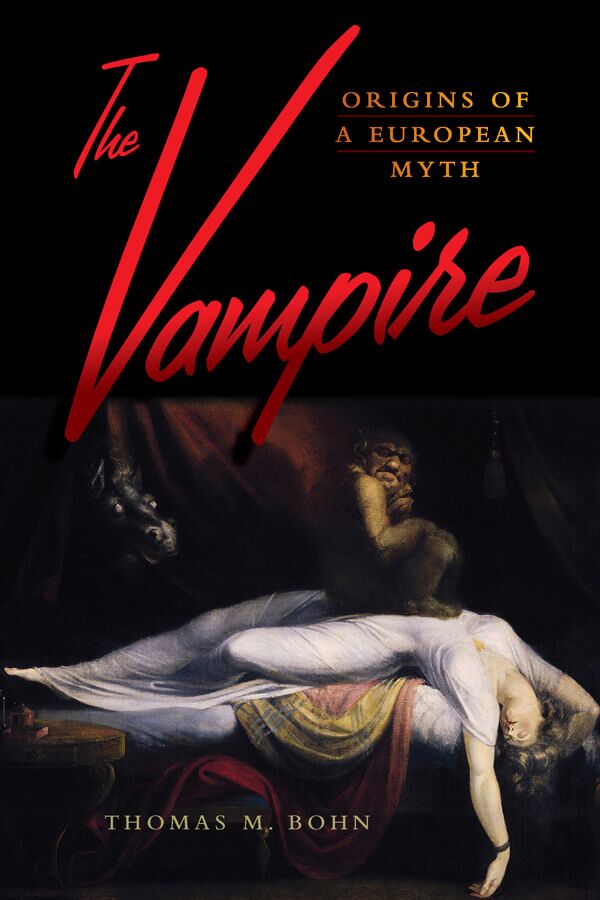
Even before Bram Stoker immortalized Transylvania as the homeland of his fictional Count Dracula, the figure of the vampire was inextricably tied to Eastern Europe in the popular imagination. Drawing on a wealth of previously neglected sources, this book offers a fascinating account of how vampires—whose various incarnations originally emerged from folk traditions from all over the world—became so strongly identified with Eastern Europe. It demonstrates that the modern conception of the vampire was born in the crucible of the Enlightenment, embodying a mysterious, Eastern otherness that stood opposed to Western rationality. From the Prologue: From Original Sin to Eternal Life For a broad contemporary public, the vampire has become a star, a media sensation from Hollywood. Bestselling authors such as Bram Stoker, Anne Rice and Stephenie Meyer continue to fire the imaginations of young and old alike, and bloodsuckers have achieved immortality through films like Dracula, Interview with a Vampireand Twilight. It is no wonder that, in the teenage bedrooms of our globalized world, vampires even steal the show from Harry Potter. They have long since been assigned individual personalities and treated with sympathy. They may possess superhuman powers, but they are also burdened by their immortality and have to learn to come to terms with their craving for blood. Whereas the Southeast European vampire, discovered in the 1730s, underwent an Americanization and domestication in the media landscape of the twentieth century, the creole zombies that first became known through the cheap novels and horror films of the 1920s still continue to serve as brainless horror figures. Do bloodsuckers really exist and should we really be afraid of the dead? These are the questions that I seek to tackle, following the wishes of my daughter, who was ten when I started this project.
eBook


Celluloid Vampires
In 1896, French magician and filmmaker George Méliès brought forth the first celluloid vampire in his film Le manoir du diable. The vampire continues to be one of film’s most popular gothic monsters and in fact, today more people become acquainted with the vampire through film than through literature, such as Bram Stoker’s classic Dracula. How has this long legacy of celluloid vampires affected our understanding of vampire mythology? And how has the vampire morphed from its folkloric and literary origins? In this entertaining and absorbing work, Stacey Abbott challenges the conventional interpretation of vampire mythology and argues that the medium of film has completely reinvented the vampire archetype. Rather than representing the primitive and folkloric, the vampire has come to embody the very experience of modernity. No longer in a cape and coffin, today’s vampire resides in major cities, listens to punk music, embraces technology, and adapts to any situation. Sometimes she’s even female. With case studies of vampire classics such as Nosferatu, Martin, Blade, and Habit, the author traces the evolution of the American vampire film, arguing that vampires are more than just blood-drinking monsters; they reflect the cultural and social climate of the societies that produce them, especially during times of intense change and modernization. Abbott also explores how independent filmmaking techniques, special effects makeup, and the stunning and ultramodern computer-generated effects of recent films have affected the representation of the vampire in film.
eBook

Vampires on the silent screen : cinema's first age of vampires 1897-1922
\"This book is the first study of the vampires in silent cinema, presenting a detailed academic yet accessible discussion of the films themselves and their sources. For the very first time, The Fire Elemental from the Wharton brothers' The Mysteries of Myra (1916) is identified as cinema's original vampire, his appearance initiating a rich and variegated period of film production that is currently missing from studies of horror cinema. Exciting and ground-breaking, Vampires on the Silent Screen also discusses Drakula Halála / Dracula's death (1920), the first ever filmic female vampire in Erich Kober's Lilith and Ly (1919),
Book
The vampire : a new history
An authoritative new history of the vampire, two hundred years after it first appeared on the literary scene Published to mark the bicentenary of John Polidori's publication of The Vampyre, Nick Groom's detailed new account illuminates the complex history of the iconic creature. The vampire first came to public prominence in the early eighteenth century, when Enlightenment science collided with Eastern European folklore and apparently verified outbreaks of vampirism, capturing the attention of medical researchers, political commentators, social theorists, theologians, and philosophers. Groom accordingly traces the vampire from its role as a monster embodying humankind's fears, to that of an unlikely hero for the marginalized and excluded in the twenty-first century. Drawing on literary and artistic representations, as well as medical, forensic, empirical, and sociopolitical perspectives, this rich and eerie history presents the vampire as a strikingly complex being that has been used to express the traumas and contradictions of the human condition.
eBook

Vampires in silent cinema
Despite the enormous cultural impact of Nosferatu (1922) on modern entertainment, from cartoon parodies and collectible toys, the history of vampires in silent cinema is largely unknown. 'Vampires in Silent Cinema' covers the subject from 1896-1931, reclaiming a large array of forgotten films while adding meaningfully to horror studies through the examination of thousands of primary sources.
BOOK

Vampires, Race, and Transnational Hollywoods
In Vampires, Race, and Transnational Hollywoods, Dale Hudson explores the movement of transnational Hollywood’s vampires, between low-budget quickies and high-budget franchises, as it appropriates visual styles from German, Mexican and Hong Kong cinemas and off-shores to Canada, Philippines, and South Africa.
eBook

Undead apocalypse: vampires and zombies in the twenty-first century
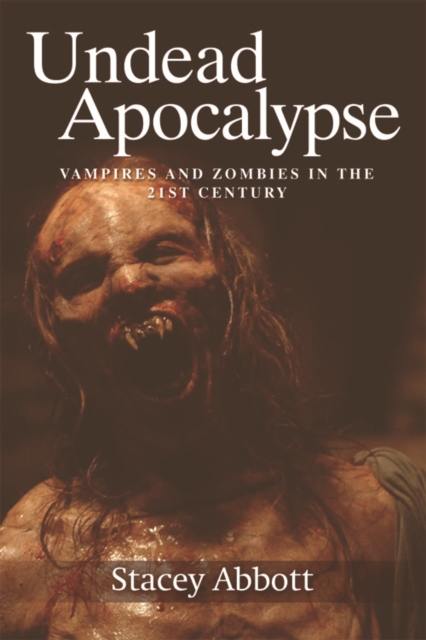
Twenty-first century film and television is overwhelmed with images of the undead. Vampires and zombies have often been seen as oppositional: one alluring, the other repellant; one seductive, the other infectious. With case studies of films like I Am Legend and 28 Days Later, as well as TV programmes like Angel and The Walking Dead, this book challenges these popular assumptions and reveals the increasing interconnection of undead genres. Exploring how the figure of the vampire has been infused with the language of science, disease and apocalypse, while the zombie text has increasingly been influenced by the trope of the 'reluctant' vampire, Stacey Abbott shows how both archetypes are actually two sides of the same undead coin. When considered together they present a dystopian, sometimes apocalyptic, vision of twenty-first century existence.
eBook