
Catalogue Search | MBRL


Are you sure you want to remove the book from the shelf?

{{itemTitle}}
9
result(s) for
"Vase-painting, Greek Themes, motives."
Sort by:

The image of the artist in archaic and classical Greece : art, poetry, and subjectivity
\"This book explores the persona of the artist in Archaic and Classical Greek art and literature. Guy Hedreen argues that artistic subjectivity, first expressed in Athenian vase-painting of the sixth century BCE and intensively explored by Euphronios, developed alongside a self-consciously constructed persona of the poet. He explains how poets like Archilochos and Hipponax identified with the wily Homeric character of Odysseus as a prototype of the successful narrator, and how the lame yet resourceful artist-god Hephaistos is emulated by Archaic vase-painters such as Kleitias. In lyric poetry and pictorial art, Hedreen traces a widespread conception of the artist or poet as socially marginal, sometimes physically imperfect, but rhetorically clever, technically peerless, and a master of fiction. Bringing together in a sustained analysis the roots of subjectivity across media, this book offers a new way of studying the relationship between poetry and art in ancient Greece\"-- Provided by publisher.
Book

Die Elite Athens auf der attischen Luxuskeramik
Image & Context (ICON) ist die erste internationale Reihe, die dem Bild und dem Funktionieren von Bildern in der Antike gilt. Das einzigartige Potential des Bildes beruht auf seiner Suggestion. Ein Bild kann die Aufmerksamkeit des Betrachters im Bruchteil einer Sekunde fesseln und sich ihm für immer einprägen. Das führt zu den Kernfragen der Reihe: Wie und von wem wurden Bilder entworfen und wahrgenommen, wie beeinflussten sie das Denken und Handeln des Betrachters, und wie wurden sie für die Bedürfnisse verschiedener Lebenskontexte eingesetzt? Die Reihe zielt darauf, neue Diskussionen und Ansätze zu einer Geschichte der antiken Bild-Kulturen anzuregen.
eBook
Dionysos in Archaic Greece
An interpretation of the god Dionysos as seen by Greek vase painters before the golden age of classical culture, which will help understand his wide popularity beyond wine consumption, which lasted until the end of antiquity.
eBook
Dionysos in Classical Athens
Dionysos, with his following of satyrs and women, was a major theme in a big part of the figure painted pottery in 500-300 B.C. Athens. As an original testimonial of their time, the imagery on these vases convey what this god meant to his worshippers. It becomes clear that he was not only appropriate for wine, wine indulgence, ecstasy and theatre. Rather, he was presenton many, both happy and sad, occasions. The vase painters have emphasized different aspects of Dionysos for their customers inside and outside of Athens, depending on the political and cultural situation.
eBook

Dionysos in Archaic Greece
An interpretation of the god Dionysos as seen by Greek vase painters before the golden age of classical culture, which will help understand his wide popularity beyond wine consumption, which lasted until the end of antiquity.
eBook
The Athenian Woman
Here Sian Lewis considers the full range of female existence in classical Greece - childhood and old age, unfree and foreign status, and the ageless woman characteristic of Athenian red-figure painting.
Ceramics are an unparalleled resource for women's lives in ancient Greece, since they show a huge number of female types and activities. Yet it can be difficult to interpret the meanings of these images, especially when they seem to conflict with literary sources.
This much-needed study shows that it is vital to see the vases as archaeology as well as art, since context is the key to understanding which images can stand as evidence for the real lives of women, and which should be reassessed.
eBook

The death and afterlife of Achilles
Achilles' death—by an arrow shot through the vulnerable heel of the otherwise invincible mythic hero—was as well known in antiquity as the rest of the history of the Trojan War. However, this important event was not described directly in either of the great Homeric epics, the Iliad or the Odyssey. Noted classics scholar Jonathan S. Burgess traces the story of Achilles as represented in other ancient sources in order to offer a deeper understanding of the death and afterlife of the celebrated Greek warrior. Through close readings of additional literary sources and analysis of ancient artwork, such as vase paintings, Burgess uncovers rich accounts of Achilles' death as well as alternative versions of his afterlife. Taking a neoanalytical approach, Burgess is able to trace the influence of these parallel cultural sources on Homer's composition of the Iliad. With his keen, original analysis of hitherto untapped literary, iconographical, and archaeological sources, Burgess adds greatly to our understanding of this archetypal mythic hero.
eBook
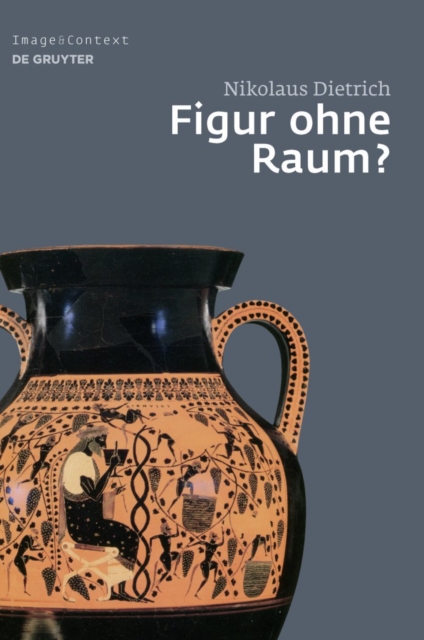
Figur ohne Raum?: Baume und Felsen in der attischen Vasenmalerei des 6. und 5. Jahrhunderts v. Chr
Nikolaus Dietrich presents a general model for the understanding of space in Greek paintings, based on an analysis of landscape elements in Attic vase painting of the 6th and 5th centuries BC. Our concept of space in landscapes proves to be completely unsuitable for understanding these motifs. Space in Greek paintings is not an earlier stage in the development of the concept we have employed since the Renaissance, but a completely different one, and a clear indication of the cultural relativity of our way of seeing things.
eBook
The Athenian Woman
Here Sian Lewis considers the full range of female existence in classical Greece - childhood and old age, unfree and foreign status, and the ageless woman characteristic of Athenian red-figure painting.
Ceramics are an unparalleled resource for women's lives in ancient Greece, since they show a huge number of female types and activities. Yet it can be difficult to interpret the meanings of these images, especially when they seem to conflict with literary sources.
This much-needed study shows that it is vital to see the vases as archaeology as well as art, since context is the key to understanding which images can stand as evidence for the real lives of women, and which should be reassessed.
eBook