
Catalogue Search | MBRL


Are you sure you want to remove the book from the shelf?

{{itemTitle}}
9,383
result(s) for
"Vases"
Sort by:

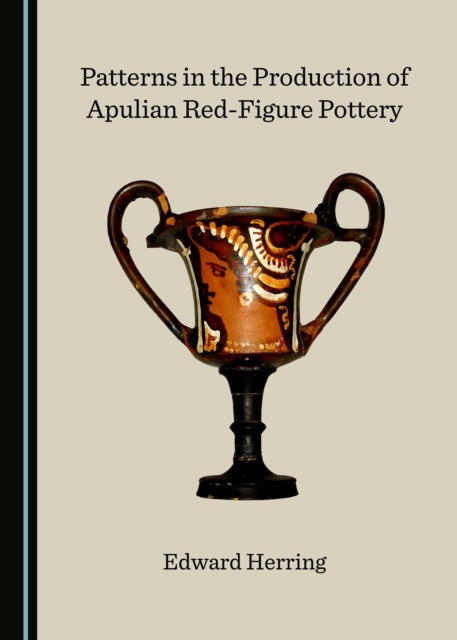
Patterns in the Production of Apulian Red-Figure Pottery
Most of the previous scholarship on Apulian red-figure pottery has focused on the cataloguing of collections, the attribution of vases to painters and workshops, iconographic and stylistic matters, and individual vessels and vase forms. This partly reflects the history of vase-painting scholarship, which grew out of antiquarian collecting during the eighteenth and nineteenth centuries, and the fact that a full archaeological provenance is not preserved for the overwhelming majority of vessels. This book takes a different approach by using a database containing in excess of 13,500 vessels and fragments to identify patterns in the production and decoration of Apulian vases that cast light on the choices made by vase-producers and the preferences of their customers. Individual chapters consider the popularity of different vessel shapes over time, the use of highly generic decorative scenes, which are characteristic of Apulian red-figure, as well as the popularity of scenes of myth, images of the gods, scenes of the life of the non-Greek population of ancient Puglia, and those showing funerary monuments. As virtually all of the vases in the sample derive from tombs, the patterns identified provide insights into the ways in which the ancient populations of South-East Italy, both Greek and indigenous, honoured their dead.
eBook

Imágenes de centauros en los vasos áticos de figuras negras y de figuras rojas
The centaur, a hybrid being with the body of horse and a human head and torso, first appeared in the mountains of Thessaly. This was the Greek horse-breeding region and it seemed natural for the centaur to have originated there, in the heart of this exclusive heritage of the landed gentry. Centaurs belonged to the spheres of heroic mythology, with clear ties to the values of the aristocracy. This book is composed of a catalogue divided into nine chapters. Each chapter comprises catalogue entries for a number of black-figure and red-figure Attic vases. The division into chapters is based on the various types of centaurs and different conflicts, either among themselves or against a hero. In addition to the catalogue is a chapter on images and statistics. Each of these nine chapters corresponds to a section of catalogue entries and statistics, as the information refers to two examples in each section, one in black figures and another in red figures. The highlighted examples illustrate the variety of different vase types (amphorae, lekythoi, etc.) and their chronology (550-500 BC, 500-450 BC). The statistics are likewise divided into black and red figures, and various themes, such as the centaur Pholos and the banquet, or Herakles and Nessos. For each of these themes or groups of examples, a table is given showing the number of vases (amphorae, lekythoi, etc.) and their place in the chronology (550-500 BC, 500-450 BC, etc.).
eBook

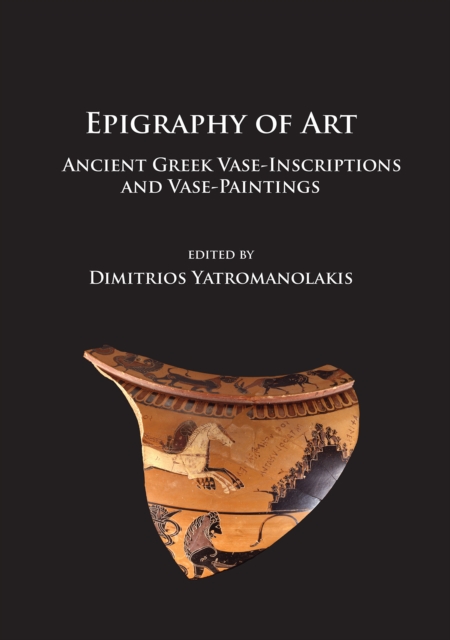
Epigraphy of Art
Ancient Greek vase-paintings offer broad-ranging and unprecedented early perspectives on the often intricate interplay of images and texts. By bringing together—for the first time in English-language scholarship—an international group of leading scholars in classical art and archaeology who have worked on vase-inscriptions, this book investigates epigraphic technicalities of Attic and non-Attic inscriptions on pottery as well as their broader iconographic and sociocultural significance. The ten chapters in this book propose original and expert methodological approaches to the study of vase-inscriptions and vasepaintings, while also foregrounding the outstanding but not fully examined importance of the area of vase-inscriptions for current research on ancient Greek visual representations. Epigraphy of Art: Ancient Greek Vase-Inscriptions and Vase-Paintings constitutes a major contribution to the fields of Greek epigraphy and classical art and archaeology and will prove significant for epigraphists, archaeologists, and art-historians interested in the complexities of the interaction of art and text.
eBook


Corinthian and Attic Vases in the Detroit Institute of Arts
This catalogue comprises those vases from Corinth and Athens with painted decoration in the Detroit Institute of Arts. Each vase is given a description of salient features, attribution to a painter and date, and discussion of the painted decoration.
eBook

The transformation of Athens : painted pottery and the creation of classical Greece
\"Why did soldiers stop fighting, athletes stop competing, and lovers stop having graphic sex in classical Greek art? The scenes depicted on Athenian pottery of the mid-fifth century BC are very different from those of the late sixth century. Did Greek potters have a different world to see - or did they come to see the world differently? In this lavishly illustrated and engagingly written book, Robin Osborne argues that these remarkable changes are the best evidence for the shifting nature of classical Greek culture. Osborne examines the thousands of surviving Athenian red-figure pots painted between 520 and 440 BC and describes the changing depictions of soldiers and athletes, drinking parties and religious occasions, sexual relations, and scenes of daily life. He shows that it was not changes in each activity that determined how the world was shown, but changes in values and aesthetics. By demonstrating that changes in artistic style involve choices about what aspects of the world we decide to represent as well as how to represent them, this book rewrites the history of Greek art. By showing that Greeks came to see the world differently over the span of less than a century, it reassesses the history of classical Greece and of Athenian democracy. And by questioning whether art reflects or produces social and political change, it provokes a fresh examination of the role of images in an ever-evolving world.\"--Jacket flaps.
Book
