
Catalogue Search | MBRL


Are you sure you want to remove the book from the shelf?

{{itemTitle}}
517
result(s) for
"Vedanta"
Sort by:


Vivekananda: Indian Swami and Global Guru
This article seeks to integrate the “Indian swami” with the “global guru” and reflects upon why Vivekananda’s teaching was conveyed so differently to different audiences. It argues that Vivekananda’s distinctive form of “counter-preaching” had its roots in Adhikari-bheda, a tradition that seeks to tailor spiritual instruction to the needs and capacities of individual aspirants. I will show how he applied this technique to larger audiences because he believed that “truth” had a relative dimension that had to account for cultural difference. I investigate how instruction in Hindu “man-making” and spiritual democracy in India was matched by lessons designed to counter “muscular Christianity” in Euro-America. Vivekananda wanted both to reinforce a vision of eastern wisdom and counter western (and at times Indian) prejudices, whilst also attempting to shift entrenched but fallacious generalizations in each arena. In working within this seeming contradiction, I will show how his nationalism and universalism were inextricable, and also tied to his innovative formulations of Advaita Vedanta, karma yoga, and especially “practical Vedanta”. I will conclude by explaining how his methods generally sought to pull his audiences away from extremes. The kaleidoscopic qualities of his teachings, I will suggest, explain why his legacy has been so variously deployed by both the right and left in contemporary Indian political culture.
Journal Article

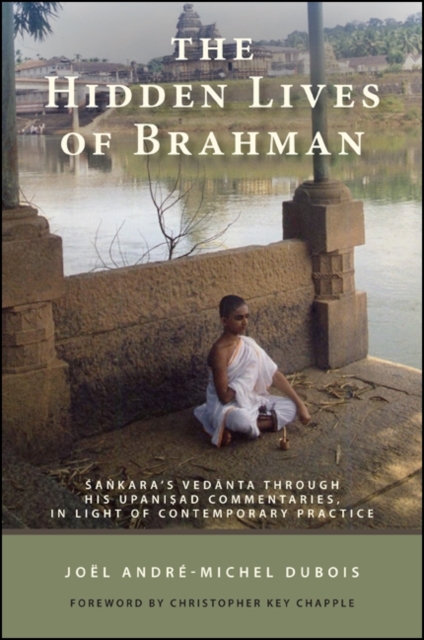
The Hidden Lives of Brahman: ÔSankara's Vedanta Through His Upanisad Commentaries, in Light of Contemporary Practice
Finalist for the 2014 Best First Book in the History of Religions presented by the American Academy of ReligionSa?kara's thought, advaita vedanta or non-dual vedanta, is a tradition focused on brahman, the ultimate reality transcending all particular manifestations, words, and ideas. It is generally considered that the transcendent brahman cannot be attained through any effort or activity. While this conception is technically correct, in The Hidden Lives of Brahman, Joël André-Michel Dubois contends that it is misleading.Hidden lives of brahman become visible when analysis of Sa?kara's seminal commentaries is combined with ethnographic descriptions of contemporary Brahmin students and teachers of vedanta, a group largely ignored in most studies of this tradition. Du bois demonstrates that for Sa?kara, as for Brahmin tradition in general, brahman is just as much an active force, fully connected to the dynamic power of words and imagination, as it is a transcendent ultimate.
eBook


Tatsṛṣṭvā Tadevānuprāviśat: Toward an Advaita Vedantic Approach to Cosmopsychism
This essay draws attention to some of the ideas and discussions in the classical Advaita Vedantic literature that have a direct bearing on contemporary debates concerning the existence of consciousness in the empirical world. Section 1 makes the case for pursuing a non-eliminativist reading of Advaita Vedanta by clarifying its position on the existence of the empirical world. The idea here is to lay the background for approaching Advaita Vedanta from a cosmopsychist perspective. Section 2 shows, first, how the position of Advaita Vedanta that macro-level consciousnesses are reflections of the universal consciousness (Brahman) in the intellects ( buddhi ) of empirical selves sets it apart from the prevailing cosmopsychist theories. It then goes on to discuss how this idea of reflection can at once offer an elegant solution to the decombination/derivation problem, suggest a promising way to bridge \"the explanatory gap\" and explain the phenomena of mental causation.
Journal Article

Adhyāropāpavāda: Revisiting the Interpretations of Svāmi Saccidānandendra Sarasvatī and The Post-Śaṅkarādvaitins
A fundamental difference in Svāmi Saccidānandendra Sarasvatī’s (SSS) and the Post-Śaṅkarādvaitins’ (PSA) exegeses of Advaita Vedānta lies in the pedagogic method of adhyāropa-apavāda (deliberate attribution of characteristics to the attribute-less brahman and its corresponding/complementary contradiction). For SSS, adhyāropāpavāda is the sole method to negate avidyā (ignorance); other Upaniṣadic methods— lakṣaṇā and netivāda —are subsumed under it. For the PSA, on the other hand, adhyāropāpavāda plays a subsidiary, less consequential role in engendering gnosis; the primary role is that of mahāvākyas (the “great” Vedāntic statements). SSS denounces the PSA—with the sole exception of Sureśvarācārya —for their (purportedly incorrect) interpretation of the method; he contends that it has led to the lamentable reification of concepts in Advaita Vedānta and ultimately undermined its basic tenets. In this article, I articulate SSS’ position.
Journal Article

War and Peace in Modern Hindu Thought—Gandhi, Aurobindo, and Vivekananda in Conversation
Mohandas Gandhi (1869–1948) and Aurobindo Ghose (1872–1950) hold distinct, yet overlapping, positions on the topic of war and peace, violence and nonviolence, and how evil ought to best be confronted. To some extent, the overlaps in their views can be seen as an effect of them basing their respective ideals on a shared foundation of Hindu teaching. More specifically, at least some portion of this overlap can potentially be seen as a function of the influence exerted upon both of these thinkers by the teachings of Swami Vivekananda, who was an inspiration to many modern Hindu thinkers, including both Gandhi and Ghose, as both figures attest. This paper will argue, apart from any historical influence he may or may not have had upon them, that Gandhi’s and Ghose’s views both, in different senses, comport well with the teaching of Swami Vivekananda. Specifically, the argument will be what could be called the utopian and realist orientations of Gandhi and Ghose, respectively, regarding the topic of violence, and we can find a logical reconciliation in Vivekananda’s philosophy of karma yoga: the path to liberation through service to the suffering beings of the world.
Journal Article