
Catalogue Search | MBRL


Are you sure you want to remove the book from the shelf?

{{itemTitle}}
26,522
result(s) for
"Vegetable gardening."
Sort by:

Indoor edible garden
Describes methods for growing edible plants indoors, covering how to make the most of available light, instructions for growing specific plants, and productive and pleasing projects to brighten the home.
Book

Knott's handbook for vegetable growers
Knott's Handbook for Vegetable Growers Authoritative and comprehensive go-to reference work for commercial vegetable growers around the world For more than 65 years, Knott's Handbook for Vegetable Growers has provided generations of commercial growers with the most timely, accessible, and useful information available on the subject, containing key.
eBook


Edible and medicinal mushrooms
Comprehensive and timely, Edible and Medicinal Mushrooms: Technology and Applications provides the most up to date information on the various edible mushrooms on the market. Compiling knowledge on their production, application and nutritional effects, chapters are dedicated to the cultivation of major species such as Agaricus bisporus, Pleurotus ostreatus, Agaricus subrufescens, Lentinula edodes, Ganoderma lucidum and others. With contributions from top researchers from around the world, topics covered include: • Biodiversity and biotechnological applications • Cultivation technologies • Control of pests and diseases • Current market overview • Bioactive mechanisms of mushrooms • Medicinal and nutritional properties Extensively illustrated with over 200 images, this is the perfect resource for researchers and professionals in the mushroom industry, food scientists and nutritionists, as well as academics and students of biology, agronomy, nutrition and medicine.
eBook

Greenhouse vegetable gardening : expert advice on how to grow vegetables, herbs, and other plants
\"'A garden should be easy and fun to care for -- don't complicate things unnecessarily.' This is the slogan of author Inger Palmstierna. In Greenhouse Vegetable Gardening, she helps readers find the joy of cultivating in their very own greenhouses. Palmstierna is a gardening authority with vast knowledge on everything that grows. With infectious enthusiasm, this garden writer and horticulturist explains how to cultivate a successful garden or orchard. The greenhouse is the place where green thumbs are realized and your imagination can run wild.\"--Amazon.com.
Book

Community gardening as social action
Drawing on case studies and social movement theory Claire Nettle provides a new empirical and theoretical understanding of community gardening by applying a contextual framework that considers the activity as a way for people to engage in collective social action. Through this a richer, more complete understanding of community gardening as a form of social activity and of its potential contributions to activism, community, democracy and culture can be reached.
eBook


Gardens of Renaissance Europe and the Islamic empires : encounters and confluences
The cross-cultural exchange of ideas that flourished in the Mediterranean during the sixteenth and seventeenth centuries profoundly affected European and Islamic society. Gardens of Renaissance Europe and the Islamic Empires considers the role and place of gardens and landscapes in the broader context of the information sharing that took place among Europeans and Islamic empires in Turkey, Persia, and India.
In illustrating commonalities in the design, development, and people's perceptions of gardens and nature in both regions, this volume substantiates important parallels in the revolutionary advancements in landscape architecture that took place during the era. The contributors explain how the exchange of gardeners as well as horticultural and irrigation techniques influenced design traditions in the two cultures; examine concurrent shifts in garden and urban landscape design, such as the move toward more public functionality; and explore the mutually influential effects of politics, economics, and culture on composed outdoor space. In doing so, they shed light on the complexity of cultures and politics during the Renaissance.
A thoughtfully composed look at the effects of cross-cultural exchange on garden design during a pivotal time in world history, this thought-provoking book points to new areas in inquiry about the influences, confluences, and connections between European and Islamic garden traditions.
In addition to the editor, the contributors include Cristina Castel-Branco, Paula Henderson, Simone M. Kaiser, Ebba Koch, Christopher Pastore, Laurent Paya, D. Fairchild Ruggles, Jill Sinclair, and Anatole Tchikine.
eBook

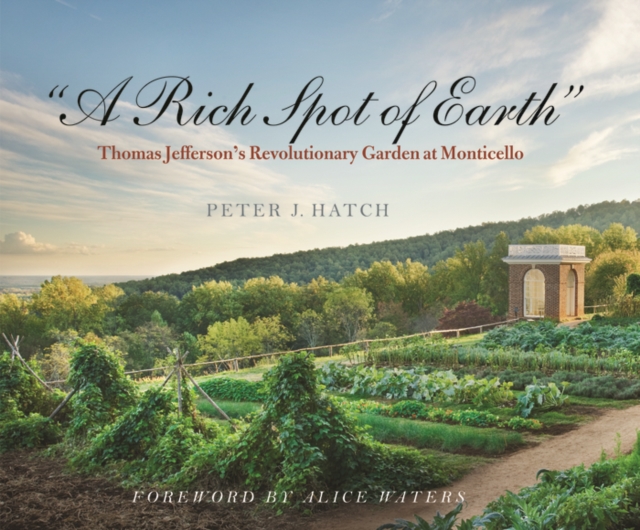
rich spot of earth
Were Thomas Jefferson to walk the grounds of Monticello today, he would no doubt feel fully at home in the 1,000-foot terraced vegetable garden where the very vegetables and herbs he favored are thriving. Extensively and painstakingly restored under Peter J. Hatch's brilliant direction, Jefferson's unique vegetable garden now boasts the same medley of plants he enthusiastically cultivated in the early nineteenth century. The garden is a living expression of Jefferson's genius and his distinctly American attitudes. Its impact on the culinary, garden, and landscape history of the United States continues to the present day.
Graced with nearly 200 full-color illustrations,\"A Rich Spot of Earth\"is the first book devoted to all aspects of the Monticello vegetable garden. Hatch guides us from the asparagus and artichokes first planted in 1770 through the horticultural experiments of Jefferson's retirement years (1809-1826). The author explores topics ranging from labor in the garden, garden pests of the time, and seed saving practices to contemporary African American gardens. He also discusses Jefferson's favorite vegetables and the hundreds of varieties he grew, the half-Virginian half-French cuisine he developed, and the gardening traditions he adapted from many other countries.
eBook