
Catalogue Search | MBRL


Are you sure you want to remove the book from the shelf?

{{itemTitle}}
10,371
result(s) for
"Vehicles History."
Sort by:

A journey through transportation
A factual picture book packed with engaging illustrations and fun information is designed for shared or independent reading and includes coverage of a wide variety of transportation vehicles, from early wheeled carts to the speedy cars of today.
Book

The development of propulsion technology for U.S. space-launch vehicles, 1926-1991
In this definitive study, J. D. Hunley traces the program’s development from Goddard’s early rockets (and the German V-2 missile) through the Titan IVA and the Space Shuttle, with a focus on space-launch vehicles. Since these rockets often evolved from early missiles, he pays considerable attention to missile technology, not as an end in itself, but as a contributor to launch-vehicle technology.
Focusing especially on the engineering culture of the program, Hunley communicates this very human side of technological development by means of anecdotes, character sketches, and case studies of problems faced by rocket engineers. He shows how such a highly adaptive approach enabled the evolution of a hugely complicated technology that was impressive—but decidedly not rocket science.
Unique in its single-volume coverage of the evolution of launch-vehicle technology from 1926 to 1991, this meticulously researched work will inform scholars and engineers interested in the history of technology and innovation, as well as those specializing in the history of space flight.
eBook

A history of travel in 50 vehicles
From the first foot migration out of Africa to the Model T Ford, hot air balloons, submarines, rickshaws, and moon rockets, humans have combined imagination, daring, and scientific and technical knowledge to improve existing vehicles or create new ones. Geography, culture, and available technologies have all influenced the development and use of vehicles in different parts of the world, and human travel has, in turn, often had a profound influence on society and the environment\"--Provided by publisher.
Book
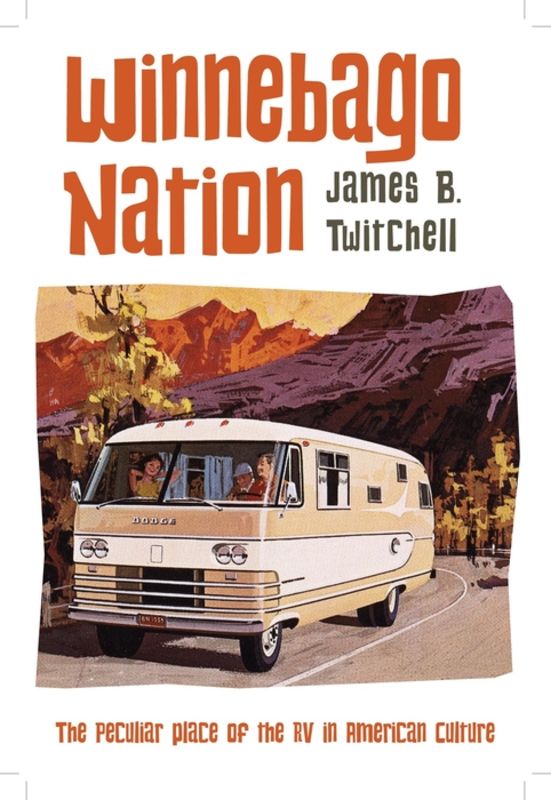
Winnebago nation
In Winnebago Nation, popular critic James B. Twitchell takes a light-hearted look at the culture and industry behind the yearning to spend the night in one's car. For the young the roadtrip is a coming-of-age ceremony; for those later in life it is the realization of a lifelong desire to be spontaneous, nomadic, and free. Informed by his own experiences on the road, Twitchell recounts the RV's origins and evolution over the twentieth century; its rise, fall, and rebirth as a cultural icon; its growing mechanical complexity as it evolved from an estate wagon to a converted bus to a mobile home; and its role in bolstering and challenging conceptions of American identity. Mechanical yet dreamy, independent yet needful, solitary yet clubby, adventurous yet homebound, life in a mobile home is a distillation of the American character and an important embodiment of American exceptionalism, (Richie Rich and Hobo Hank spend time in essentially the same rig at the same campground, albeit for different reasons and in different levels of comfort.) The frontier may be tapped out but we still yearn for the exploratory life. Twitchell concludes with his thoughts on the future of RV communities and the possibility of mobile cities becoming a real part of the American landscape.
eBook

The complete history of wheeled transportation : from cars and trucks to buses and bikes
Provides information of an assortment of wheeled vehicles throughout history, including the evolution of roads, the design of different vehicles, and how vehicles were used.
Book

Blazing the Trail: The Early History of Spacecraft and Rocketry
Description
Winner of the Luigi Napolitano Award (2006) from the International Academy of Astronautics
This book presents the fascinating story of the events that paved the way to space. It introduces the reader to the history of early rocketry and the subsequent developments that led into the space age.
People of various nations and from various lands contributed to the breakthrough to space, and the book takes the reader to faraway places on five continents. It also includes many quotes to give readers
a flavor of how the participants viewed the developments.
Most publications on the topic either target narrow aspects of rocket history or are popular books that scratch the surface, with minimal and sometimes inaccurate technical details. This book bridges the gap.
It contains numerous technical details usually unavailable in popular publications. The details are not overbearing and anyone interested in rocketry and space exploration will navigate through the book without
difficulty. There are 340 figures and photographs, many appearing for the first time.
eBook

Space craft : 100 iconic rockets, shuttles, and satellites that put us into space
Spacecraft chronicles the historic and contemporary most important spacecraft. American, Soviet (then Russian), and Chinese rockets, shuttles, satellites, labs, and more are chronicled-- Provided by publisher.
Book


Armored vehicles
Young readers learn about armored vehicles and the situations in which they are used.
Book

Vanishing Point
In Vanishing Point
, award winning journalist and author Tom Wilber pieces
together the largely forgotten story of the bomber,
Getaway Gertie , and an eclectic
group of enthusiasts who have spent years searching for
it.
At the height of World War II, a B-24 Liberator bomber vanished
with its crew while on a training mission over upstate New York.
The final hours and ultimate resting place of pilot Keith Ponder
and seven other US aviators aboard the plane remain mysteries to
this day. The tale is at once a compelling instance of loss on the
World War II American home front and a more extensive, largely
unreported history. Ponder-a 21-year-old from rural Mississippi-and
his crew were tragically unexceptional casualties in the monumental
effort to recruit and train an air force en masse to counter the
global conquest of Nazi Germany and Imperial Japan. More than
fifteen thousand American airmen and, in some cases, women burned,
crashed, or fell to their deaths in stateside training accidents
during the war-their lives and stories shuffled away in piles of
Air Force bureaucracy.
The forgotten story of Getaway Gertie was originally
inspired by summer evenings around the campfire on the shores of
Lake Ontario, where parts of the plane have washed up. Building on
those campfire tales, Wilber deftly connects myth with fact and
memory with historicity. The result is a vivid portrait of the
forgotten soldier of the home front and a new take on the meaning
of wartime sacrifice as the last survivors of the Greatest
Generation pass away.
eBook