
Catalogue Search | MBRL


Are you sure you want to remove the book from the shelf?

{{itemTitle}}
5,012
result(s) for
"Veils"
Sort by:


A Quiet Revolution
In Cairo in the 1940s, Leila Ahmed was raised by a generation of women who never dressed in the veils and headscarves their mothers and grandmothers had worn. To them, these coverings seemed irrelevant to both modern life and Islamic piety. Today, however, the majority of Muslim women throughout the Islamic world again wear the veil. Why, Ahmed asks, did this change take root so swiftly, and what does this shift mean for women, Islam, and the West?
When she began her study, Ahmed assumed that the veil's return indicated a backward step for Muslim women worldwide. What she discovered, however, in the stories of British colonial officials, young Muslim feminists, Arab nationalists, pious Islamic daughters, American Muslim immigrants, violent jihadists, and peaceful Islamic activists, confounded her expectations. Ahmed observed that Islamism, with its commitments to activism in the service of the poor and in pursuit of social justice, is the strain of Islam most easily and naturally merging with western democracies' own tradition of activism in the cause of justice and social change. It is often Islamists, even more than secular Muslims, who are at the forefront of such contemporary activist struggles as civil rights and women's rights. Ahmed's surprising conclusions represent a near reversal of her thinking on this topic.
Richly insightful, intricately drawn, and passionately argued, this absorbing story of the veil's resurgence, from Egypt through Saudi Arabia and into the West, suggests a dramatically new portrait of contemporary Islam.
eBook
The veil
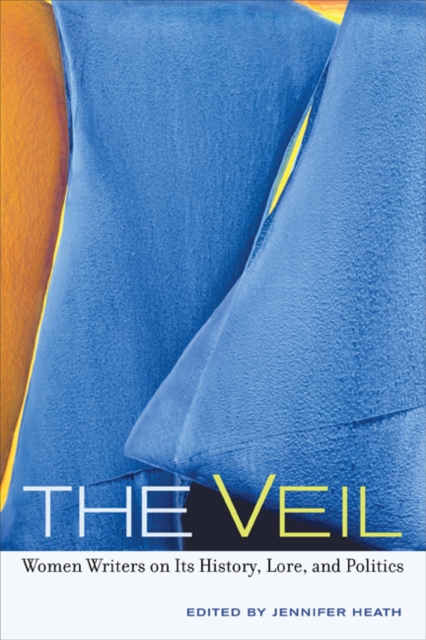
This groundbreaking volume, written entirely by women, examines the vastly misunderstood and multilayered world of the veil. Veiling— of women, of men, and of sacred places and objects—has existed in countless cultures and religions from time immemorial. Today, veiling is a globally polarizing issue, a locus for the struggle between Islam and the West and between contemporary and traditional interpretations of Islam. But veiling was a practice long before Islam and still extends far beyond the Middle East. This book explores and examines the cultures, politics, and histories of veiling. Twenty-one gifted writers and scholars, representing a wide range of societies, religions, ages, locations, races, and accomplishments, here elucidate, challenge, and/or praise the practice. Expertly organized and introduced by Jennifer Heath, who also writes on male veiling, the essays are arranged in three parts: the veil as an expression of the sacred; the veil as it relates to the emotional and the sensual; and the veil in its sociopolitical aspects. This unique, dynamic, and insightful volume is illustrated throughout. It brings together a multiplicity of thought and experience, much of it personal, to make readily accessible a difficult and controversial subject. Contributors: Kecia Ali, Michelle Auerbach, Sarah C. Bell, Barbara Goldman Carrel, Eve Grubin, Roxanne Kamayani Gupta, Jana M. Hawley, Jasbir Jain, Mohja Kahf, Laurene Lafontaine, Shireen Malik, Maliha Masood, Marjane Satrapi, Aisha Shaheed, Rita Stephan, Pamela K. Taylor, Ashraf Zahedi, Dinah Zeiger, Sherifa Zuhur
eBook

Veil obsessed : representations in literature, art, and media
\"Discussions surrounding the veil often run along essentialist and ahistorical lines, associating Islam with oppression, shame, and honor. Contributing to these stereotypes, the media in both the East and the West obsessively condemn or valorize practices of veiling. In Veil Obsessed, Umme Al-wazedi and Afrin Zeenat present a range of essays to complicate and challenge the dialogue around the veil, exploring its symbolic, religious, and cultural significance. Scholars from a variety of fields analyze and critique the use of the veil in literature, film, television, and the fine arts. Considering the multiple perceptions of the veil, this volume shows that the meaning of hijab can be natural or constructed, real or metaphorical, and religious or political, when it is presented through the media, in the teachings of Islam, and in upholding it as a national symbol of a nation-state. There are inherent tensions among the ideas concerning the power of hijab. Does wearing it give agency to women or does it represent oppression, thereby creating and perpetuating stereotypes? How an individual sees their relationship with the self, family and community, and the nation-state dictates their choice of whether to wear the veil. In exploring the wide range of portrayals, the editors pose critical questions about perceptions of the veil and the dangers of ignoring its multiplicity\"-- Provided by publisher.
BOOK

What is Veiling?
In an environment of increasing conservatism, in a world where a woman's right to wear the headscarf has become a touchstone for issues of all sorts, and at a time when racial and religious profiling has become commonplace, it is our political and social responsibility to gain a deeper understanding of veiling.
eBook


Localisation Across the Humanitarian-Development-Peace Nexus
Whilst the relation between local and global levels has been a long-standing concern of humanitarian, development, and peace efforts, in recent years the term “localisation” has become a major issue in the humanitarian sector whilst peacebuilding scholarship has taken a “local turn.” This article analyses the concept of localisation across the three parts of the triple nexus—humanitarian, development, and peace. It traces the long-standing concern with the local in each of these domains, considering similarities and differences in their engagement with the local and counter-veiling trends towards universalisation, before proceeding to frame four challenges common to localisation across all forms of conflict response: defining the local, valuing local capacity, maintaining political will, and multi-scalar conflict response.
Journal Article

Veiled presence : body and drapery from Giotto to Titian
This wide-ranging book elucidates the symbolism of veils and highlights the power of drapery in Italian art from Giotto to Titian. In the cities of the Renaissance, display of luxury dress was a marker of status. Florentines decked out their palaces and streets with textiles for public rituals. But cloths are also the stuff of fantasy: throughout the book, the author moves from the material to the metaphorical. Curtains and veils, swaddling and shrouds, evoke associations with birth and death. The central chapters address the sculpture of Ghiberti and Donatello, focusing on how they deployed drapery to dramatic effect. In the final chapters the focus shifts to the paintings of Bellini, Lotto, and Titian, where drapery both clothes the figures and composes the picture. In the work of Titian, the veiled presence of the body is absorbed within the materials of oil-paint on canvas: medium and subject become one.
Book

Muslim girls and the other France : race, identity politics, & social exclusion
[Keaton] provides the most in-depth analysis of the predicament of
French Arabs and Africans living in the suburbs of Paris... [O]ne can read the book
through the lens of such great African American writers and activists as Richard
Wright, James Baldwin, and Malcolm X... [It] contains an implicit warning to you,
France, not to repeat the American racism in your country. -- from the
foreword by Manthia Diawara Muslim girls growing up in the
outer-cities of Paris are portrayed many ways in popular discourse -- as oppressed,
submissive, foreign, kids from the projects, even as veil-wearing
menaces to France's national identity -- but rarely are they perceived simply as
what they say they are: French. Amid widespread perceptions of heightened urban
violence attributed to Muslims and highly publicized struggles over whether Muslim
students should be allowed to wear headscarves to school, Muslim girls often appear
to be the quintessential other. In this vivid, evocative study, Trica
Danielle Keaton draws on ethnographic research in schools, housing projects, and
other settings among Muslim teenagers of North and West African origin. She finds
contradictions between the ideal of universalism and the lived reality of ethnic
distinction and racialized discrimination. The author's own experiences as an
African American woman and non-Muslim are key parts of her analysis. Keaton makes a
powerful statement about identity, race, and educational politics in contemporary
France.
eBook