
Catalogue Search | MBRL


Are you sure you want to remove the book from the shelf?

{{itemTitle}}
1,602
result(s) for
"Vernacular architecture"
Sort by:


About the hearth
Due to changing climates and demographics, questions of policy in the circumpolar north have focused attention on the very structures that people call home. Dwellings lie at the heart of many forms of negotiation. Based on years of in-depth research, this book presents and analyzes how the people of the circumpolar regions conceive, build, memorialize, and live in their dwellings. This book seeks to set a new standard for interdisciplinary work within the humanities and social sciences and includes anthropological work on vernacular architecture, environmental anthropology, household archaeology and demographics.
eBook

The art of Japanese architecture : history, culture, design
Husband-and-wife collaborators David Young (anthropology, Univ. of Alberta) and Michiko Young have been studying Japanese aesthetics for years. Previously, they wrote The Art of the Japanese Garden, and now they tackle Japanese architecture, perfectly melding East and West to give us a deeply historical and cultural appreciation for the design and construction of Japanese shelter over an astonishing 12,000 years. They explain the elements of structure and the spare glory of the essentials as well as provide many examples that pay tribute to function. The buildings they examine embrace strong societal traditions, a tendency that makes Japanese architecture timeless and always \"modern.\" Nearly 400 illustrations, photographs, and woodcuts reinforce and enhance the outstanding text.
Book

OLD RAUMA (FINLAND): LIVING AND RESEARCHING VERNACULAR ARCHITECTURE
Old Rauma is a Finnish medieval town. It was founded in the 15th century and although it went through several modifications, it maintained significative features of medieval Nordic urbanism and vernacular architecture. Buildings mostly consist of logs-timber structures, even if there are also few cases of stone constructions; dwellings are usually simple volumes composed of a stone cellar, a first main floor and an attic, that is used for ventilation and secondary domestic activities. The wood is the most used material and slabs, floors, doors, windows, finishing and decorations are made of it. People still live in traditional dwellings or use them with other functions. Some significant changes were necessary to adapt the buildings to the modern lifestyle: although some of them were quite modifying, the upgrades are often operated by using traditional techniques, materials and by maintaining the most relevant architectural features. Thank to this habit, Old Rauma is one of the largest and most important examples of Nordic traditional architecture. This text will present the results of 2 months of direct field research, by explaining the work methodology, its results and some considerations about them. The analysis has been conducted during a traineeship at Tammela Centre (Rauma) and it has been carried out by visual surveys, bibliographical researches, active participation to seminars and activities, photographical cataloguing and through interviews with local professionals, experts and inhabitants.
Conference Proceeding

Architecture and agriculture : a rural design guide
\"Architecture and Agriculture: A Rural Design Guide presents architectural guidelines for buildings designed and constructed in rural landscapes by emphasizing their connections with function, culture, climate, and place. Following on from the author's first book Rural Design, the book discusses in detail the buildings that humans construct in support of agriculture. By examining case studies from around the world including Australia, China, Japan, Norway, Poland, Japan, Portugal, North America, Africa and the Southeast Asia it informs readers about the potentials, opportunities, and values of rural architecture, and how they have been developed to create sustainable landscapes and sustainable buildings for rapidly changing rural futures.\"-- Provided by publisher.
Book

Expression and communication in architecture philosophy of vernacular architecture of the Yorubas in Nigeria
This paper investigated how Yoruba architectural philosophy was expressed and communicated through their vernacular architecture, despite its gradually diminishing presence in modern times. A mixed-method approach involving questionnaire, interview, and observation checklist was adopted to achieve this. Using the stratified random sampling technique, a sample size of 240 respondents was selected. Of these, 168 copies of the questionnaire were returned, resulting in a 70% response rate. A structured interview was also conducted, which provided a clearer understanding of the architectural philosophy behind Yoruba vernacular architecture. To present the results of the analysis conducted using SPSS, tables, and charts were created and incorporated into the report. The study found out that Yoruba vernacular architecture expresses a range of architectural philosophies beyond aesthetics and art form. However, many of these philosophies are at risk of going into extinction due to the demolition and renovation of traditional buildings. This highlights the importance of preserving and promoting Yoruba architectural heritage in modern designs, to ensure the preservation of its cultural significance. The study concluded that it is crucial to integrate these traditional elements into contemporary architecture, to allow the Yoruba architectural philosophy to continue to be expressed and communicated to future generations.
Journal Article


Heritage in Transition: Vernacular Architectural Patterns in Rural Iran
The transition from vernacular architectural patterns to current architecture in rural Iran has led to various socio-cultural and environmental problems in the last decade. This study explores the nature of this transition, which has been overlooked in the studies of vernacular architecture in Iran. Furthermore, this article contributes to the ongoing academic debate on the decline and transformation of vernacular architectural patterns in the context of modernization. It analyzes the forces behind the decline and rise of vernacular settlements in a case study area, the Salami region of the Khaf district in Iran’s Khorasan Razavi province, by exploring how it is possible to reinterpret vernacular architectural patterns in the context of current architecture to utilize the new developments in rural Iran not as an obstacle but as an opportunity for improvement. To this end, this article explores vernacular architectural patterns in a case study area in Iran, supported by socio-cultural aspects and the environmental conditions of the region. This study conducts architectural and anthropological fieldwork on three vernacular houses in a case study area and uses participant observation and informal interview methods to understand the people and their interaction with their built environment. The findings of this article thus contradict previous studies on learning from vernacular architecture by shedding light on vernacular architecture in Iran as a system by demonstrating the inextricable links between different vernacular architectural patterns. Therefore, this study argues that to draw lessons from vernacular architectural patterns for current architecture in rural Iran, it is necessary to limit its communication concerning people’s contemporary needs but not to neglect this communication completely.
Journal Article
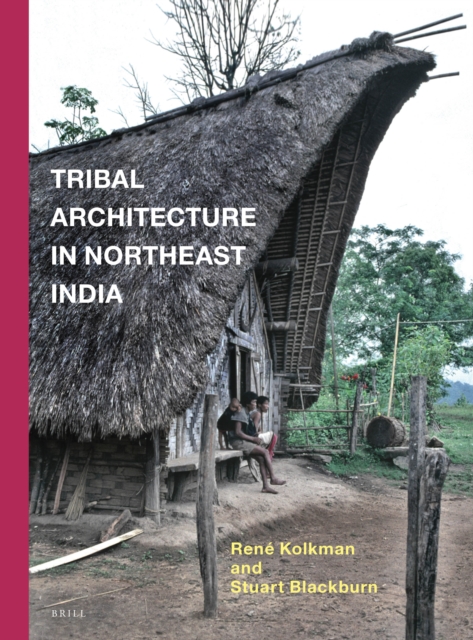
Tribal Architecture in \u2028Northeast India
Detailed drawings of traditional houses among 34 ethnic populations in India's northeast illustrate that each house-type is different. These houses are changing but nevertheless remain an important marker of cultural identity.
eBook