
Catalogue Search | MBRL


Are you sure you want to remove the book from the shelf?

{{itemTitle}}
12,319
result(s) for
"Vests"
Sort by:

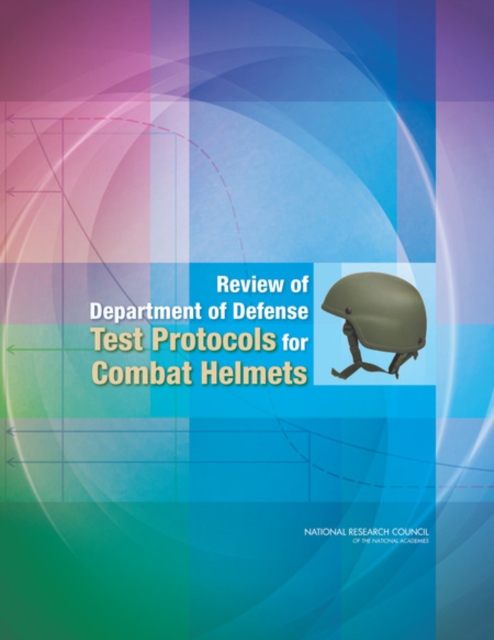
Review of Department of Defense Test Protocols for Combat Helmets
Combat helmets have evolved considerably over the years from those used in World War I to today's Advanced Combat Helmet.One of the key advances was the development of aramid fibers in the 1960s, which led to today's Kevlar-based helmets.
eBook

The ‘end of the world’ vs. the ‘end of the month’: understanding social resistance to sustainability transition agendas, a lesson from the Yellow Vests in France
This paper investigates the Yellow Vests movement and the extent it constitutes an original platform for resistance to a sustainability transition agenda in the French context. The movement represents a disruption to global climate mitigation solutions that are often formalized at a global scale, and illustrates cultural and economic constraints in providing social justice in the age of climate change. Using a cultural performative approach, this case study reveals the relevance of framing and cultural analyses to understand such resistance. This qualitative exploration initiates a narrative analysis to assess how the universal resolve of the 2015 Paris Conference and the related legitimacy of the sustainability discourse has been further contested by the Yellow Vests and their fractured framing. From the ‘end of the world’ to the ‘end of the month’, we investigate the rise and fall of the legitimacy of the French sustainability discourse by analysing politicians’ and activists’ speeches, historical narratives as well as visual materials of resistance in France in the context of sustainability transitions. Tip of a broader social crisis, the movement reveals an original conflict of temporalities, symptomatic of the inevitable interdependency of socio-economic inequalities to sustainability transitions. Beyond the resistance itself, the Yellow Vests embody an original exemplar for the importance of cultural appropriation within the sustainability discourse’ legitimation processes.
Journal Article

The effect of cooling vest along with hospital full-body protection equipment on physiological and cognitive indicators among hospital nurses: an interventional study
Background
Nurses experience physiological and cognitive challenges in high-temperature hospitals while wearing full-body Personal Protective Equipment (PPE). Identifying solutions is crucial for their well-being and performance. The aim of this study was to assess the effects of integrating cooling vests into full-body PPE on physiological and cognitive markers among hospital nurses in Iran.
Methods
Forty nurses from Shiraz, Iran, participated, with 20 participants in the control group and 20 participants in the intervention group. The control group wore standard PPE, while the intervention group used cooling vests with their PPE. Objective evaluations included physiological measurements and cognitive function tests, while subjective evaluations assessed fatigue, thermal sensation, thirst, and moisture.
Results
Physiological measurements, including heart rate maximum, and energy expenditure, showed no notable differences between the two groups. The effect of the cooling vest in the Continuous Performance Test (CPT) in comparison between the two groups decreased the response time (
p
< 0.001). The N-Back test, no response (
p
= 0.189), and response time (
p
= 0.871) between the two groups showed no significant difference. Subjective parameters were considerable reduced in the intervention group (
p
< 0.001).
Conclusion
Integrating cooling vests into PPE may alleviate physiological and cognitive challenges nurses experience in high-temperature environments, emphasizing the importance of providing appropriate PPE and cooling solutions for healthcare professionals working in hot conditions.
Clinical trial number
Not applicable.
Journal Article

Airbag Vests in Equestrian Sports: Is Use Associated with Harm?
Airbag vests (AV) are increasingly popular in equestrian sports. The efficacy of AV in protecting against serious injury has not been adequately analyzed, nor have product testing standards been established. This study provides an overview of current research to understand AV efficacy and future areas of improvement. A systematic review applying the PRISMA framework, NIH Study Quality Assessment, and CEBM Level of Evidence was conducted. Employing variations of “equestrian sport,” “powered two-wheeled vehicle,” “thoracic injury,” “chest deflection,” “airbag vest,” and “safety vest,” 18 articles were identified for data collection from three recognized research databases and citation searching. In laboratory settings, the ability of AV to protect against thoracic injuries was variable based on concurrent foam-based safety vest (SV) usage, impact speed, and impact mechanism. Studies that examined equestrian falls with AV found an association with increased injury rates and risk. SVs were shown to provide inconclusive efficacy in protecting against injuries in experimental and cohort studies. Protective capabilities depend on material, temperature, and impact mechanism. Further limiting use, equestrians reported not wearing, or incorrectly wearing SV due to unknown benefits, low comfort, and ill fit. In equestrian sports, based on published literature to date, AV have not been associated with a reduction in injury. AV appear to be associated with an increase in the risk of serious or fatal injuries in certain settings. However, research in this area is limited and future, large-scale studies should be conducted to further evaluate the efficacy of the air vests.
Journal Article

Composites with Natural Fibers and Conventional Materials Applied in a Hard Armor: A Comparison
Natural-fiber-reinforced polymer composites have recently drawn attention as new materials for ballistic armor due to sustainability benefits and lower cost as compared to conventional synthetic fibers, such as aramid and ultra-high-molecular-weight polyethylene (UHMWPE). In the present work, a comparison was carried out between the ballistic performance of UHMWPE composite, commercially known as Dyneema, and epoxy composite reinforced with 30 vol % natural fibers extracted from pineapple leaves (PALF) in a hard armor system. This hard armor system aims to provide additional protection to conventional level IIIA ballistic armor vests, made with Kevlar, by introducing the PALF composite plate, effectively changing the ballistic armor into level III. This level of protection allows the ballistic armor to be safely subjected to higher impact projectiles, such as 7.62 mm caliber rifle ammunition. The results indicate that a hard armor with a ceramic front followed by the PALF/epoxy composite meets the National Institute of Justice (NIJ) international standard for level III protection and performs comparably to that of the Dyneema plate, commonly used in armor vests.
Journal Article

Comfort and performance improvement through the use of cooling vests for construction workers
PurposeThe purpose of this study is to analyze the question “In what order of magnitude does the comfort and performance improvement lie with the use of a cooling vest for construction workers?”.Design/methodology/approachThe use of personal cooling systems, in the form of cooling vests, is not only intended to reduce the heat load, in order to prevent disruption of the thermoregulation system of the body, but also to improve work performance. A calculation study was carried out on the basis of four validated mathematical models, namely a cooling vest model, a thermophysiological human model, a dynamic thermal sensation model and a performance loss model for construction workers.FindingsThe use of a cooling vest has a significant beneficial effect on the thermal sensation and the loss of performance, depending on the thermal load on the body.Research limitations/implicationsEach cooling vest can be characterized on the basis of the maximum cooling power (Pmax; in W/m²), the cooling capacity (Auc; in Wh/m2) and the time (tc; in minutes) after which the cooling power is negligible. In order to objectively compare cooling vests, a (preferably International and/or European) standard/guideline must be compiled to determine the cooling power and the cooling capacity of cooling vests.Practical implicationsIt is recommended to implement the use of cooling vests in the construction process so that employees can use them if necessary or desired.Social implicationsClimate change, resulting in global warming, is one of the biggest problems of present times. Rising outdoor temperatures will continue in the 21st century, with a greater frequency and duration of heat waves. Some regions of the world are more affected than others. Europe is one of the regions of the world where rising global temperatures will adversely affect public health, especially that of the labor force, resulting in a decline in labor productivity. It will be clear that in many situations air conditioning is not an option because it does not provide sufficient cooling or it is a very expensive investment; for example, in the situation of construction work. In such a situation, personal cooling systems, such as cooling vests, can be an efficient and financially attractive solution to the problem of discomfort and heat stress.Originality/valueThe value of the study lies in the link between four validated mathematical models, namely a cooling vest model, a thermophysiological human model, a dynamic thermal sensation model and a performance loss model for construction workers.
Journal Article

Effectiveness of a ‘do not interrupt’ vest intervention to reduce medication errors during medication administration: a multicenter cluster randomized controlled trial
Background
The use of a ‘do not interrupt’ vest during medication administration rounds is recommended but there have been no controlled randomized studies to evaluate its impact on reducing administration errors. We aimed to evaluate the impact of wearing such a vest on reducing such errors. The secondary objectives were to evaluate the types and potential clinical impact of errors, the association between errors and several risk factors (such as interruptions), and nurses’ experiences.
Methods
This was a multicenter, cluster, controlled, randomized study (March–July 2017) in 29 adult units (4 hospitals). Data were collected by direct observation by trained observers. All nurses from selected units were informed. A ‘Do not interrupt’ vest was implemented in all units of the experimental group. A poster was placed at the entrance of these units to inform patients and relatives. The main outcome was the administration error rate (number of Opportunities for Error (OE), calculated as one or more errors divided by the Total Opportunities for Error (TOE) and multiplied by 100).
Results
We enrolled 178 nurses and 1346 patients during 383 medication rounds in 14 units in the experimental group and 15 units in the control group. During the intervention period, the administration error rates were 7.09% (188 OE with at least one error/2653 TOE) for the experimental group and 6.23% (210 OE with at least one error/3373 TOE) for the control group (
p
= 0.192). Identified risk factors (patient age, nurses’ experience, nurses’ workload, unit exposition, and interruption) were not associated with the error rate. The main error type observed for both groups was wrong dosage-form. Most errors had no clinical impact for the patient and the interruption rates were 15.04% for the experimental group and 20.75% for the control group.
Conclusions
The intervention vest had no impact on medication administration error or interruption rates. Further studies need to be performed taking into consideration the limitations of our study and other risk factors associated with other interventions, such as nurse’s training and/or a barcode system.
Trial registration
The PERMIS study protocol (V2–1, 11/04/2017) was approved by institutional review boards and ethics committees (CPP Ile de France number 2016-A00211–50, CNIL 21/03/2017, CCTIRS 11/04/2016). It is registered at ClinicalTrials.gov (registration number:
NCT03062852
, date of first registration: 23/02/2017).
Journal Article

Tactile spatial discrimination on the torso using vibrotactile and force stimulation
There is a steadily growing number of mobile communication systems that provide spatially encoded tactile information to the humans’ torso. However, the increased use of such hands-off displays is currently not matched with or supported by systematic perceptual characterization of tactile spatial discrimination on the torso. Furthermore, there are currently no data testing spatial discrimination for dynamic force stimuli applied to the torso. In the present study, we measured tactile point localization (LOC) and tactile direction discrimination (DIR) on the thoracic spine using two unisex torso-worn tactile vests realized with arrays of 3 × 3 vibrotactile or force feedback actuators. We aimed to, first, evaluate and compare the spatial discrimination of vibrotactile and force stimulations on the thoracic spine and, second, to investigate the relationship between the LOC and DIR results across stimulations. Thirty-four healthy participants performed both tasks with both vests. Tactile accuracies for vibrotactile and force stimulations were 60.7% and 54.6% for the LOC task; 71.0% and 67.7% for the DIR task, respectively. Performance correlated positively with both stimulations, although accuracies were higher for the vibrotactile than for the force stimulation across tasks, arguably due to specific properties of vibrotactile stimulations. We observed comparable directional anisotropies in the LOC results for both stimulations; however, anisotropies in the DIR task were only observed with vibrotactile stimulations. We discuss our findings with respect to tactile perception research as well as their implications for the design of high-resolution torso-mounted tactile displays for spatial cueing.
Journal Article
Designing new sizing bulletproof vests for Taiwanese soldiers
PurposeCombining the collected human body variables by a 3D body scanner and the research results of medical computed tomography (CT) imaging, this research aims to develop a military bulletproof vest that is both protective and fit. In particular, the protective part must be able to cover the vital human internal organs completely. The results of this research help to make military bulletproof vests of different sizes for Taiwanese male and female soldiers. At the same time, the research results can provide a reference for the industry of making special-purpose clothing.Design/methodology/approach17 important human body variables of 988 participants (male: 716, 72.5%; female 272, 27.5%) are used for the analysis. The K-means algorithm firstly builds clusters of different body shapes for both sexes; the silhouette coefficient helps to determine the optimal number of clusters to be six. Thus, the standard size of the bulletproof vest for soldiers is determined. The specifications of the bulletproof vest's inner core and textile vest are calculated for each cluster user. Our research then makes twelve prototypes of the bulletproof vest. After that, 12 subjects are invited to try on the new version (the vest designed in this study) and the old version (the vest currently used) to contrast the differences between the two.FindingsAccording to the index of the silhouette coefficient, the optimal number of clusters is determined to be six for both male and female clusters. Therefore, this study has designed six sizes of the bulletproof vest for male and female soldiers in Taiwan. After trying the new and old vests on, the subjects all indicate that the new vest fits better than the old one. In addition, the coverage of the bulletproof vest designed in this study is 94.38% for male users and 92.75% for female users.Originality/valueThe design of bulletproof vests must take note of the fit of the clothing itself and its protective function. Apart from the size design of general clothing only focusing on the human shape exteriorly, the bulletproof vest also needs to pay attention to the relative positions of vital organs inside the human body. Besides, for practical applications, it is quite effective to use the silhouette coefficient to determine the results of cluster analysis. Thus, the value of this research lies in the cross-field combination, enabling the integration of body measurement, data science and clothing design. Generally, bulletproof vests of newly designed sizes can meet the requirements of Taiwan's military. The research results can be used in the development of various military clothing for Taiwanese military personnel. At the same time, the results can be provided to the clothing industry as relevant parameters for designing unique functional clothing.
Journal Article