
Catalogue Search | MBRL


Are you sure you want to remove the book from the shelf?

{{itemTitle}}
576
result(s) for
"Veterinarians - ethics"
Sort by:

Ethical conflict and moral distress in veterinary practice: A survey of North American veterinarians
Abstract
Background
Concerns about ethical conflicts, moral distress, and burnout in veterinary practice are steadily increasing. Root causes of these problems have not been rigorously identified. Little research has been done to evaluate the existence of moral distress in North American veterinarians or to explore its impact on career sustainability and poor well-being.
Hypothesis/Objectives
Ethical conflict and resultant moral distress are common occurrences in contemporary veterinary practice and negatively impact daily practice life, but may not be identified or labeled by veterinarians as such.
Animals
No animals were used in this study.
Methods
Mixed methods sequential explanatory design; confidential and anonymous on-line sampling of 889 veterinarians in North America.
Results
A majority of respondents reported feeling conflict over what care is appropriate to provide. Over 70% of respondents felt that the obstacles they faced that prevented them from providing appropriate care caused them or their staff moderate to severe distress. Seventy-nine percent of participants report being asked to provide care that they consider futile. More than 70% of participants reported no training in conflict resolution or self-care.
Conclusions and Clinical Importance
Veterinarians report widespread ethical conflict and moral distress across many practice types and demographics. Most veterinarians have little to no training on how to decrease the impact of these problems. Ethical conflict and resulting moral distress may be an important source of stress and poor well-being that is not widely recognized or well defined. Well-researched and effective tools used to decrease moral distress in human healthcare could be adapted to ameliorate this problem.
Journal Article

To treat or not to treat: Experiences and considerations of veterinarians in management of cats with diabetes mellitus
Veterinarians’ daily work involves navigating ethical, medical, and emotional considerations while balancing diverse perceptions of responsible care within the triadic relationship between veterinarian, animal, and owner. These challenges are particularly evident in the management of chronic diseases. Diabetes mellitus serves as an example in our study, where we explore Swedish veterinarians’ experiences of managing it in cats. Individual in-depth interviews were conducted with ten veterinarians, and the data were systematically analysed using reflexive thematic analysis. One overarching theme, the perceived prioritisation of the cat’s wellbeing, was identified as central to how veterinarians approached the clinical situation. Three themes are addressed: the role of the owner in disease management, the negotiation between medical ideals and practical realities, and the perception of euthanasia as being in the best interest of the cat. Taken together, the three themes explore how veterinarians continually negotiate what it means to act responsibly within the constraints of real-life practice. This ongoing negotiation between ideals, pragmatism, and compassion underscores the ethical depth and emotional labour embedded in everyday veterinary work. The results contribute in-depth insights into how clinical reasoning and decision-making is shaped by both moral positions and pragmatic adaptations, and the importance of veterinary-owner communication in finding the optimal management plan in each individual case. Awareness of the challenges associated with diabetes care in cats may facilitate ethical reflexivity in veterinary practice, supporting decisions that impact both animal welfare and veterinarians’ professional wellbeing.
Journal Article
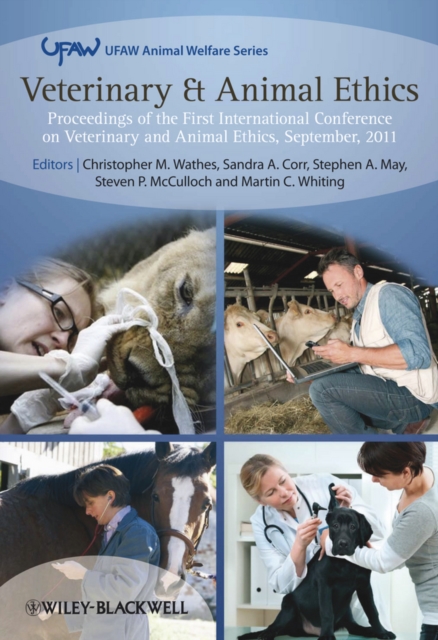
Veterinary and animal ethics : proceedings of the First International Conference on Veterinary and Animal Ethics, September 2011
The first International Conference on Veterinary and Animal Ethics (ICVAE) held in September 2011 saw leading experts from across the world come together to discuss the most important issues of animal welfare in contemporary veterinary practice and research. This is the extended proceedings of that conference, enabling all those interested in this increasingly significant subject to benefit from the insights of those discussions.
The conference was divided into four sessions: Principles of veterinary and animal ethics; Justifying ends - the morality of animal use; Ethical analyses of animal use; and Cultural, political, legal and economic considerations. Each session contained four or five papers, and these are presented here in full, as well as the transcribed question and answer sessions at the end of each paper, and a short post-presentation reflection from each author. Also included is the debate on the motion 'Is it better to have lived and lost than never to have lived at all?' which records three prepared responses to the question as well as registrants' comments from the floor.
KEY FEATURES
• Contributions from the leading thinkers in veterinary and animal ethics today
• Includes stimulating, challenging, thought-provoking and sometimes controversial discussions
• Addresses key questions on the role of the veterinarian and the morality of animal use, as well as our impact on wildlife
• Provides guidance on the practical application of ethical principles and the problems encountered
Published as part of the UFAW Animal Welfare book series. See www.wiley.com/go/ufaw [http://www.wiley.com/go/ufaw] for more details.
eBook

Survey of the frequency and perceived stressfulness of ethical dilemmas encountered in UK veterinary practice
The scale of the ethical challenges faced by veterinary surgeons and their perceived stressful consequences were investigated via a short questionnaire, completed by 58 practising veterinary surgeons. Respondents were asked to report how frequently they faced ethical dilemmas, and to rate on a simple numerical scale (zero to 10) how stressful they found three common scenarios. Fifty seven per cent of respondents reported that they faced one to two dilemmas per week, while 34 per cent stated they typically faced three to five dilemmas per week. The three scenarios provided were all rated as highly stressful with ‘client wishing to continue treatment despite poor animal welfare’ rated as the most stressful (median 9). The female veterinary surgeons gave two of the scenarios significantly higher stress ratings than the male veterinary surgeons. Stress ratings were not influenced by number of years in practice (which ranged from one to more than 25 years). The results show that veterinary surgeons regularly face ethical dilemmas and that they find these stressful. This has implications for the wellbeing of veterinary surgeons and supports the case for increased provision of training and support, especially for those who entered the profession before undergraduate ethics teaching was widely available.
Journal Article
Veterinary opinions on refusing euthanasia: justifications and philosophical frameworks
To obtain information on euthanasia decisions from practising veterinary surgeons, respondents were asked to estimate how often during their time in practice they had refused to euthanase a dog and how often they had wanted to refuse to euthanase a dog but not done so because of other pressures. For each, respondents were then asked to state their most common reasons for refusing/not refusing in free text. The responses of clinicians were considered in the light of established ethical concepts to produce an evidence-based ethical framework for decision making. In total, 58 practitioners responded. Common reasons given for decisions on whether to refuse euthanasia referred to the patient's interests, such as the possibility of treatment or rehoming, and the fear of other unacceptable outcomes for the dog. Other reasons were based on concern for owners' interests. Some respondents reported being pressured into euthanasia by clients and other veterinary surgeons. This gives insight into the ethical principles that explicitly underlie veterinary surgeons' euthanasia decisions and the resultant framework may be useful for discussing and teaching euthanasia.
Journal Article
Using Hormones to Manage Dairy Cow Fertility: The Clinical and Ethical Beliefs of Veterinary Practitioners
In the face of a steady decline in dairy cow fertility over several decades, using hormones to assist reproduction has become common. In the European Union, hormones are prescription-only medicines, giving veterinary practitioners a central role in their deployment. This study explored the clinical and ethical beliefs of practitioners, and provides data on their current prescribing practices. During 2011, 93 practitioners working in England completed a questionnaire (95% response rate). Of the 714 non-organic farms they attended, only 4 farms (0.6%) never used hormones to assist the insemination of lactating dairy cows. Practitioners agreed (>80%) that hormones improve fertility and farm businesses profitability. They also agreed (>80%) that if farmers are able to tackle management issues contributing to poor oestrus expression, then over a five year period these outcomes would both improve, relative to using hormones instead. If management issues are addressed instead of prescribing hormones, practitioners envisaged a less favourable outcome for veterinary practices profitability (p<0.01), but an improvement in genetic selection for fertility (p<0.01) and overall cow welfare (p<0.01). On farms making no efforts to address underlying management problems, long-term routine use at the start of breeding for timing artificial insemination or inducing oestrus was judged \"unacceptable\" by 69% and 48% of practitioners, respectively. In contrast, practitioners agreed (≥ 90%) that both these types of use are acceptable, provided a period of time has been allowed to elapse during which the cow is observed for natural oestrus. Issues discussed include: weighing quality versus length of cow life, fiscal factors, legal obligations, and balancing the interests of all stakeholders, including the increasing societal demand for food. This research fosters debate and critical appraisal, contributes to veterinary ethics, and encourages the pro-active development of professional codes of conduct.
Journal Article

Moral Standing of Animals and Some Problems in Veterinarian Ethics
This paper discusses the Indirect Duties View implying that, when our actions have no negative effects on humans, we can treat animals any way we wish. I offer several criticisms of this view. Subsequently, I explore some implications of rejecting this view that rise in the contexts of animal research and veterinarian ethics.
Journal Article
When to euthanase
Decisions on when to treat, when to euthanase and when not to intervene are not always easy; both undertreatment and overtreatment may lead to unnecessary suffering. James Yeates offers some thoughts on how to evaluate patients’ best interests
Journal Article
New codes of conduct for vets and veterinary nurses
'The general public has the right to expect that, as the regulatory body, we move with the times and include topics such as clinical governance and protocols for health and performance in order to protect their interests and those of their animals' New formats The Codes are available in three formats: a 16-page hard-copy booklet containing short urls to chapters of supporting guidance on the RCVS website; online; and, shortly, as a PDF. Key features of the Codes Concise principles-based Codes, with supplementary guidance Principles of practice same for vets and VNs Clear distinction between what is obligatory and what is advised Three formats available: pocket-sized booklet, with supplementary guidance online; via the RCVS website; or as a PDF Explicit that CPD requirements are obligatory New declaration for RVNs; updated declaration for vets Clinical governance requirements Health Protocol Performance Protocol
Journal Article
Offering the best to patients: ethical issues associated with the provision of veterinary services
Veterinary surgeons have long been perceived as animal advocates and yet their income is usually dependent on a third party: the owner. Given the ever-increasing options now available to treat complex clinical conditions, it is important to consider which services should, rather than could, be offered to clients. Does the professional obligation to act as an animal advocate conflict or concord with the desire to operate a successful business? David Main discusses the ethical issues associated with the provision of professional services to clients and their animals.
Journal Article