
Catalogue Search | MBRL


Are you sure you want to remove the book from the shelf?

{{itemTitle}}
2,170
result(s) for
"Veterinary bacteriology"
Sort by:

Evaluation of the bacterial ocular surface microbiome in ophthalmologically normal dogs prior to and following treatment with topical neomycin-polymyxin-bacitracin
The ocular surface microbiome of veterinary species has not been thoroughly characterized using molecular-based techniques, such as next generation sequencing (NGS), as the vast majority of studies have utilized traditional culture-based techniques. To date, there is one pilot study evaluating the ocular surface of healthy dogs using NGS. Furthermore, alterations in the ocular surface microbiome over time and after topical antibiotic treatment are unknown. The objectives of this study were to describe the bacterial composition of the ocular surface microbiome in clinically normal dogs, and to determine if microbial community changes occur over time or following topical antibiotic therapy. Topical neomycin-polymyxin-bacitracin ophthalmic ointment was applied to one eye each of 13 adult dogs three times daily for seven days, while contralateral eyes served as untreated controls. The inferior conjunctival fornix of both eyes was sampled via swabbing at baseline prior to antibiotic therapy (day 0), after 1 week of treatment (day 7), and 4 weeks after discontinuing treatment (day 35). Genomic DNA was extracted from the conjunctival swabs and primers targeting the V4 region of bacterial 16S rRNA genes were used to generate amplicon libraries, which were then sequenced on an Illumina platform. Data were analyzed using Quantitative Insights Into Molecular Ecology (QIIME 2.0). At baseline, the most relatively abundant phyla sequenced were Proteobacteria (49.7%), Actinobacteria (25.5%), Firmicutes (12%), Bacteroidetes (7.5%), and Fusobacteria (1.4%). The most common families detected were Pseudomonadaceae (13.2%), Micrococcaceae (12%), Pasteurellaceae (6.9%), Microbacteriaceae (5.2%), Enterobacteriaceae (3.9%), Neisseriaceae (3.5%), and Corynebacteriaceae (3.3%). Alpha and beta diversity measurements did not differ in both control and treatment eyes over time. This report examines the temporal stability of the canine ocular surface microbiome. The major bacterial taxa on the canine ocular surface remained consistent over time and following topical antibiotic therapy.
Journal Article

Interrelationship between tetracycline resistance determinants, phylogenetic group affiliation and carriage of class 1 integrons in commensal Escherichia coli isolates from cattle farms
Background
Carriage of antibiotic-resistant foodborne pathogens by food production animals is one of many contributors to treatment failure in health care settings, and it necessitates an integrated approach to investigate the carriage of resistant pathogens harboring integrons in food-producing animals.
Methods
Escherichia coli
isolates with reduced susceptibility to tetracycline antibiotics (
n
= 92) were tested for associations between carriage of class1 integrons, phylogenetic group affiliation and tetracycline resistance determinants using the MIC method, PFGE analysis, PCR and sequencing.
Results
Phylogroups B1 and A were the most common (58.7 and 19.6%, respectively), followed by groups D (20.7%) and B2 (1.1%). All isolates carried at least one of the
tet
genes examined. In addition, 88 (95.7%) of all tetracycline-resistant isolates carried
tet(A)
or
tet(B)
, while 47 (51.1%) and 41 (44.6%) harbored only
tet(A)
or
tet(B)
, respectively. Likewise, isolates harboring these genes had a higher chance (
P
< 0.05) of carrying class 1 integrons. Of the tested isolates, 38 (41.3%) carried the
intI1
gene. Classical integrons with complete genes (
sul1
and
qacE∆1
) at the 3′-CS were recognized in 27 isolates. PCR screening and subsequent sequencing demonstrated that 84.2% (32/38) of the
intI1
-positive isolates harbored resistance gene cassettes. Overall, seven gene cassettes were identified, either solely or combined with another gene cassette. The most common gene was
aadA1
(10 isolates), followed by a combination of
aadA1-dfrA1
(seven isolates),
aadA1-dfrA12
(six isolates) and
aadA1-aadA2-dfrA12
(three isolates). Genetic typing using PFGE showed minimum clonal relatedness with 28 different clusters and 12–25 discernible DNA fragments.
Conclusions
This study brings new insight into the relationships between the presence of integrons, phylogenetic group association and characteristics of tetracycline antibiotic resistance determinants in commensal
E. coli
strains.
Journal Article
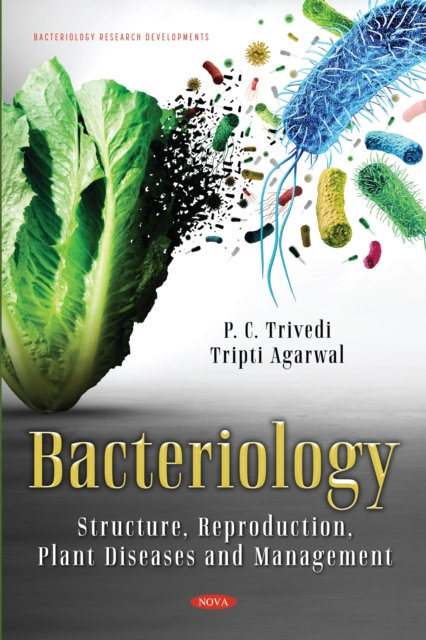
Bacteriology : structure, reproduction, plant diseases and management
Plant diseases are a threat to agriculture and food production on a global scale. Significant yield losses have been recorded due to plant pathogens in most agriculture and horticulture crops. The effective management of these diseases is very difficult. As such, it is important to understand fundamental concepts of the management of plant diseases caused by bacteria. Bacteriology is a subdivision of microbiology and involves the documentation, description, and identification of bacteria. This book covers recent updates on the morphology, classification, genetics, ecology, and biochemistry of bacteria as well as the basic molecular concepts of bacteriology. This book has a futuristic approach and will help scholars understand the symptoms, mechanisms, and effective management of diseases caused by bacterial pathogens. This book is useful for students and researchers of plant sciences, botany, microbiology, pathology, agriculture science, veterinary science, medical science, and other allied areas.
eBook

Intra- and Post-Operative Bacteriological Surveys of Surgical Site in Horses: A Single-Centre Study
Bacterial contamination of the surgical site in horses is a major risk factor for the development of surgical site infections (SSIs), which increase morbidity, mortality, the hospitalisation period, antibiotic use, and management costs. While contamination is a prerequisite for infection, its progression to clinical infection depends on additional factors that compromise host defences. The present study, conducted at the Veterinary Teaching Hospital of the University of Perugia over an 11-month period, investigated bacterial contamination in 70 surgeries (53 clean and 17 clean-contaminated) at the end of the procedure. To exclude pre-existing contamination, a sterile swab was collected after surgical scrub, and only cases that entered surgery with a sterile operative field were considered. A swab, biopsy, and fine-needle aspiration from the wound margins were then performed at the end of the surgery to conduct a qualitative assessment of the bacterial contamination of the surgical sites. Risk factors for surgical field contamination were analysed separately for clean and clean-contaminated procedures. Specifically, for clean-contaminated surgeries, the presence of emergency conditions, surgery duration, and intra-operative complications were evaluated. For clean surgeries, risk factors included the type of operating room, surgical duration, tissue involved, use of local anaesthetics, and placement of surgical drapes. The results revealed bacterial contamination rates of 49.1% in clean surgeries and 41.2% in clean-contaminated surgeries. Coagulase-negative staphylococci were the most frequently isolated bacteria, followed by Burkholderia cepacia, Bacillus sp., and Stenotrophomonas maltophilia. A statistical analysis showed no significant results on the predictive factors of the contamination evaluated. However, the observed trends suggest the importance of further investigating these risk factors in a larger sample size. These results emphasise the importance of effective prophylactic measures to limit surgical site contamination. Future research will focus on optimising pre-operative and intra-operative prophylaxis strategies to reduce bacterial contamination to sub-pathogenic levels, thereby enhancing post-operative outcomes.
Journal Article
Microbiota Profiling on Veterinary Faculty Restroom Surfaces and Source Tracking
In this study, we aimed to develop a comprehensive microbial source amplicon database tailored for source tracking in veterinary settings. We rigorously tested our locally curated source tracking database by selecting a frequently accessed environment by veterinary students and veterinarians. By exploring the composition of resident microbiota and identifying potential sources of contamination, including animals, the environment, and human beings, we aimed to provide valuable insights into the dynamics of microbial transmission within veterinary facilities. The 16S rDNA amplicon sequencing was used to determine the bacterial taxonomic profiles of restroom surfaces. Bacterial sources were identified by linking our metadata-enriched local database to the microbiota profiling analysis using high-quality sequences. Microbiota profiling shows the dominance of four phyla: Actinobacteria, Bacteroidetes, Proteobacteria, and Firmicutes. If the restroom cleaning process did not appear to impact microbiota composition, significant differences regarding bacterial distribution were observed between male and female users in different sampling campaigns. Combining 16S rDNA profiling to our specific sources labeling pipeline, we found aquatic and human sources were the primary environment keywords in our campaigns. The probable presence of known animal sources (bovids, insects, equids, suids…) associated with bacterial genera such as Chryseobacterium, Bergeyella, Fibrobacter, and Syntrophococcus was also involved in restroom surfaces, emphasizing the proximity between these restrooms and the exchange of bacteria between people involved in animals handling. To summarize, we have demonstrated that DNA sequence-based source tracking may be integrated with high-throughput bacterial community analysis to enrich microbial investigation of potential bacterial contamination sources, especially for little known or poorly identified taxa. However, more research is needed to determine the tool’s utility in other applications.
Journal Article
Isolation of Streptococcus agalactiae in a female llama
Streptococcus agalactiae is pathogenic for both animals and humans. In dairy cattle it commonly causes mastitis, with great economic losses, and there is scientific evidence of mastitis, caseous lymphadenitis, contagious skin necrosis and purulent infections associated with S. agalactiae in camels (Camelus dromedarius) as well. In humans, it is a common component of the respiratory and gastrointestinal microflora, but it can also act as a pathogen, especially in elderly people and immunocompromised patients, as well as in pregrant women and newborns. This report describes, to the best of our knowledge, the first isolation of S. agalactiae in llamas (Lama glama). The animal came from a herd that counts approximately 200 South American camelids (llamas, alpacas) along with several horses, chicken, rabbits, cats and dogs; this farm offers services, such as trekking and pet therapy activities.
Journal Article
Bacteria and parasites in Podarcis sicula and P. sicula klemmerii
Background
New epidemiological data on bacterial and parasitic infections in 24 Italian wall lizards, namely
Podarcis sicula
(mainland population) and
P. sicula klemmerii
(insular population) in southern Italy were provided. To achieve this goal, samples were collected from individuals belonging to the two populations and analysed by microbiological and parasitological methods.
Results
A wide range of bacteria (e.g.
Pantoea
spp.,
Citrobacter
spp.,
Morganella
spp.,
Pseudomonas
,
Enterobacter
spp.,
Staphylococcus
spp. and
Escherichia coli
) and parasites (e.g.
Ophionyssus natricis
, coccidia, Dicrocoelidae) were detected in both
P. sicula
and
P. sicula klemmerii
individuals. Insular population presented similar bacterial and parasitic diversity to its mainland counterpart. Ampicillin was the antimicrobial with the highest resistance rate.
Conclusion
This study highlighted various bacteria and parasites, some of them potentially zoonotic. Further studies are needed to better understand the epidemiology and transmission routes of these pathogens along with their impact on the welfare and behaviour of Italian wall lizards.
Journal Article

Beneficial Microbes in Agro-Ecology
Beneficial Microbes in Agro-Ecology: Bacteria and Fungi is a complete resource on the agriculturally important beneficial microflora used in agricultural production technologies.Included are 30 different bacterial genera relevant in the sustainability, mechanisms, and beneficial natural processes that enhance soil fertility and plant growth.
eBook

Validity of somatic cell count as indicator of pathogen-specific intramammary infections
The objective of this study was to determine whether somatic cell count (SCC) was an effective test, with a sensitivity exceeding 85%, to determine species-specific bacterial infections. In addition, the relation between the SCC and various udder pathogen groups was investigated. SCC thresholds of greater than 200 000 cells/mL were used in quarter and greater than 150 000 cells/mL in composite milk samples. A retrospective study was conducted on a data set for 89 635 quarter and 345 467 composite cow milk samples. Eleven SCC threshold values were used to evaluate the diagnostic efficacy for the following bacteria: Gram-positive major pathogens: Staphylococcus aureus, Streptococcus agalactiae, Streptococcus dysgalactiae and Streptococcus uberis; Gram-negative major pathogens: Escherichia coli, Klebsiella pneumonia and Serratia spp.; minor pathogens: coagulase-negative staphylococci, Micrococcus spp., Staphylococcus pseudintermedius, Streptococcus pyogenes, Enterococcus faecalis, Enterococcus canis, Trueperella pyogenes and other Enterobacteriaceae. Sensitivity and specificity were calculated taking the effect of clustering into account with quarter milk samples. Most samples yielding major Gram-positive pathogens (88.9% in quarter and 79.9% in composite samples) and minor pathogens (61.4% in quarter and 51.7% in composite samples) had SCC greater than 200 000 cells/mL. Sensitivity of the SCC test to detect major pathogens at an SCC threshold of greater than 200 000 cells/mL in quarter samples and greater than 150 000 cells/mL in composite milk samples was 88.2% and 84.2%, respectively, but specificity was low (57.7% and 52.8%, respectively).
Journal Article
Paratuberculosis in a domestic dog in South Africa
This case report shows that Mycobacterium avium subsp. paratuberculosis (MAP) infection can cause clinical disease in domestic dogs, and should be considered as a differential diagnosis for gastrointestinal inflammatory conditions. A male dachshund presented with lethargy and pain. Enlarged mesenteric lymph nodes were found on abdominal ultrasound examination. Cytological examination of lymph node aspirates was consistent with granulomatous inflammation, which was culture-confirmed as MAP. Although we were unable to confirm the source of infection, the dog’s history included exposure to sheep in the Western Cape.
Journal Article