
Catalogue Search | MBRL


Are you sure you want to remove the book from the shelf?

{{itemTitle}}
3,141
result(s) for
"Veterinary surgeons"
Sort by:

Correction: Delivery and evaluation of participatory education for animal keepers led by veterinarians and para-veterinarians around the Kanha Tiger Reserve, Madhya Pradesh, India
[This corrects the article DOI: 10.1371/journal.pone.0200999.].
Journal Article

A Cross-Sectional Study of Experiences and Attitudes towards Clinical Audit of Farm Animal Veterinary Surgeons in the United Kingdom
Clinical audit is a quality improvement tool used to assess and improve the clinical services provided to patients. This is the first study to investigate the extent to which clinical audit is understood and utilised in farm animal veterinary practice. A cross-sectional study to collect experiences and attitudes of farm animal veterinary surgeons in the UK towards clinical audit was conducted using an online nationwide survey. The survey revealed that whilst just under three-quarters (n = 237/325; 73%) of responding veterinary surgeons had heard of clinical audit, nearly 50% (n = 148/301) had never been involved in a clinical audit of any species. The participants’ knowledge of what a clinical audit was varied substantially, with many respondents reporting not receiving training on clinical audit at the undergraduate or postgraduate level. Respondents that had participated in a clinical audit suggested that protected time away from clinical work was required for the process to be completed successfully. This novel study suggests that clinical audit is undertaken to some extent in farm animal practice and that practitioner perception is that it can bring benefits, but was felt that more resources and support were needed for it to be implemented successfully on a wider scale.
Journal Article
Pet owners’ and veterinarians’ perceptions of information exchange and clinical decision-making in companion animal practice
One of the most complex aspects of the veterinarian-client-patient interaction is the clinical decision-making process. Research suggests that the approach to communication used by veterinarians can impact veterinary clients’ involvement in the decision-making process and their ultimate satisfaction. Using different approaches to the decision-making process may affect how information is exchanged and consequently how decisions are made. The objective of this study was to determine pet owners’ expectations with respect to information exchange and decision-making during veterinarian-client-patient interactions and to compare veterinarians’ perceptions of those expectations and the challenges they face in meeting them. Five pet owner focus groups (27 owners) and three veterinarian focus groups (24 veterinarians) were conducted with standardized open-ended questions and follow-up probes. Thematic analysis of the transcribed data was conducted to identify trends and patterns that emerged during the focus groups. Three pet owner-based themes were identified: 1) understanding the client; 2) providing information suitable for the client; and 3) decision-making. In addition, three barriers for veterinarians affecting information exchange and decision-making were identified: 1) time constraints; 2) involvement of multiple clients; and 3) language barriers. Results suggest that pet owners expect to be supported by their veterinarian to make informed decisions by understanding the client’s current knowledge, tailoring information and educating clients about their options. Breakdowns in the information exchange process can impact pet owners’ perceptions of veterinarians’ motivations. Pet owners’ emphasis on partnership suggests that a collaborative approach between veterinarians and clients may improve client satisfaction.
Journal Article

Prevalence of commonly diagnosed disorders in UK dogs under primary veterinary care: results and applications
Background
Although dogs are a commonly owned companion animal in the UK, the species experiences many health problems that are predictable from demographic information. This study aimed to use anonymised veterinary clinical data from the VetCompass™ Programme to report the frequency of common disorders of dogs under primary veterinary care in the UK during 2016 and to explore effects associated with age, sex and neuter status.
Results
From an available population of 905,543 dogs under veterinary care at 886 veterinary clinics during 2016, the current study included a random sample of 22,333 (2.47 %) dogs from 784 clinics. Prevalence for each disorder was calculated at the most refined level of diagnostic certainty (precise-level precision) and after grouping to a more general level of diagnostic precision (grouped-level precision). The most prevalent precise-level precision disorders recorded were periodontal disease (prevalence 12.52 %, 95 % CI: 12.09–12.97), otitis externa (7.30 %, 95 % CI: 6.97–7.65) and obesity (7.07 %, 95 % CI: 6.74–7.42). The most prevalent grouped-level disorders were dental disorder (14.10 %, 95 % CI: 13.64–14.56), skin disorder (12.58 %, 95 % CI: 12.15–13.02) and enteropathy (10.43 %, 95 % CI: 10.04–10.84). Associations were identified for many common disorders with age, sex and neuter.
Conclusions
The overall findings can assist veterinarians and owners to prioritise preventive care and to understand demographic risk factors in order to facilitate earlier diagnosis of common disorders in dogs. The information on associations with age, sex and neuter status provides additional contextual background to the complexity of disorder occurrence and supports targeted health controls for demographic subsets of dogs.
Journal Article
Describing the antimicrobial usage patterns of companion animal veterinary practices; free text analysis of more than 4.4 million consultation records
Antimicrobial Resistance is a global crisis that veterinarians contribute to through their use of antimicrobials in animals. Antimicrobial stewardship has been shown to be an effective means to reduce antimicrobial resistance in hospital environments. Effective monitoring of antimicrobial usage patterns is an essential part of antimicrobial stewardship and is critical in reducing the development of antimicrobial resistance. The aim of this study is to describe how frequently antimicrobials were used in veterinary consultations and identify the most frequently used antimicrobials. Using VetCompass Australia, Natural Language Processing techniques, and the Australian Strategic Technical Advisory Group's (ASTAG) Rating system to classify the importance of antimicrobials, descriptive analysis was performed on the antimicrobials prescribed in consultations from 137 companion animal veterinary clinics in Australia between 2013 and 2017 (inclusive). Of the 4,400,519 consultations downloaded there were 595,089 consultations where antimicrobials were prescribed to dogs or cats. Antimicrobials were dispensed in 145 of every 1000 canine consultations; and 38 per 1000 consultations involved high importance rated antimicrobials. Similarly with cats, 108 per 1000 consultations had antimicrobials dispensed, and in 47 per 1000 consultations an antimicrobial of high importance rating was administered. The most common antimicrobials given to cats and dogs were cefovecin and amoxycillin clavulanate, respectively. The most common topical antimicrobial and high-rated topical antimicrobial given to dogs and cats was polymyxin B. This study provides a descriptive analysis of the antimicrobial usage patterns in Australia using methods that can be automated to inform antimicrobial use surveillance programs and promote antimicrobial stewardship.
Journal Article
Evaluation of a brief video intervention aimed at UK-based veterinary surgeons to encourage neutering cats at four months old: A randomised controlled trial
In the UK, it is currently recommended that owned cats be neutered from four months of age. However, its uptake is inconsistent across the veterinary profession. Here we assess the effect of a brief video intervention that aimed to encourage four month neutering, whilst preserving clinical autonomy. We compare this theory-driven approach with traditional information giving and a control group. Veterinary surgeons who regularly undertook feline neutering work in the UK but did not routinely neuter cats at four months and/or recommend four month neutering for client owned cats were randomised into three groups (n = 234). Participants received either no information, a written summary of evidence or the video. The primary behaviour outcomes were the recommending and carrying out of neutering cats at four months. Evaluative, belief and stages of change measures were also collected. Self-reported outcomes were assessed pre-intervention, immediately post-intervention, two months post-intervention and six months post-intervention. At two months, participants that had received the video intervention were significantly more likely to have started recommending neutering cats at four months. At six months, participants that had received the video intervention were significantly more likely to have started carrying out neutering cats at four months. There were no significant behaviour changes for the other groups. At two months, the video intervention was associated with a significant increase in thinking about, and speaking to colleagues about, four-month neutering, relative to the control group. The written summary of evidence had no similar effect on stages of change, despite it being perceived as a significantly more helpful resource relative to the video. To conclude, a brief one-off video intervention resulted in an increase in positive behaviours towards neutering cats at 4 months, likely mediated by the social influences of the intervention prompting the opportunity to reflect and discuss four-month neutering with colleagues.
Journal Article
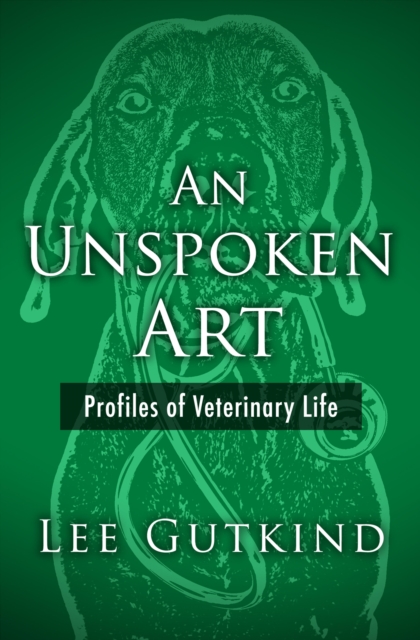
An Unspoken Art
In the tradition of James Herriot's All Creatures Great and Small, An Unspoken Art is Lee Gutkind's captivating look at the lives of veterinarians, from the zoos to the farm
Lee Gutkind, the godfather of creative nonfiction, explores with warmth and sincerity the worlds of modern-day veterinarians—from practitioners operating on Manhattan's Upper East Side to those working knee deep in mud in the English countryside. Gutkind profiles the men and women who have devoted their lives to the care of animals, almost all treating their patients with more humanity and compassion than physicians in human hospitals do. He writes of the people who do not bat an eye at sharing a bed with their dogs, and of those who spare no expense when it comes to the well-being of their pets.
An Unspoken Art is an insightful look at the individuals who dedicate themselves to the care of creatures, and of the enduring bond between people and animals.
eBook

Recent advances on Dirofilaria repens in dogs and humans in Europe
Dirofilaria repens
is a nematode affecting domestic and wild canids, transmitted by several species of mosquitoes. It usually causes a non-pathogenic subcutaneous infection in dogs and is the principal agent of human dirofilariosis in the Old World. In the last decades,
D. repens
has increased in prevalence in areas where it has already been reported and its distribution range has expanded into new areas of Europe, representing a paradigmatic example of an emergent pathogen. Despite its emergence and zoonotic impact,
D. repens
has received less attention by scientists compared to
Dirofilaria immitis
. In this review we report the recent advances of
D. repens
infection in dogs and humans, and transmission by vectors, and discuss possible factors that influence the spread and increase of this zoonotic parasite in Europe. There is evidence that
D. repens
has spread faster than
D. immitis
from the endemic areas of southern Europe to northern Europe. Climate change affecting mosquito vectors and the facilitation of pet travel seem to have contributed to this expansion; however, in the authors’ opinion, the major factor is likely the rate of undiagnosed dogs continuing to perpetuate the life-cycle of
D. repens
. Many infected dogs remain undetected due to the subclinical nature of the disease, the lack of rapid and reliable diagnostic tools and the poor knowledge and still low awareness of
D. repens
in non-endemic areas. Improved diagnostic tools are warranted to bring
D. repens
diagnosis to the state of
D. immitis
diagnosis, as well as improved screening of imported dogs and promotion of preventative measures among veterinarians and dog owners. For vector-borne diseases involving pets, veterinarians play a significant role in prevention and should be more aware of their responsibility in reducing the impact of the zoonotic agents. In addition, they should enhance multisectorial collaboration with medical entomologists and the public health experts, under the concept and the actions of One Health-One Medicine.
Journal Article
The future of veterinary communication: Partnership or persuasion? A qualitative investigation of veterinary communication in the pursuit of client behaviour change
Client behaviour change is at the heart of veterinary practice, where promoting animal health and welfare is often synonymous with engaging clients in animal management practices. In the medical realm, extensive research points to the link between practitioner communication and patient behavioural outcomes, suggesting that the veterinary industry could benefit from a deeper understanding of veterinarian communication and its effects on client motivation. Whilst extensive studies have quantified language components typical of the veterinary consultation, the literature is lacking in-depth qualitative analysis in this context. The objective of this study was to address this deficit, and offer new critical insight into veterinary communication strategies in the pursuit of client behaviour change. Role-play interactions (n = 15) between UK cattle veterinarians and an actress experienced in medical and veterinary education were recorded, transcribed and analysed thematically. Analysis revealed that, overall, veterinarians tend to communicate in a directive style (minimal eliciting of client opinion, dominating the consultation agenda, prioritising instrumental support), reflecting a paternalistic role in the consultation interaction. Given this finding, recommendations for progress in the veterinary industry are made; namely, the integration of evidence-based medical communication methodologies into clinical training. Use of these types of methodologies may facilitate the adoption of more mutualistic, relationship-centred communication in veterinary practice, supporting core psychological elements of client motivation and resultant behaviour change.
Journal Article
Marked gender inequity in the invited speakers at the European College of Veterinary Surgeons annual scientific congress 2012–2022
The objective of this retrospective study was to explore gendered equity for invited speakers at the European College of Veterinary Surgery (ECVS) Annual Scientific Meeting between 2012–2022 when compared to speciality demographics for ECVS membership. Our sample populations included the European College of Veterinary Surgeons (ECVS) Diplomate membership, and all invited speakers at their Annual Scientific Meetings between 2012–2022. Data was extracted from Meeting Programs including year, speaker name, session type, and frequency of invitation. Authors were assigned a binary gender using a web-based algorithm to determine gender by a first name. The number and gender of new Diplomates each year between 1993–2023 was obtained from the ECVS Office and used as a comparison group to assess proportional representation amongst invited speakers. We found that women comprised 27% (249/924) of ECVS Diplomates in 2012 and 33.82% (312/924) in 2022. In this decade, there were 913 invited lectures delivered at ECVS Annual Scientific Meetings, 21% (188/913) were delivered by women. Women were particularly under-represented for higher prestige lectures including State of the Art (0%), Pre-Congress wet labs (0%) and Pre-Congress expert-led sessions (15.8%, 15/95). In conclusion, the proportion of invited speakers that were women at ECVS Scientific Meetings between 2012–2022 was 21%, despite women comprising >25% of ECVS Diplomate membership since 2012. Higher prestige sessions were heavily biased towards speakers being men. We suggest proactive commitment is needed to achieve gender equity in speaker invitations across all session types at ECVS Annual Scientific Meetings.
Journal Article