
Catalogue Search | MBRL


Are you sure you want to remove the book from the shelf?

{{itemTitle}}
9
result(s) for
"Vienna (Austria) -- Intellectual life -- 19th century"
Sort by:


Lateness and Brahms
Brahms's self-identity and public identity as a Liberal are the basis for the two historical perspectives in this book. One reconstructs his place in Vienna. The other draws on criticism conditioned by Western Marxism, on ideas developed in response to 19th-century Liberalism. Brahms appears not to have recognized a societal problem of late Liberalism: exaggerated emphasis on the individual. He did, however, recognize a related musical problem delineated by Adorno — individualized themes at the expense of the formal whole — and made it central to his lifework. Commentary on Brahms's chamber music draws on other ideas articulated by Adorno and Lukács such as “second nature”, while discussion of ideology of the symphony applies Habermas's explanation of the “public sphere”, in both instances to move between social and musical problems associated with late Liberalism. Emphasis is placed on Brahms's diverse sources of renewal and on an under-explored facet of his music: his mastery of ways and degrees of establishing a key in this late period of tonality. With Brahms's works and his circumstances as exemplars, an addendum to late-style dialectics is proposed: late works are at once an expression of their time and alienated from the contemporary context. For better and worse, Brahms remained an orthodox Liberal. Thus, despite his allegiance to German nationalism he did not succumb to the tribalism that became critical around 1890.
eBook


The viennese café and fin-de-siècle culture
The Viennese café was a key site of urban modernity around 1900. In the rapidly growing city it functioned simultaneously as home and workplace, affording opportunities for both leisure and intellectual exchange. This volume explores the nature and function of the coffeehouse in the social, cultural, and political world of fin-de-siècle Vienna. Just as the café served as a creative meeting place within the city, so this volume initiates conversations between different disciplines focusing on Vienna at the beginning of the twentieth century. Contributions are drawn from the fields of social and cultural history, literary studies, Jewish studies and art, and architectural and design history. A fresh perspective is also provided by a selection of comparative articles exploring coffeehouse culture elsewhere in Eastern Europe.
eBook

Vienna's dreams of Europe : culture and identity beyond the nation-state
Vienna's Dreams of Europe puts forward a convincing counter-narrative to the prevailing story of Austria's place in Europe since the Enlightenment. For a millennium, Austrian writers have used images of Europe and its hegemonic culture as their political and cultural reference points. Yet in discussions of Europe's nation-states, Austria appears only as an afterthought, no matter that its precursor states-the Holy Roman Empire, the Austrian Empire, and Austria Hungary-represented a globalized European cultural space outside the dominant paradigm of nationalist colonialism. Austrian writers today confront reunited Europe in full acknowledgment of Austro-Hungary's multicultural heritage, which mixes various nationalities, ethnicities, and cultural forms, including ancestors from the Balkans and beyond. Challenging standard accounts of 18th- through 20th-century European imperial identity construction, Vienna's Dreams of Europe introduces a group of Austrian public intellectuals and authors who have since the 18th century construed their own public as European. Working in different terms than today's theorist-critics of the hegemonic West, Katherine Arens posits a political identity resisting two hundred years of European nationalism.
eBook

Tropics of vienna
The Austrian Empire was not a colonial power in the sense that fellow actors like 19th-century England and France were. It nevertheless oversaw a multinational federation where the capital of Vienna was unmistakably linked with its eastern periphery in a quasi-colonial arrangement that inevitably shaped the cultural and intellectual life of the Habsburg Empire. This was particularly evident in the era's colonial utopian writing, andTropics of Vienna blends literary criticism, cultural theory, and historical analysis to illuminate this curious genre. By analyzing the works of Leopold von Sacher-Masoch, Theodor Herzl, Joseph Roth, and other representative Austrian writers, it reveals a shared longing for alternative social and spatial configurations beyond the concept of the \"nation-state\" prevalent at the time.
eBook
Rethinking vienna 1900
Fin-de-siècle Vienna remains a central event in the birth of the century's modern culture. Our understanding of what happened in those key decades in Central Europe at the turn of the century has been shaped in the last years by an historiography presided over by Carl Schorske's Fin de Siècle Vienna and the model of the relationship between politics and culture which emerged from his work and that of his followers. Recent scholarship, however, has begun to question the main paradigm of this school, i.e. the \"failure of liberalism.\" This volume reflects not only a whole range of the critiques but also offers alternative ways of understanding the subject, most notably though the concept of \"critical modernism\" and the integration of previously neglected aspects such as the role of marginality, of the market and the larger Central and European context. As a result this volume offers novel ideas on a subject that is of unending fascination and never fails to captivate the Western imagination.
eBook

Literature in Vienna at the Turn of the Centuries
This volume of new essays by widely-published scholars from the United States, Great Britain, Germany and Austria examines the artistic, social, political, and historical continuities and discontinuities in Viennese literature during the periods around 1900 and 2000. It takes its impetus from the idea that both turns of the century are turning points in the development of Austrian literature and history. The essays show comprehensively that in both historical periods literature not only reflects societal conditions and political issues, but also serves as a medium of criticism and opposition to them. Ernst Grabovszki's introduction sets the context of literature in Vienna in 1900 and 2000, and is followed by essays exploring the following topics bearing on the city's literature across the two periods: writing about Vienna (Janet Stewart); art and architecture (Douglas Crow); psychoanalysis and the literature of Vienna (Thomas Paul Bonfiglio); poetry in Vienna from Hofmannsthal to Jandl (Rüdiger Görner); Austrian cinema culture (Willy Riemer); Austrian-Jewish culture (Hillary Hope Herzog and Todd Herzog); Austrian women's writing (Dagmar C. G. Lorenz); Karl Kraus and Robert Menasse as critical observers of their times (Geoffrey C. Howes); and Venice as mediator between the Viennese metropolis and the provinces (John Pizer). The figures treated range from Arthur Schnitzler, Hugo von Hofmannsthal, Sigmund Freud, Theodor Herzl, Karl Kraus, Peter Altenberg, Franz Grillparzer, Joseph Roth, Bertha von Suttner, and Marie von Ebner-Eschenbach in the earlier fin de siècle to Elfriede Jelinek, Robert Schindel, Robert Menasse, Josef Haslinger, Ernst Jandl, Friedensreich Hundertwasser, and Marlene Streeruwitz in the current period. Ernst Grabovszki teaches at the University of Vienna. James Hardin is professor emeritus in German at the University of South Carolina and editor of the series Studies in German Literature, Linguistics, and Culture.
eBook
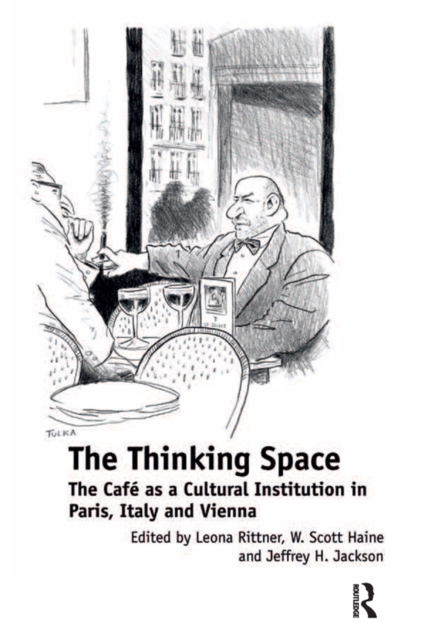
The Thinking Space
The cafe is not only a place to enjoy a cup of coffee, it is also a space - distinct from its urban environment - in which to reflect and take part in intellectual debate. Since the eighteenth century in Europe, intellectuals and artists have gathered in cafes to exchange ideas, inspirations and information that has driven the cultural agenda for Europe and the world. Without the café, would there have been a Karl Marx or a Jean-Paul Sartre? The café as an institutional site has been the subject of renewed interest amongst scholars in the past decade, and its role in the development of art, ideas and culture has been explored in some detail. However, few have investigated the ways in which cafés create a cultural and intellectual space which brings together multiple influences and intellectual practices and shapes the urban settings of which they are a part. This volume presents an international group of scholars who consider cafés as sites of intellectual discourse from across Europe during the long modern period. Drawing on literary theory, history, cultural studies and urban studies, the contributors explore the ways in which cafes have functioned and evolved at crucial moments in the histories of important cities and countries - notably Paris, Vienna and Italy. Choosing these sites allows readers to understand both the local particularities of each café while also seeing the larger cultural connections between these places. By revealing how the café operated as a unique cultural context within the urban setting, this volume demonstrates how space and ideas are connected. As our global society becomes more focused on creativity and mobility the intellectual cafés of past generations can also serve as inspiration for contemporary and future knowledge workers who will expand and develop this tradition of using and thinking in space.
eBook