
Catalogue Search | MBRL


Are you sure you want to remove the book from the shelf?

{{itemTitle}}
13
result(s) for
"Vikings Sources."
Sort by:

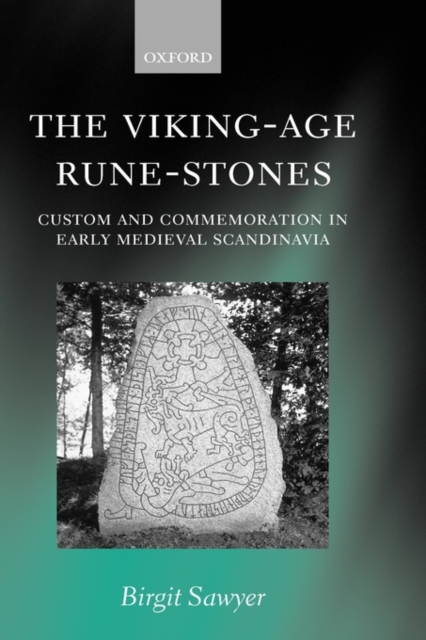
The Viking-Age Rune-Stones
There are over 3000 runic inscriptions on stone made in Scandinavia in the late Viking Age. This book is the first attempt by a historian to study the material as a whole. The analysis reveals significant regional variations that reflect different stages in the process of conversion, and the growth of royal power. Many monuments were declarations of faith or manifestations of status; but virtually all reflect inheritance claims, and cast unexpected light on the prehistory of the inheritance customs found in later Scandinavian law codes. The results of this analysis make a significant contribution to understanding developments in other parts of the Germanic world, as well as Scandinavia. The inclusion of a digest of the data-base on which this book is based will facilitate further study of this rich vein of evidence.
eBook

The Vikings and their age
\"The Vikings and Their Age offers a quick overview of the chronology and major themes of the Viking period. Written in an accessible manner, it also provides a great introduction to some of the most interesting and significant figures in Viking lore, such as Harald Bluetooth, Eirik the Red, Leif Eiriksson, and Gudrid Thorbjarnardottir, a female Viking traveller. Insights and evidence from such diverse disciplines as archaeology, philology, linguistics, and genetics are provided.
Book

Caries prevalence and other dental pathological conditions in Vikings from Varnhem, Sweden
In a late Swedish Viking Age population dating from around 10 th -12 th century AD, the prevalence, distribution and location of dental caries were studied. Tooth wear, other dental pathology and anatomical variations were identified and recorded clinically and radiographically. A total of 3293 teeth were analyzed from 171 individuals with complete and partial dentitions, of which 133 were permanent and 38 deciduous/mixed dentition. The dentitions were studied clinically, using a dental probe under a strong light source, and radiographs were taken for 18 of the individuals to verify and complement the clinical caries registration. Almost half the population, 83 of 171 individuals (49%), had at least one carious lesion. All individuals with deciduous or mixed dentitions were caries-free. The number of teeth affected by caries among adults was 424 (13%) and the surface most susceptible to caries was the root surface. The tooth most commonly affected by caries was the first mandibular molar. Other findings included apical infections, which were detected clinically in 4% of the teeth, and one case of filed front teeth. The findings gave a unique understanding of life and death in this early Christian Viking community and indicated that it was common to suffer from dental caries, tooth loss, infections of dental origin and tooth pain. These Vikings also manipulated their teeth through filing, tooth picking and other occupational behaviors.
Journal Article

Viking sagas as oral histories
In the long dark nights and bitter cold of a northern winter, the Vikings gathered around the fire, with food and drink in hand, to hear tales of great kings and heroes or tales of their ancestors. In the kings' courts the heroic tales were sung by poets called 'skalds', and often referred to the king or his ancestors, while in the long-houses of farmers the head of the family would recite family histories. Since the earliest written works were religious, the sagas, which were secular, were not written down but continued to be recited for 200 years.1 While there was Norse writing (called 'runes') carved on stone, these were short accounts of events, not sagas. Icelandic law was still recited by the Lawspeaker at the Allthing, an annual meeting of chieftains, and judgements were made without reference to written sources.2 Harald Sigurdsson, later known as Hardradi or Ruthless, and Erik the Red and his family were some of the most significant figures in Norwegian and Icelandic history.
Journal Article
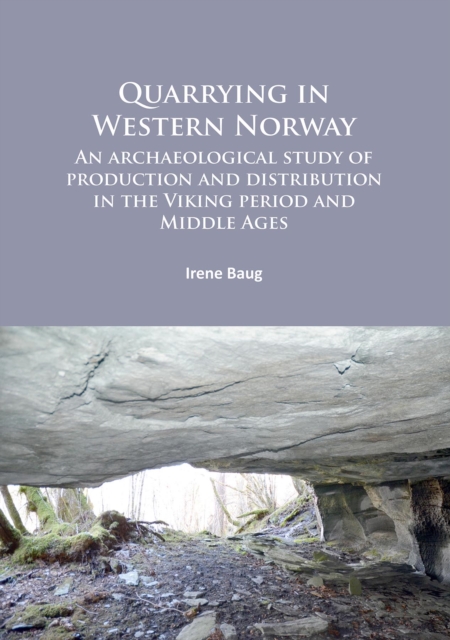
Quarrying in Western Norway
The theme of this study is the large-scale exploitation of different stone products that took place in Norway during the Viking Age and the Middle Ages (c. AD 800–1500). The research is based on analyses of two different quarry landscapes in Western Norway: the quernstone quarries in Hyllestad, Sogn og Fjordane, and the bakestone quarries in Ølve and Hatlestrand, Hordaland. The centre of attention is the production of utility artefacts: quernstones, millstones and bakestones, and more symbolic products such as stone crosses. The production landscapes are also assessed within wider socio-economic perspectives related to organisation, control and landownership. Following the different products, from production in the quarries to their distribution and use in both urban and rural contexts in Northern Europe, questions regarding trade and networks are addressed. The material is also discussed and assessed in wider methodological and theoretical contexts, and an aim is to illuminate the control and right of use related to the quarrying, also to examine the groups of actors behind production as well as distribution and trade.
eBook
The feminist thought of Sarah Grimké
A collection of the essays, documents and letters of Sarah Grimke, who together with her sister Angelina was one of the leading figures in the abolitionist and early feminist movements in the USA. Lerner provides a commentary on the pieces and asserts the importance of Grimke as feminist theorist.
eBook

Representations of English History in Icelandic Kings' Saga: Haraldssaga Hardrada and Knytlinga Saga
The Icelandic sagas are one of the most important historical sources for Viking studies. Although there are many different types of saga, only the kings' sagas and family sagas are generally considered historically accurate to some extent. Unfortunately, because they were composed centuries after the Viking age, even these sagas contain a number of historical inaccuracies. In this research, I will try to discuss this problem by focusing on the Heimskringla version of King Harald's saga and the Knýtlinga saga, and how English history is represented in them. After discussing the nature of the sagas and the problems of the Icelandic sources, I will consider the saga accounts of certain events that occurred in England during the reigns of Harald Hardrada and Cnut the Great. In order to show the possible mistakes in these sagas, primary sources from outside of Scandinavia and Iceland, notably the Anglo-Saxon Chronicle, as well as modern studies, will be used to assess these possible errors in the Heimskringla and Knýtlinga saga.
Dissertation

A calcareous foraminiferal faunule from the upper Albian Viking Formation of the Giroux Lake and Kaybob North fields, northwestern Alberta; implications for regional biostratigraphic correlation
Arenaceous foraminifera from the upper Albian Viking Formation and associated strata are recorded and charted from five wells in the northwestern portion of the West Alberta Basin, viz. Gulf Giroux Lake 04-11-66-21W5, Candel Arco Giroux Lake 00/10-05-65-20W5, Pan Am B-1 Giroux 02/10-05-65-20W5, Calstan B.A. Kaybob W 02-28-63-20W5, and Chevron Fox Creek 10-15-62-19W5. An anomalous calcareous foraminiferal component in three Gulf Giroux Lake samples is illustrated. Ichnological, sedimentological, and stratigraphic studies of the Viking Formation strata, based on 26 cored intervals, indicate largely transgressive, shallow-marine deposition in the area. The microfaunal and ichnological assemblages indicate a general increase in salinity toward normal marine conditions. Facies analysis demonstrates the stacking of two shoreface parasequences, truncated by wave-ravinement surfaces. The calcareous foraminifera in the Viking Formation are associated with abundant and diverse arenaceous foraminifera, with arctic affinities that we have used for determining the microfaunal zone positions. Biostratigraphic correlation has been made with a calcareous faunule in the lower part of the Hasler Formation, within the expanded Fort St. John Group, found in the southern portion of the Keg River subbasin, Hudson Hope region, northeastern British Columbia. This helps to resolve the problem of correlating the stratigraphically equivalent Paddy Member at the type section near the town of Peace River, Alberta.
Journal Article

Identifying the site of Raknarr's tomb in the Barthar Saga
Ruins of buildings and tombs attributed to the Vikings have been found on Pamiok Island, which is connected to Northern Canada by a reef. The island may be the site of a Viking tomb mentioned in the Barthar Saga.
Journal Article