
Catalogue Search | MBRL


Are you sure you want to remove the book from the shelf?

{{itemTitle}}
5,579
result(s) for
"Violence Case studies."
Sort by:


Honour, Violence and Emotions in History
Honour, Violence and Emotions in History is the first book to draw on emerging cross-disciplinary scholarship on the study of emotions to analyse the history of honour and violence across a broad range of cultures and regions. Written by leading cultural and social historians from around the world, the book considers how emotions - particularly shame, anger, disgust, jealousy, despair and fear - have been provoked and expressed through culturally-embedded and historically specific understandings of honour. The collection explores a range of contexts, from 17th-century China to 18th-century South Africa and 20th-century Europe, offering a broad and wide-ranging analysis of the interrelationships between honour, violence and emotions in history. This ground-breaking book will be of interest to all researchers studying the relationship between violence and the emotions.
eBook


Conflict, Crime, and the State in Postcommunist Eurasia
In the years after the collapse of the Soviet Union and its zone of influence, few insurgent groups had the resources necessary to confront regular armies. At the same time, state-sponsored financial support for insurgencies dramatically decreased. The pressing need to raise funds for war and the weakness of law enforcement in conflict zones create fertile conditions for organized crime; indeed, there is a mounting body of evidence correlating armed conflict and illicit economy, though the nature of this link and its impact on regional politics has not been well understood.Conflict, Crime, and the State in Postcommunist Eurasiaexplores the relationship between ideologically motivated insurgents, profit-motivated crime, and state institutions in eight conflict zones. Through detailed case studies, the contributors demonstrate how the operations and incentives of insurgents may emerge and shift over time: for some armed groups, crime can become an end in itself beyond a financial means, but not all armed groups equally adapt to illicit commerce. They also show how the criminalization of state institutions is a lingering concerns even after armed conflicts end.Conflict, Crime, and the State in Postcommunist Eurasiaplaces the case studies along a continuum of political and criminal behavior, examining the factors that motivate insurgents to seek out criminal alliance, how this connection affects the dynamics of conflict, and what risks remain during postconflict transition. These findings will provide a better understanding of the types of challenges likely to confront peacekeeping and statebuilding endeavors in other parts of the world.Contributors:Jana Arsovska, Svante Cornell, Johan Engvall, Michael Jonsson, Alexandru Molcean, Niklas Nilsson, Murad Batal al-Shishani, Natalie Verständig.
eBook


Battle Cries
Contrary to the stereotype of the strong Black woman, African American women are more plagued by domestic violence than any other racial group in the United States. In fact, African American women experience intimate partner violence at a rate 35% higher than white women and about two and a half times more than women of other races and ethnicities. This common portrayal can hinder black women seeking help and support simply because those on the outside don't think help is needed. Yet, as Hillary Potter argues in Battle Cries: Black Women and Intimate Partner Abuse, this stereotype often helps these African American women to resist and to verbally and physically retaliate against their abusers. Thanks to this generalization, Potter observes, black women are less inclined to label themselves as \"victims\" and more inclined to fight back.Battle Cries is an eye-opening examination of African American women's experiences with intimate partner abuse, the methods used to contend with abusive mates, and the immediate and enduring consequences resulting from the maltreatment. Based on intensive interviews with 40 African American women abused by their male partners, Potter's analysis takes into account variations in their experiences based on socioeconomic class, education level, and age, and discusses the common abuses and perceptions they share. Combining her remarkable findings with black feminist thought and critical race theory, Potter offers a unique and significant window through which we can better understand this understudied though rampant social problem.
eBook


Punishing schools
In a society increasingly dominated by zero-tolerance thinking, Punishing Schools argues that our educational system has become both the subject of legislative punishment and an instrument for the punishment of children. William Lyons and Julie Drew analyze the connections between state sanctions against our schools (the diversion of funding to charter schools, imposition of unfunded mandates, and enforcement of dubious forms of teacher accountability) and the schools' own infliction of punitive measures on their students—a vicious cycle that creates fear and encourages the development of passive and dependent citizens.
eBook

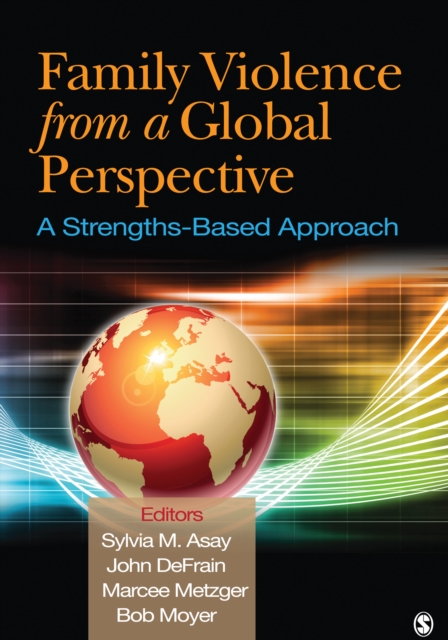
Family violence from a global perspective : a strengths-based approach
Drawing on the expertise of authors from 21 countries to tell the story of domestic violence in their country, this book lends academic, professional, and victims′ expertise to determine these strengths and analyze how they can translate into greater safety for victims and increased accountability for perpetrators, including improved policy formation.
eBook