
Catalogue Search | MBRL


Are you sure you want to remove the book from the shelf?

{{itemTitle}}
343
result(s) for
"Violence Press coverage."
Sort by:


Representing Mass Violence
A free ebook version of this title is available through Luminos, University of California Press’s new open access publishing program for monographs. Visit www.luminosoa.org to learn more. How do interventions by the UN Security Council and the International Criminal Court influence representations of mass violence? What images arise instead from the humanitarianism and diplomacy fields? How are these competing perspectives communicated to the public via mass media? Zooming in on the case of Darfur, Joachim J. Savelsberg analyzes more than three thousand news reports and opinion pieces and interviews leading newspaper correspondents, NGO experts, and foreign ministry officials from eight countries to show the dramatic differences in the framing of mass violence around the world and across social fields. Representing Mass Violence contributes to our understanding of how the world acknowledges and responds to violence in the Global South.
eBook


Citizens’ Media against Armed Conflict
For two years, Clemencia Rodríguez did fieldwork in regions of Colombia where leftist guerillas, right-wing paramilitary groups, the army, and drug traffickers made their presence felt in the lives of unarmed civilians. Here, Rodríguez tells the story of how these civilians use community radio, television, video, digital photography, and the Internet to shield their communities from armed violence’s negative impacts.
eBook

A Global Standard for Reporting Conflict
A Global Standard for Reporting Conflict constructs an argument from first principles to identify what constitutes good journalism. It explores and synthesises key concepts from political and communication theory to delineate the role of journalism in public spheres. And it shows how these concepts relate to ideas from peace research, in the form of Peace Journalism. Thinkers whose contributions are examined along the way include Michel Foucault, Johan Galtung, John Paul Lederach, Edward Herman and Noam Chomsky, Manuel Castells and Jurgen Habermas. The book argues for a critical realist approach, considering critiques of 'correspondence' theories of representation to propose an innovative conceptualisation of journalistic epistemology in which 'social truths' can be identified as the basis for the journalistic remit of factual reporting. If the world cannot be accessed as it is, then it can be assembled as agreed - so long as consensus on important meanings is kept under constant review. These propositions are tested by extensive fieldwork in four countries: Australia, the Philippines, South Africa and Mexico.
eBook

Representing mass violence : conflicting responses to human rights violations in Darfur
\"How do UN Security Council and International Criminal Court interventions, both part of the Justice Cascade, color representations of mass violence? What images of suffering and of responsible actors arise instead from the humanitarianism and diplomacy fields? How are these competing perspectives communicated to the public via mass media? Zooming in on the case of Darfur, Joachim J. Savelsberg analyzes over three thousand news reports and opinion pieces and interviews leading newspaper correspondents, NGO experts, and foreign ministry officials from eight countries to show the dramatic differences in the framing of mass violence around the world and across social fields. Representing Mass Violence contributes to our understanding of how the world acknowledges and responds to violence in the Global South\"--Provided by publisher.
Book
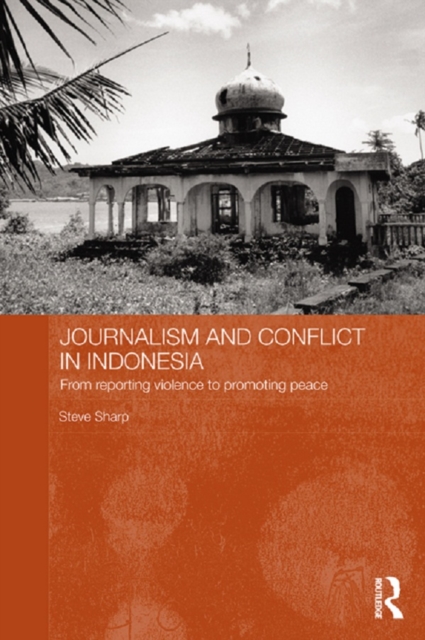
Journalism and Conflict in Indonesia
This book examines, through the case study of Indonesia over recent decades, how the reporting of violence can drive the escalation of violence, and how journalists can alter their reporting practices in order to have the opposite effect and promote peace. It discusses the nature of press freedom in Indonesia from 1966 onwards, considers the relationship between the press and politicians, and explores journalists' working methods. It goes on to outline in detail the communal wars in eastern Indonesia in the period 1999-2000, arguing that communication as much as physical preparations for violence were key to bringing about the wars, with journalists' rigid professional routines and newswriting conventions causing them to reproduce and enlarge the battle cries of those at war. The book concludes by advocating a \"development communication\" approach to journalism in transitional settings, in order to help journalists to counter the disintegrative tendencies of failing states and the communal strife that can result.
eBook

Tulsa, 1921 : reporting a massacre
\"Examines the events and players contributing to, participating in, and responding to Tulsa's 1921 race riot and massacre and the social, political and historical context in which it occurred\"-- Provided by publisher.
Book

Discourses of denial : mediations of race, gender, and violence
With examples from the lives of immigrant girls and women of colour, this book uncovers how racism, sexism, and violence interweave deep within the foundations of our society.
eBook