
Catalogue Search | MBRL


Are you sure you want to remove the book from the shelf?

{{itemTitle}}
1,002
result(s) for
"Virtues in literature"
Sort by:

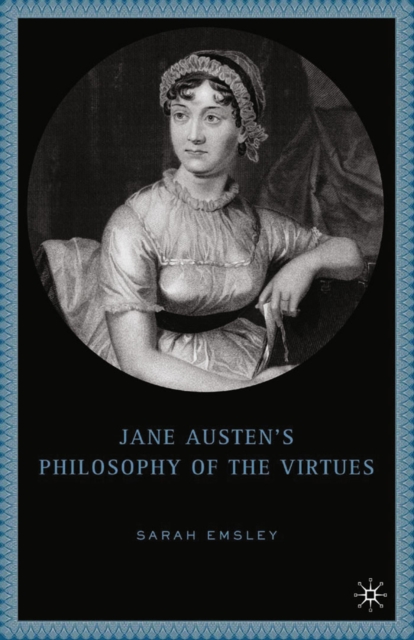
Jane Austen's philosophy of the virtues
This book examines Austen's novels in relation to her philosophical and religious context, demonstrating that the combination of the classical and theological traditions of the virtues is central to her work. Austen's heroines learn to confront the fundamental ethical question of how to live their lives. Instead of defining virtue only in the narrow sense of female sexual virtue, Austen opens up questions about a plurality of virtues. In fresh readings of the six completed novels, plus Lady Susan, Emsley shows how Austen's complex imaginative representations of the tensions among the virtues engage with and expand on classical and Christian ethical thought.
eBook


Literature, Rival Conceptions of Virtue, and Moral Education
Two key claims in the work of Alasdair MacIntyre are identified for the purposes of this paper. The first, that human virtues are capacities required to sustain social practices defined in terms of rival moral traditions, is rejected in favor of a neo-Aristotelian conception of virtues as needed for general (cross-cultural) human flourishing. However, while the second claim (also found in Aristotle)--that the literary products and inheritances of human cultures provide the best possible insight into human moral character and virtue--is fully endorsed, it is also recognized that such literature inevitably shows moral life and experience to be a site of tension and conflict between moral imperatives and virtues. Notwithstanding this, it is argued that, since initiation into rational appreciation of such tension and conflict is the very stuff of moral education, such literature should be regarded as significant moral educational resource.
Journal Article

Exemplary epic : Silius Italicus' Punica
The force of example was a distinctive determiner of Roman identity. In this study of the representation of certain central characters in Silius Italicus' 'Punica', Ben Tipping considers the virtues & vices they embody, their status as exemplars, & the process by which Silius as epic poet heroizes, demonizes, & establishes models.
Book

Ethics and Children's Literature
Exploring the ethical questions posed by, in, and about children's literature, this collection examines the way texts intended for children raise questions of value, depict the moral development of their characters, and call into attention shared moral presuppositions. The essays in Part I look at various past attempts at conveying moral messages to children and interrogate their underlying assumptions. What visions of childhood were conveyed by explicit attempts to cultivate specific virtues in children? What unstated cultural assumptions were expressed by growing resistance to didacticism? How should we prepare children to respond to racism in their books and in their society?
Part II takes up the ethical orientations of various classic and contemporary texts, including 'prosaic ethics' in the Hundred Acre Wood, moral discernment in Narnia, ethical recognition in the distant worlds traversed by L'Engle, and virtuous transgression in recent Anglo-American children's literature and in the emerging children's literature of 1960s Taiwan. Part III's essays engage in ethical criticism of arguably problematic messages about our relationship to nonhuman animals, about war, and about prejudice. The final section considers how we respond to children's literature with ethically focused essays exploring a range of ways in which child readers and adult authorities react to children's literature. Even as children's literature has evolved in opposition to its origins in didactic Sunday school tracts and moralizing fables, authors, parents, librarians, and scholars remain sensitive to the values conveyed to children through the texts they choose to share with them.
eBook

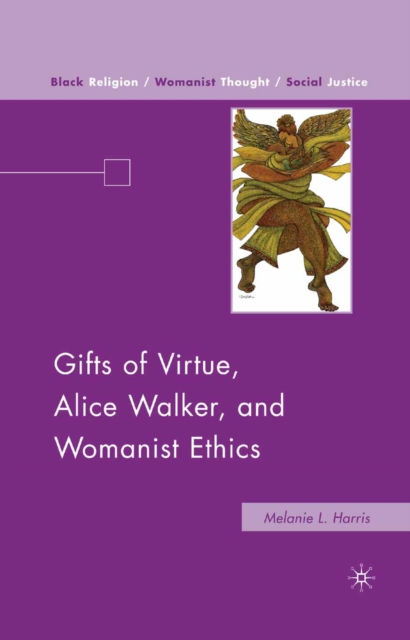
Gifts of virtue, Alice Walker, and womanist ethics
Melanie L.Harris dives into the spirituality and life work of Alice Walker, literary genius and poet.Through the lens of Womanist ethics, Harris takes an inside look into the virtues and values that can be lifted from a study of Walker s non-fiction work.
eBook

100 ways to make the world better!
\" Who says kids can't change the world? If they've got the will, Nat Geo Kids can guide the way, with doable activities, hands-on projects, advice from National Geographic explorers, interviews with experts, weird-but-true facts, and more inspiration. Actions can be as easy as carrying a resuable water bottle to avoid wasting plastic or planting a tree to help the ecosystem. Ideas are presented as simple concepts with engaging graphics and photographs, and many are followed by detailed supporting information. Kids get a sense of their own power to make a difference and an understanding of what actions contribute to postive outcomes. Sometimes all it takes is starting with something simple, and before you know it, together we've reshaped our planet for the better\"-- Provided by publisher.
Book

Thoreau's Living Ethics
Thoreau's Living Ethics is the first full, rigorous account of Henry Thoreau's ethical philosophy. Focused on Walden but ranging widely across his writings, the study situates Thoreau within a long tradition of ethical thinking in the West, from the ancients to the Romantics and on to the present day. Philip Cafaro shows Thoreau grappling with important ethical questions that agitated his own society and discusses his value for those seeking to understand contemporary ethical issues. Cafaro's particular interest is in Thoreau's treatment of virtue ethics: the branch of ethics centered on personal and social flourishing. Ranging across the central elements of Thoreau's philosophy-life, virtue, economy, solitude and society, nature, and politics-Cafaro shows Thoreau developing a comprehensive virtue ethics, less based in ancient philosophy than many recent efforts and more grounded in modern life and experience. He presents Thoreau's evolutionary, experimental ethics as superior to the more static foundational efforts of current virtue ethicists. Another main focus is Thoreau's environmental ethics. The book shows Thoreau not only anticipating recent arguments for wild nature's intrinsic value, but also demonstrating how a personal connection to nature furthers self-development, moral character, knowledge, and creativity. Thoreau's life and writings, argues Cafaro, present a positive, life-affirming environmental ethics, combining respect and restraint with an appreciation for human possibilities for flourishing within nature.
eBook