
Catalogue Search | MBRL


Are you sure you want to remove the book from the shelf?

{{itemTitle}}
68
result(s) for
"Visigoths"
Sort by:
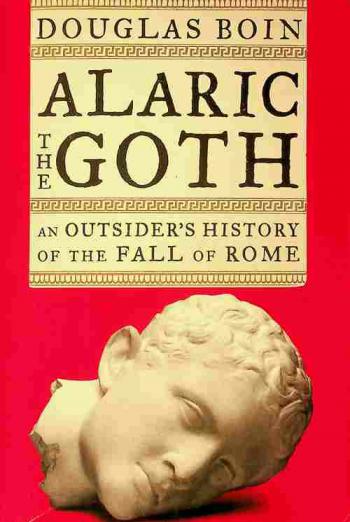
Alaric the Goth : an outsider's history of the fall of Rome
\"Did \"barbarians\" really cause the catastrophic collapse of civilization? Boin is the first to give an historically sound account from the \"barbarian\" perspective, through the life of Alaric the Goth. On August 24, 410 A.D., the Senate and the People of Rome awoke to a seismic shock. Intruders, led by a disaffected forty-year-old immigrant, known only as Alaric, had stormed the city. There were kidnappings, robbery, and acts of arson. The effects were long-lasting. Within two generations, Rome's world fell apart. A city predicted to rule an empire without end, in the words of its famous Latin poet Virgil, was governed by a savage band of foreigners, called Goths. Alaric the Goth offers a deeply researched look at the end of the Roman Empire but from a surprising point-of-view. Offering the first full-length biography of Alaric, a talented and frustrated immigrant living in a time of pervasive bigotry, state-supported Christian violence, and irrational xenophobia, it breaks out of decades of tired, traditional approaches to the period, most of which overidentify with the Roman people. And it reveals the lasting contributions Goths made to legal history, to the values of religious toleration, and to modern ideas of citizenship. By moving this man from the borders to the center of Rome's story, it asks readers to think deeply and differently about the lives of marginalized people too often invisible in our history books.\"-- Provided by publisher.

Rome and Byzantium in the Visigothic Kingdom
This volume interrogates the assumption that Visigothic practices and institutions were mere imitations of the Byzantine empire. Contributors rethink these practices not as uncritical and derivative adoptions of Byzantine customs, but as dynamic processes in dialogue with not only the Byzantine empire but also with the contemporary Iberian context, as well as the Roman past. The goal of the volume is to approach Visigothic customs not as an uncritical adoption and imitatio of contemporary Roman models (an 'acculturation' model), but as unique interpretations of a common pool of symbols, practices, and institutions that formed the legacy of Rome. The contributors argue that it is necessary to reconsider the idea of imitatio imperii as a process that involved specific actors taking strategic decisions in historically contingent circumstances.
eBook


History and Chronicles in Late Medieval Iberia
This book offers a comprehensive analysis of the construction of the late medieval chronicle in Iberia by means of an examination of eighteen different late medieval accounts of the reign of the Visigothic king Wamba.
eBook

Etnicidad vs. aculturacion: las necrpolis castellanas de los siglos V-VI d.C. y el asentamiento visigodo en la Peninsula Iberica : una mirada desde la meseta sur
The Visigoth settlement in the Iberian Peninsula and its relationship with the archaeological record of the 5th-6th centuries AD continues to be one of the most controversial issues in Spanish archaeology. The controversy relates to politics as much as it relates to archaeological research with two points remaining particularly controversial: the alleged use of the Visigoth past by the Francoist intelligentsia as an ideological affirmation of the regime and the contribution of archaeologist Julio Martìnez Santa-Olalla in supporting and enabling this re-interpretation of Visigothic archaeology. The purely archaeological aspect of the controversy relates to an archaeological interpretation, stemming from the ranks of the so-called New Archeology, of the Castilian necropoleis containing grave goods of Pontic-Danubian type. This interpretation places special emphasis on social and cultural phenomena above the ethnic criteria defended by the Vienna School. This volume approaches the ideological question that underlies these controversies, as well as their repercussions in the direction adopted by later archaeological investigations in relation to the history of Spain. The author attempts to deconstruct the work of Martìnez Santa-Olalla and places it in the context of the scientific production of his time. At the same time, it relativizes the role played by the Visigoth period in the Francoist ideological construction. Once the discussion is framed in these terms, the author dedicates his study to a refutation of the cultural interpretation of the phenomenon of the Visigothic necropoleis of the Castilian plateau based on the archaeological data and by comparing this data with literary sources. The study also addresses two other historical problems that could be related to the Gothic settlement in the Castilian plateau: the creation of the bishopric of Segovia and the flourishing of the city of Toledo. | El asentamiento visigodo en la Penìnsula Ibérica y su relación con el registro arqueológico de los siglos V-VI d.C. continúa siendo en la actualidad una de las cuestiones más controvertidas de la arqueologìa española. Gran parte de esa controversia tiene que ver con aspectos que trascienden a la propia investigación arqueológica y nos sitúan en el plano de la polìtica. Asì, a la hora de abordar el problema hay dos puntos que han resultado especialmente polémicos: la presunta utilización del pasado visigodo por parte de la intelectualidad franquista como afirmación ideológica del régimen y la contribución del arqueólogo burgalés Julio Martìnez Santa-Olalla en la fijación del esquema de arqueologìa visigoda. Por otro lado, el aspecto puramente arqueológico de la controversia tiene que ver con la interpretación que desde las filas de la denominada New Archaeology se viene realizando de las necrópolis castellanas con ajuares de tipo póntico-danubiano. Dicha interpretación hace especial hincapié en fenómenos sociales y culturales por encima de los criterios étnicos defendidos por la Escuela de Viena. El presente estudio aborda de forma lúcida la cuestión ideológica que subyace detrás de la polémica, asì como las repercusiones que ha tenido en la posterior dirección adoptada por la investigación arqueológica en relación con la propia historia de España. En este sentido, el autor realiza un ejercicio de deconstrucción de la figura de Martìnez Santa-Olalla y lo sitúa en el contexto de la producción cientìfica de su época. Al mismo tiempo, relativiza el papel desempeñado por el periodo visigodo en la construcción ideológica franquista. Una vez situada la discusión en estos términos, el autor dedica su estudio a una refutación de la interpretación en clave cultural del fenómeno de las necrópolis visigodas de la meseta castellana desde los propios datos arqueológicos y a partir del cotejo de estos datos con los testimonios que proporcionan las fuentes literarias. Además, el presente estudio aborda también otros dos problemas históricos que podrìan estar relacionados con el asentamiento godo en la meseta castellana: la creación de la sede episcopal segoviana y el auge de la ciudad de Toledo.
eBook
Lo gótico y neogótico
En el presente trabajo proponemos llevar al lector a una concepción clara del concepto de Historia, no sólo en nuestros días sino cómo habría sido entendida durante el periodo medieval. Determinar la evolución de la idea de Historia desde griegos y romanos y las características principales de la mentalidad histórica medieval esperamos que sea de ayuda para comprender mejor la crónica de Rodrigo Jiménez de Rada como intelectual del siglo XIII. Haremos especial hincapié en el estudio de ciertas figuras cristianas cuya cosmovisión pensamos que tendría un impacto muy importante en la mentalidad de nuestro cronista, innovador probablemente en muchos sentidos, pero deudor en otros tantos de la tradición historiográfica anterior.
Por otro lado, abordaremos la formación de identidad goda no sólo desde su punto de vista (a través de su conciencia tribal, de su recorrido migratorio, de sus propias acciones o de sus comportamientos a lo largo del tiempo) sino también desde el punto de vista romano, que por diversas razones pretendieron dar una imagen concreta de los godos acorde o no a sus intereses. Esto, por tanto, nos llevará a indagar en las relaciones de los godos con el resto de pueblos para comprender mejor la visión de estos con respecto a los primeros. Al mismo tiempo, nos conducirá a reflexionar sobre qué tipos de normas o criterios emplearon los propios godos para construir su identidad. [Texto de la editorial]
eBook

Tres Usurpadores Godos
This book presents a study of three famous usurpations of the Visigothic period: the uprising of Prince Hermenegild (579-585); the rebellion of Duke Argimundo at the beginning of the reign of Recaredo; and Duke Theudemirus and the role he played in the transmission of power between Visigoths and Arabs after the fall of the kingdom of Toledo.
eBook


Etnicidad vs. Aculturación
A study of the political and archaeological controversies surrounding the Castilian Necropoleis of the V-VI Centuries AD and the Visigoth Settlement in the Iberian Peninsula. The author attempts to deconstruct the various controversies and presents fresh analysis based on the archaeological data and literary evidence.
eBook