
Catalogue Search | MBRL


Are you sure you want to remove the book from the shelf?

{{itemTitle}}
163
result(s) for
"Visual communication Political aspects."
Sort by:

The politics of the superficial : visual rhetoric and the protocol of display
\"The Politics of the Superficial argues that the increasing volume of visually communicative surfaces in public life contributes to a very particular form of public imagination and political activity\"-- Provided by publisher.
Book

Images from Paradise
Drawing upon the disciplines of politics, anthropology, psychoanalysis, aesthetics and cinema studies, Salgó presents a new way of looking at the \"art of European unification.\" The official visual narratives of the European Union constitute the main object of inquiry – the iconography of the new series of euro banknotes and the videos through which the supranational elite seek to generate \"collective effervescence,\" allow for a European carnival to take place, and prompt citizens to pledge allegiance to the sacred dogma of the \"ever closer union,\" thereby strengthening the mythical sources of the organization's legitimacy. The author seeks to illustrate how and why the federalist utopia turned into a political soteriology after the outbreak of the 2008 crisis.
eBook


German Colonialism, Visual Culture, and Modern Memory
There is no overarching master narrative in understanding the history of German colonialism, and over the past decade, the study of Germany’s colonial past has experienced a dramatic transformation in its scope of inquiry. Influenced by new theoretical and methodological approaches to the study of race, nationalism, and globalization, these new studies initiate a process of reevaluating and redefining the parameters within which German Colonialism is understood. The role of visual materials, in particular, is ideal for exploring the porousness of disciplinary boundaries, though visual culture studies pertaining to German history – and especially German colonialism – have previously been almost completely neglected. Investigating visual communication and mass culture, print culture and suggestive racial politics, racial aesthetics, racial politics and early German film, racial continuity and German film, and photography, German Colonialism, Visual Culture, and Modern Memory offers compelling evidence of a German society between 1884 and 1919 that produced vibrant and heterogeneous – and at times contradictory – cultures of colonialism.
This collection of new essays illustrates the dramatic changes and vast array of perspectives that have recently emerged in the study of German colonialism. In documenting the latest cutting-edge research of German colonial history, the contributors to this volume prove wrong the persistent assumptions that the creation of Germany’s colonial empire did not have any lasting impact on German political and cultural life. Their essays document how colonialism in its various forms was entwined with the inner workings of modern German life and society, especially through the cultural and technical innovations of its time. In contrast to existing research, these studies show that colonial Germany played a significant role in shaping German perceptions of racial difference, influenced German support for World War I, and facilitated the construction of German nationalism. German Colonialism, Visual Culture, and Modern Memory uniquely demonstrates that the visual culture of colonialism is closely linked to the fascination with new modes of seeing and the enigma of visual experience that have become trademarks of modernity.
Acknowledgements. Introduction: Picturing Race: Visuality and German Colonialism. Volker Langbehn. German Colonialism 1884–1919. 1. Advertising and the Optics of Colonial Power at the fin de siècle. David Ciarlo. 2. \"... will try to send you the best views from here\" – Postcards from the Colonial War in Namibia (1904–1908). Felix Axster. 3. Harmless \"Kolonialbiedermeier\"? Colonial and Exotic Trading Cards. Joachim Zeller. 4. Cakewalking the Anarchy of Empire around 1900. Astrid Kusser. 5. Satire Magazines and Racial Politics. Volker Langbehn. 6. Demystifying Colonial Settlement: Building Handbooks for Settlers, 1904–1930. Itohan Osayimwese. 7. Patriotism, Spectacle and Reverie: Colonialism in Early Cinema. Wolfgang Fuhrmann. German Postcolonialism 1919–Present. 8. Persuasive Maps and a Suggestive Novel – Hans Grimm’s Volk ohne Raum and German Cartography in Southwest Africa. Oliver Simons. 9. Colonial Disgust: The Colonial Master’s Emotion of Superiority. Thomas Schwarz. 10. Weimar Revisions of Germany’s Colonial Past: The Photomontages of Hannah Höch and László Moholy-Nagy. Brett M. Van Hoesen. 11. The \"Colonial Idea\" in Weimar Cinema. Christian Rogowski. 12. \"The Black Jew\": An After-Image of German Colonialism. Birgit Haehnel. 13. Reenacting Colonialism: Germany and its Former Colonies in Recent TV Productions. Wolfgang Struck. 14. Postcolonial Amnesia? Taboo Memories and Kanaks with Cameras. Deniz Göktürk. Contributors. References. Index.
‘[A] comprehensive collection of studies that examine materials from new and creative angles. The inclusion of essays on both issues of actual German colonialism, as well as its continuation in different shapes in postcolonial times, convincingly demonstrates that continuous engagement with its ideological legacy is still of relevance today. … What distinguishes most contributions is the interdisciplinary methods of inquiry their authors use to provide new insights into German colonialism and its impact.’ – German Studies Review
Volker Langbehn (Ph.D. University of Minnesota, Minneapolis, 1998) is Associate Professor of German at San Francisco State University, California. He is the author of Arno Schmidt's Zettels Traum: An Analysis (2003) and has published articles on Friedrich Nietzsche, Christa Wolf, Arno Schmidt, Fritz von Unruh, Novalis and Gert Heidenreich, and the visual representation of German Colonialism. He is the co-editor with Dr. Mohammad Salama of Colonial (Dis)-Continuities: Race, Holocaust, and Postwar Germany (2010). His current book project tentatively titled The Visual Representation of Cultural Identity in German Mass Culture Around 1900 focuses on visual representations of Africa in German mass culture. It is a study of how racism can develop in a modern society through subtle, everyday means, and it explores the negative consequences of race thinking upon the long-term development of German identity. He examines how images of Africa and Africans contained in four types of media – political caricatures in satirical magazines, picture postcards, black-and-white photographs, and illustrated children’s literature – helped foster a racialized German national identity.
eBook

Visual peace : images, spectatorship, and the politics of violence
\"This unique study offers a political analysis of the relationship between visual representations and the politics of violence both nationally and internationally. It emphasizes the spectator and his or her own involvement in, responsibility for, and potential responses to the conditions depicted in given images. Through a series of case studies which engage with visual representations of the politics of violence, such as the aftermath of the 1994 genocide in Rwanda and the visualization of colonial memory, it analyzes the relationship between visibility and political agency and elaborates the extent to which people who have normally been subjects of the image production of others can become agents of their own image. This book's comprehensive analysis of different genres including photography, graphic novels, comics and paintings introduces a new research agenda for the emerging field of visual peace. \"-- Provided by publisher.
Book

Revolts and Political Violence in Early Modern Imagery
The first in-depth analysis of how early modern people produced and consumed images of revolts and political violence, drawing on evidence from Russia, China, Hungary, Portugal, Germany, North America and other regions.
eBook

Politics personified : portraiture, caricature and visual culture in Britain, c. 1830-80
Investigates how reformers, conservatives, and radicals used portraiture to connect with supporters and build identity in Victorian politics.
Book
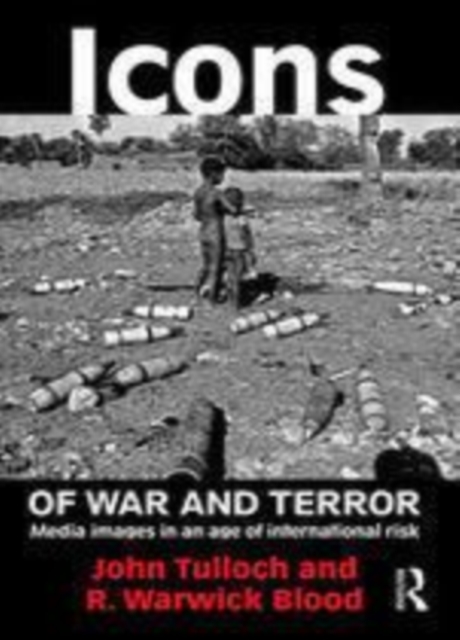
Icons of War and Terror
This book explores the ideas of key thinkers and media practitioners who have examined images and icons of war and terror.
Icons of War and Terror explores theories of iconic images of war and terror, not as received pieties but as challenging uncertainties; in doing so, it engages with both critical discourse and conventional image-making. The authors draw on these theories to re-investigate the media/global context of some of the most iconic representations of war and terror in the international 'risk society'. Among these photojournalistic images are:
Nick Ut's Pulitzer Prize winning photograph of a naked girl, Kim Phuc, running burned from a napalm attack in Vietnam in June 1972;
a quintessential 'ethnic cleansing' image of massacred Kosovar Albanian villagers at Racak on January 15, 1999, which finally propelled a hesitant Western alliance into the first of the 'new humanitarian wars';
Luis Simco's photograph of marine James Blake Miller, 'the Marlboro Man', at Fallujah, Iraq, 2004;
the iconic toppling of the World Trade Centre towers in New York by planes on September 11, 2001; and the 'Falling Man' icon - one of the most controversial images of 9/11;
the image of one of the authors of this book, as close-up victim of the 7/7 terrorist attack on London, which the media quickly labelled iconic.
This book will be of great interest to students of media and war, sociology, communications studies, cultural studies, terrorism studies and security studies in general.
eBook

The semiotics of Che Guevara : affective gateways
\"Alberto Korda's famous photograph of Che Guevara titled the 'Guerrillero Heroico' has been reproduced, modified and remixed countless times since it was taken on March 5, 1960, in Havana, Cuba. This book looks again at this well-known mass-produced image to explore how an image can take on cultural force in diverse parts of the globe and legitimate varying positions and mass action in unexpected global political contexts. Analytically, the book develops a comparative analysis of how images become attached to a range of meanings that are absolutely inseparable from their contexts of use. Addressing the need for a fluid and responsive approach to the study of visual meaning-making, this book relies on multiple methodologies such as semiotics, research-creation, multimodal discourse analysis, ethnography and phenomenology and shows how each method has something to offer toward the understanding of the social and cultural work of images in our globally oriented cultures\"-- Provided by publisher.
BOOK
Emperors and Emperorship in Late Antiquity
In this volume, nine contributions deal with the ways in which imperial power was exercised in the fourth century AD, paying particular attention to how it was articulated and manipulated by means of literary strategies and iconographic programmes.
eBook