
Catalogue Search | MBRL


Are you sure you want to remove the book from the shelf?

{{itemTitle}}
4,025
result(s) for
"Visual communication Research."
Sort by:

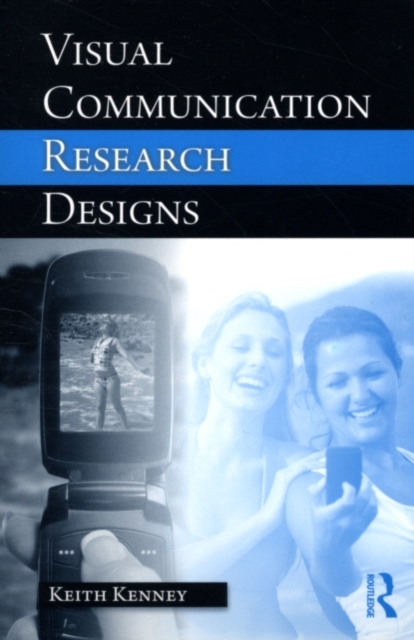
Visual Communication Research Designs
Visual Communication Research Designs provides a step-by-step guide for designing research involving visuals relevant to communications media. This volume explains the process from conceptualization to research questions, instrumentation, analysis, and reliability and validity checks. It also addresses the lack of sufficient methods to answer theoretical questions attending visual communication. This resource has been developed in response to the circumstance in which, in many cases, the methodologies used for verbal and textual communications are inappropriate or ineffective when applied or adapted for the study of visual communications. Additionally, research articles from ethnography, action research, rhetoric, semiotics, psychology, cultural studies, and critical theory often do not use examples appropriate to visual communication readers. To address these issues, this book explains in clear and straightforward language key research designs, including new methodologies, that are appropriate for scholars and students conducting visual communication research.
Organized into three parts -- production, analysis, and effects of visuals – this research text provides guidance in using, interpreting and measuring the effects of visual images.
It addresses such topics as:
producing photographs and video that can be used as research data;
interpreting images that already exist;
measuring the effects of visuals and to understand their use by different groups.
Ethical issues are included, as well as a discussion of the advantages and limitations of each method. \"War stories\" are provided by experienced researchers, who discuss a particular research project and explain pitfalls to avoid, as well as what to do when problems occur.
The primary audiences are scholars, researchers, and students conducting research on motion pictures, video, television, photographs, illustrations, graphics, typography, political cartoons, comic books, animation, and other media with a visual component. Individuals will use this text whenever they need to conduct research that involves visuals in the media. The book will be a required text for advanced courses in visual culture, seminars on visual communication research, and other research methods courses integrating a visual component.
Keith Kenney (Ph.D. Michigan State University) is an associate professor in the School of Journalism and Mass Communications at the University of South Carolina. He is the founding editor of Visual Communication Quarterly , and he served as an editor of the Handbook of Visual Communication . He continues to shoot documentary-style photographs and videos.
eBook

Visual methodologies and digital tools for researching with young children : transforming visuality
This book makes an original contribution to researching child-community development so that those with specific interests in early childhood education have new theoretical tools to guide their research practices. The book explicitly theorises the use of digital visual tools from a cultural-historical perspective. It also draws upon a range of post-structuralist concepts for moving research and scholarship forward. Examples of visual technologies from research in different cultural communities are foregrounded. In particular this book introduces contemporary methodologies for researching child and community development with a focus on visual methodology so the dynamics of development can be captured over time and analysed historically, culturally, socially, ecologically and psychologically through a range of iterative techniques. Visual technology was not freely available in Vygotsky's time for example, and therefore potentially represents an extension of his genetic experimental approach to researching child development. The book presents a range of methodological arguments about research into child and community development through which new conceptions for research centred on young children have been created. The authors of the chapters also discuss why a more holistic, dynamic and ethical view of research is needed for generating new knowledge about child development in a range of cultural contexts.
BOOK

Terms of debate: Consensus definitions to guide the scientific discourse on visual distraction
Hypothesis-driven research rests on clearly articulated scientific theories. The building blocks for communicating these theories are scientific terms. Obviously, communication – and thus, scientific progress – is hampered if the meaning of these terms varies idiosyncratically across (sub)fields and even across individual researchers within the same subfield. We have formed an international group of experts representing various theoretical stances with the goal to homogenize the use of the terms that are most relevant to fundamental research on
visual distraction
in visual search. Our discussions revealed striking heterogeneity and we had to invest much time and effort to increase our mutual understanding of each other’s use of central terms, which turned out to be strongly related to our respective theoretical positions. We present the outcomes of these discussions in a glossary and provide some context in several essays. Specifically, we explicate how central terms are used in the distraction literature and consensually sharpen their definitions in order to enable communication across theoretical standpoints. Where applicable, we also explain how the respective constructs can be measured. We believe that this novel type of adversarial collaboration can serve as a model for other fields of psychological research that strive to build a solid groundwork for theorizing and communicating by establishing a common language. For the field of visual distraction, the present paper should facilitate communication across theoretical standpoints and may serve as an introduction and reference text for newcomers.
Journal Article

Research visual primary sources : photographs, paintings, video, and more!
\"How do we know so much about people and events from the past? Much of what we know comes from studying items used long ago. Research Visual Primary Sources: Photographs, Paintings, Video, and More! will help you dive deeper into studying history by showing you how to examine objects that were part of everyday life in the past\"-- Provided by publisher.
Book

Communicating Science Effectively
Science and technology are embedded in virtually every aspect of modern life. As a result, people face an increasing need to integrate information from science with their personal values and other considerations as they make important life decisions about medical care, the safety of foods, what to do about climate change, and many other issues. Communicating science effectively, however, is a complex task and an acquired skill. Moreover, the approaches to communicating science that will be most effective for specific audiences and circumstances are not obvious. Fortunately, there is an expanding science base from diverse disciplines that can support science communicators in making these determinations.
Communicating Science Effectively offers a research agenda for science communicators and researchers seeking to apply this research and fill gaps in knowledge about how to communicate effectively about science, focusing in particular on issues that are contentious in the public sphere. To inform this research agenda, this publication identifies important influences - psychological, economic, political, social, cultural, and media-related - on how science related to such issues is understood, perceived, and used.
eBook

Detection and analysis of spatiotemporal patterns in brain activity
There is growing evidence that population-level brain activity is often organized into propagating waves that are structured in both space and time. Such spatiotemporal patterns have been linked to brain function and observed across multiple recording methodologies and scales. The ability to detect and analyze these patterns is thus essential for understanding the working mechanisms of neural circuits. Here we present a mathematical and computational framework for the identification and analysis of multiple classes of wave patterns in neural population-level recordings. By drawing a conceptual link between spatiotemporal patterns found in the brain and coherent structures such as vortices found in turbulent flows, we introduce velocity vector fields to characterize neural population activity. These vector fields are calculated for both phase and amplitude of oscillatory neural signals by adapting optical flow estimation methods from the field of computer vision. Based on these velocity vector fields, we then introduce order parameters and critical point analysis to detect and characterize a diverse range of propagating wave patterns, including planar waves, sources, sinks, spiral waves, and saddle patterns. We also introduce a novel vector field decomposition method that extracts the dominant spatiotemporal structures in a recording. This enables neural data to be represented by the activity of a small number of independent spatiotemporal modes, providing an alternative to existing dimensionality reduction techniques which separate space and time components. We demonstrate the capabilities of the framework and toolbox with simulated data, local field potentials from marmoset visual cortex and optical voltage recordings from whole mouse cortex, and we show that pattern dynamics are non-random and are modulated by the presence of visual stimuli. These methods are implemented in a MATLAB toolbox, which is freely available under an open-source licensing agreement.
Journal Article

The logic of single-cell projections from visual cortex
Neocortical areas communicate through extensive axonal projections, but the logic of information transfer remains poorly understood, because the projections of individual neurons have not been systematically characterized. It is not known whether individual neurons send projections only to single cortical areas or distribute signals across multiple targets. Here we determine the projection patterns of 591 individual neurons in the mouse primary visual cortex using whole-brain fluorescence-based axonal tracing and high-throughput DNA sequencing of genetically barcoded neurons (MAPseq). Projections were highly diverse and divergent, collectively targeting at least 18 cortical and subcortical areas. Most neurons targeted multiple cortical areas, often in non-random combinations, suggesting that sub-classes of intracortical projection neurons exist. Our results indicate that the dominant mode of intracortical information transfer is not based on ‘one neuron–one target area’ mapping. Instead, signals carried by individual cortical neurons are shared across subsets of target areas, and thus concurrently contribute to multiple functional pathways.
Tracing of projection neuron axons from the primary visual cortex to their targets shows that these neurons often project to multiple cortical areas of the mouse brain.
Cortical neurons connect widely
Studies of cortical connectivity have produced a rough diagram of how different brain areas are connected. However, the projection patterns of individual neurons and the logic behind this pattern organization are not known. Thomas Mrsic-Flogel and colleagues use anatomical tracing and DNA barcoding to elucidate the connectivity of individual neurons in the visual cortex of mice. Although some individual neurons target a single cortical area exclusively, most of them broadcast information widely to multiple targets. These findings argue against previous notions that information transfer in the cortex occurs from neurons to specific areas.
Journal Article

Effect of an intravitreal antisense oligonucleotide on vision in Leber congenital amaurosis due to a photoreceptor cilium defect
Photoreceptor ciliopathies constitute the most common molecular mechanism of the childhood blindness Leber congenital amaurosis. Ten patients with Leber congenital amaurosis carrying the c.2991+1655A>G allele in the ciliopathy gene centrosomal protein 290 (
CEP290
) were treated (ClinicalTrials.gov no.
NCT03140969
) with intravitreal injections of an antisense oligonucleotide to restore correct splicing. There were no serious adverse events, and vision improved at 3 months. The visual acuity of one exceptional responder improved from light perception to 20/400.
RNA antisense oligonucleotide therapy to restore normal splicing of a ciliopathy gene shows promising safety and efficacy results in a clinical trial to treat a form of childhood blindness.
Journal Article

Automated identification of mouse visual areas with intrinsic signal imaging
This protocol describes how to produce retinotopic maps of mouse visual cortex using intrinsic signal optical imaging and a segmentation algorithm.
Intrinsic signal optical imaging (ISI) is a rapid and noninvasive method for observing brain activity
in vivo
over a large area of the cortex. Here we describe our protocol for mapping retinotopy to identify mouse visual cortical areas using ISI. First, surgery is performed to attach a head frame to the mouse skull (∼1 h). The next day, intrinsic activity across the visual cortex is recorded during the presentation of a full-field drifting bar in the horizontal and vertical directions (∼2 h). Horizontal and vertical retinotopic maps are generated by analyzing the response of each pixel during the period of the stimulus. Last, an algorithm uses these retinotopic maps to compute the visual field sign and coverage, and automatically construct visual borders without human input. Compared with conventional retinotopic mapping with episodic presentation of adjacent stimuli, a continuous, periodic stimulus is more resistant to biological artifacts. Furthermore, unlike manual hand-drawn approaches, we present a method for automatically segmenting visual areas, even in the small mouse cortex. This relatively simple procedure and accompanying open-source code can be implemented with minimal surgical and computational experience, and is useful to any laboratory wishing to target visual cortical areas in this increasingly valuable model system.
Journal Article