
Catalogue Search | MBRL


Are you sure you want to remove the book from the shelf?

{{itemTitle}}
20
result(s) for
"Visual perception Congresses."
Sort by:


The Interface of Language, Vision, and Action
This book brings together chapters from investigators on the leading edge on this new research area to explore on the leading edge on this new research area to explore common theoretical issues, empirical findings, technical problems, and outstanding questions. This book will serve as a blueprint for work on the interface of vision, language, and action over the next five to ten years.
eBook
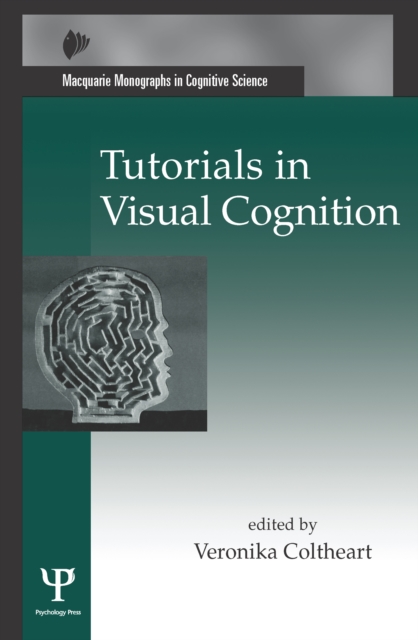
Tutorials in Visual Cognition
In the late-1980s, visual cognition was a small subfield of cognitive psychology, and the standard texts mainly discussed just iconic memory in their sections on visual cognition. In the subsequent two decades, and especially very recently, many remarkable new aspects of the processing of brief visual stimuli have been discovered -- change blindness, repetition blindness, the attentional blink, newly-discovered properties of visual short-term memory and of the face recognition system, the influence of reentrant processing on visual perception, and the surprisingly intimate relationships between eyeblinks and visual cognition.
This volume provides up-to-date tutorial reviews of these many new developments in the study of visual cognition written by the leaders in the discipline, providing an incisive and comprehensive survey of research in this dynamic field.
V. Coltheart, Introduction to Tutorials in Visual Cognition . V. Di Lollo , Iterative Reentrant Processing: A Conceptual Framework for Perception and Cognition. W. Prinzmetal, A.N. Landau , Dissecting Spatial Visual Attention. J. Theeuwes, A. Belopolsky , Top-down and Bottom-up Control of Visual Selection: Controversies and Debate. J.M. Wolfe, T.S. Horowitz, E.M. Palmer, K.O. Michod, M.J. Van Wert , Getting Into Guided Search. D.E. Irwin, L.E. Thomas , Eyeblinks and Cognition. P. Jolicœur, R. Dell’Acqua, B. Brisson, N. Robitaille, K. Sauvé, É. Leblanc, D. Prime, S. Grimault, R. Marois, P. Sessa, C. Grova, J.-M. Lina, A.-S. Dubarry, Visual Spatial Attention and Visual Short-term Memory: Electromagnetic Explorations of Mind. V. Coltheart, A Review of Repetition Blindness Phenomena and Theories . P. Smith, Spatial Attention and the Detection of Weak Visual Signals . E. McKone, Face and Object Recognition: How Do They Differ? R. Palermo, G. Rhodes, Is Face Processing Automatic? C. Umiltà, K. Priftis, M. Zorzi. Visuo-spatial Representation of Number Magnitude . M. Coltheart, V. Coltheart, Visual Memories.
eBook


Recent research on geometry education : an ICME-13 survey team report
This survey on the theme of Geometry Education (including new technologies) focuses chiefly on the time span since 2008. Based on our review of the research literature published during this time span (in refereed journal articles, conference proceedings and edited books), we have jointly identified seven major threads of contributions that span from the early years of learning (pre-school and primary school) through to post-compulsory education and to the issue of mathematics teacher education for geometry. These threads are as follows: developments and trends in the use of theories; advances in the understanding of visuo spatial reasoning; the use and role of diagrams and gestures; advances in the understanding of the role of digital technologies; advances in the understanding of the teaching and learning of definitions; advances in the understanding of the teaching and learning of the proving process; and, moving beyond traditional Euclidean approaches. Within each theme, we identify relevant research and also offer commentary on future directions. [Author abstract]
Journal Article

Computational, Geometric, and Process Perspectives on Facial Cognition
Within the last three decades, interest in the psychological experience of human faces has drawn together cognitive science researchers from diverse backgrounds. Computer scientists talk to neural scientists who draw on the work of mathematicians who explicitly influence those conducting behavioral experiments. The chapters in this volume illustrate the breadth of the research on facial perception and memory, with the emphasis being on mathematical and computational approaches. In pulling together these chapters, the editors sought to do much more than illustrate breadth. They endeavored as well to illustrate the synergies and tensions that inevitably result from adopting a broad view, one consistent with the emerging discipline of cognitive science.
eBook

Innovations in pediatric cataract surgery
Advances in technology have made surgery in children safer and faster. The management of pediatric cataract has made rapid progress in the past decade with the availability of safer anesthesia, newer technique's, more predictable intraocular lens (IOL) power calculation, a better understanding of neurobiology, genetics, amblyopia management, improved IOL designs for preventing visual axis opacification, and adjuvant postoperative care. Modern vitrectomy machines with minimally invasive instruments, radiofrequency, diathermy, and plasma blades help immensely in complicated cases. Preoperative evaluation with ultrasound biomicroscopy and optical coherence tomography (OCT) allows better planning of surgical procedure. The future holds good for stem cell research, customized OCT, and Zepto (precision pulse capsulotomy).
Journal Article

Perception
Vancouver Studies in Cognitive Science is an interdisciplinary series bringing together topics of interest to psychologists, philosophers, cognitive scientists, and linguists.
eBook
What's new for us in strabismus?
Strabismus is one of the most challenging subspecialties encountered in the field of ophthalmology. The concept of etiology of strabismus is being advanced with the development of newer imaging modalities and increased understanding of the genetics of strabismus. Imaging is also being used to aid in the planning of strabismus surgery. Newer horizons are being explored in the amblyopia management. The good old eye-pad is being replaced with the iPad. Early detection of loss of stereopsis is being used to decide the timing for strabismus surgery. Improvement of binocular summation has been discovered as a benefit of corrective strabismus surgery. Newer surgical techniques such as new transposition procedures are being developed to correct complex strabismus. Strabismus surgeries aided by adjustable sutures have increased the precision of a strabismologist. A new light has been thrown on the psychosocial impact of strabismus. A present-day strabismologist has advanced from the goal of ocular alignment to a bigger perspective \"to regain the paradise lost: stereopsis.\"
Journal Article