
Catalogue Search | MBRL


Are you sure you want to remove the book from the shelf?

{{itemTitle}}
7,474
result(s) for
"Visual perception in children."
Sort by:

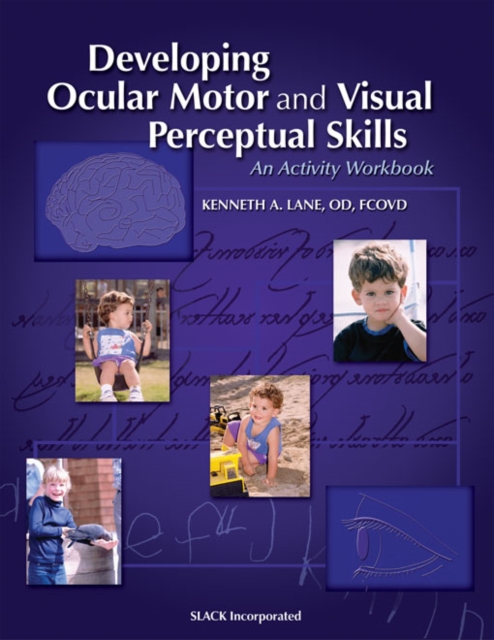
Developing Ocular Motor and Visual Perceptual Skills An Activity Workbook
With over 20 years of experience, Dr. Kenneth A. Lane has designed
Developing Ocular Motor and Visual Perceptual Skills: An Activity Workbook
to help occupational therapists, optometrists, and other professionals develop the ocular motor and visual perceptual skills of learning disabled children.
To establish a framework for understanding, each chapter begins with the scientific theories used to develop the activity forms. Insightful suggestions are included on how to solidify the program's success.
The easy-to-follow activity forms are then presented, along with numerous illustrations that help develop ocular motor and visual perceptual skills. The forms are divided into as many as five levels of difficulty so both children and teenagers can benefit from each activity.
Developing Ocular Motor and Visual Perceptual Skills
contains daily lesson plans and practical tips on how to successfully start an activities program. Other helpful features include a glossary of terms and a reference list of individuals and organizations that work with learning disabled children to develop these skills.
The first of its kind,
Developing Ocular Motor and Visual Perceptual Skills
utilizes a learning approach by linking the theories with the remediation activities to help learning disabled children improve their perceptual and fine motor skills. All professionals looking to assess and enhance a variety of fine motor and visual perception deficiencies will welcome this workbook into their practices.
Topics include:
Complexity of reading
Ocular motor
Gross motor
Visual-motor perception
Visual memory
Laterality
Reversals
eBook

What young chimpanzees know about seeing
Previous experimental research has suggested that chimpanzees may understand some of the epistemological aspects of visual perception, such as how the perceptual act of seeing can have internal mental consequences for an individual's state of knowledge. Other research suggests that chimpanzees and other nonhuman primates may understand visual perception at a simpler level; that is, they may at least understand seeing as a mental event that subjectively anchors organisms to the external world. However, these results are ambiguous and are open to several interpretations. In this Monograph, we report the results of 15 studies that we conducted with chimpanzees and preschool children to explore their knowledge about visual perception. The central goal of these studies was to determine whether young chimpanzees appreciate that visual perception subjectively links organisms to the external world. In order to achieve this goal, our research incorporated three methodological objectives. First, we sought to overcome limitations of previous comparative theory of mind research by using a fairly large sample of well-trained chimpanzees (six to seven animals in all studies) who were all within 8 months of age of each other. In contrast, previous research has typically relied on the results of one to four animals ranging widely in age. Second, we designed our studies in order to allow for a very sensitive diagnosis of whether the animals possessed immediate dispositions to act in a fashion predicted by a theory of mind view of their psychology or whether their successful performances could be better explained by learning theory. Finally, using fairly well-established transitions in preschool children's understanding of visual perception, we sought to establish the validity of our nonverbal methods by testing predictions about how children of various ages ought to perform. Collectively, our findings provide little evidence that young chimpanzees understand seeing as a mental event. Although our results establish that young chimpanzees both (a) develop algorithms for tracking the visual gaze of other organisms and (b) quickly learn rules about the configurations of faces and eyes, on the one hand, and subsequent events, on the other, they provide no clear evidence that these algorithms and rules are grounded in a matrix of intentionality. Particularly striking, our results demonstrate that, even though young chimpanzee subjects spontaneously attend to and follow the visual gaze of others, they simultaneously appear oblivious to the attentional significance of that gaze. Thus, young chimpanzees possess and learn rules about visual perception, but these rules do not necessarily incorporate the notion that seeing is \"about\" something. The general pattern of our results is consistent with three different possibilities. First, the potential existence of a general developmental delay in psychological development in chimpanzees (or, more likely, an acceleration in humans) leaves open the possibility that older chimpanzees may display evidence of a mentalistic appreciation of seeing. Second, chimpanzees may possess a different (but nonetheless mentalistic) theory of attention in which organisms are subjectively connected to the world not through any particular sensory modality such as vision but rather through other (as-of-yet unspecified) behavioral indicators. Finally, a subjective understanding of visual perception (and perhaps behavior in general) may be a uniquely evolved feature of the human lineage.
Journal Article

Visual Attention in Children With Normal Hearing, Children With Hearing Aids, and Children With Cochlear Implants
Previous studies have reported both positive and negative effects of deafness on visual attention. The purpose of this study was to replicate and expand findings of previous studies by examining visual attention abilities in children with deafness and children with normal hearing. Twenty-eight children, ages 8–14 years, were evaluated. There were two groups of children with prelingual deafness and one group with normal hearing. The children with deafness were divided further into two groups: those with cochlear implants and those with conventional hearing aids. Unlike previous studies, the current study found no substantial differences in performance among these three groups of children on a continuous-performance visual attention task or on a letter cancellation task. Children in all three groups performed very well on the visual attention tasks. Furthermore, there was little association between performance on the visual attention tasks and parent or teacher ratings of behavior and attention. Age and nonverbal intelligence were significantly correlated with performance on visual attention tasks. The theoretical implications of these findings are discussed, along with directions for future research.
Journal Article

Attention in Early Development
Attention is a complex and multidimensional construct. It depends on distributed neural networks; it is linked to multiple sources of information from the environment and to complex motor, emotional, and motivational systems. Taking this functional approach, this book focuses on visual attention and its underlying processes in the first four to five years of life. The book is organized around two overlapping structures. One is the division of attention into three conceptual domains: selectivity, state, and executive- or higher-level control. The second organizational structure revolves around the development of two attention systems during the early years: the first is an orienting/investigative system; and the second is a more voluntary system related to inhibitory processes, planning, goal-oriented activity, and to the larger construct of self-regulation. Within these two structures, the book discusses the research and theory relevant to the development of selection, modulation of intensity or state, and the higher-level control of attention. It also discusses individual variation in these three aspects of attention. It includes individual differences in patterns of attention and underlying temperamental factors, and differences in developmental trajectory. It also address deviations from the normal range of attention and possible developmental scenarios to account for them. For both development and individual differences, the book covers the research on behavioural and psycho-physiological indices of attention. In addition, the book makes inferences from the research in order to discuss the non-observable processes underlying these indices.
eBook

Visual attention in children : theories and activities
In typical child development, attention controls many aspects of learning, including memory, motor control, and problem solving. Attention organizes the constant influx of information that needs to be absorbed by children.
eBook

Seeking New Horizons
Castner developed this innovative perspective on geographic education through observation of the Orff-Schulwerk technique of music education. This pedagogical method provides an organizational framework within which the primitive elements and concepts of music can be introduced, experienced, and explored, and auditory discrimination developed. The process of improvisation is the focal point of the Schulwerk. Castner suggests that the numerous educational benefits of improvisation can be obtained in geographic education by the process of \"mapping.\" He defines mapping as graphic description, analysis, and presentation in a problem-solving context. After more than two decades of research in cartographic communication, Castner concludes that success in examining and analysing landscapes, and images representative of them, is dependant upon developed skills in visual discrimination.
eBook


Perceptual impulsions and unfamiliar solids: Evidence from a drawing task
Previous work (Dziurawiec & Derȩgowski, 1992) has shown that children's distorted drawings of animal models may be explained by the child's tendency to depict typical contours, the outlines of the surfaces which undergo pronounced change. The present paper investigates whether the typical contours notion can be extended to purely geometric solids. Results from a drawing task by children aged nine and eleven years, using unfamiliar models of varying complexity, indicate that the tendency to draw in perspective increases with the increase in figure complexity for both age groups, but younger children show a greater reliance on typical contours than older children. Recasting the data from previous drawing experiments (Bartel, 1928/1958; Cox, 1986) further confirms the utility of the typical contours approach. Finally, the advantages of such an approach over that of canonicity (cf. Palmer, Rosch & Chase, 1981) for the representation of solids are elaborated.
Journal Article

Uniqueness of the visual processing disabilities in children with nonverbal learning disabilities and their relationship to performance in arithmetic
Visual processing difficulties have been described as a core problem of children with nonverbal learning disabilities (NLD; Rourke, 1989), but the specific nature of these difficulties has received little systematic investigation. The younger the age at which these kinds of difficulties are identified, the better the opportunity for successful intervention (Rourke, 1989). The present study systematically compared the simple and complex visuoperceptual and visual-spatial abilities of 6-year-old boys with NLD (n = 13) to a matched control group of boys with other learning disabilities (CLD) and to normative scores. A profile of strong average abilities on a simple discrimination task but relative visual-spatial weaknesses was unique to the NLD group, as was significantly poorer (p ≤ 5.01) performance on the mom complex mental rotation task. The visual processing abilities of children with NLD were positively associated with their arithmetic scores, but no significant correlations were found for the CLD group.
Dissertation