
Catalogue Search | MBRL


Are you sure you want to remove the book from the shelf?

{{itemTitle}}
738
result(s) for
"Vocational education Vietnam."
Sort by:


“Employability in context”: graduate employability attributes expected by employers in regional Vietnam and implications for career guidance
This article examines how graduate employability is viewed by employers in six economically disadvantaged mountainous provinces in Vietnam. The study reported in this article identified continuous self-learning, resilience, adaptability, devotion and empathy for the local people and local community to be among the main employability attributes expected of graduates in regional Vietnam. The findings of the study raise the importance of context situatedness in looking at employability and show how employability is characterised by the local structural conditions, demographic features and socio-cultural norms. The study provides significant implications for career guidance and graduate employability development, especially in relation to regional areas.
Journal Article

Examining dimensions of career intentions: insights from medical and nursing students at a private not-for profit university in Vietnam
Background
Understanding students’ career intentions through evidence-based approaches is crucial for developing effective career guidance and intervention strategies. Although there has been considerable attention in this field, research remains limited, particularly in low- and middle-income countries (LMICs) in Asia. These regions have unique socioeconomic conditions and cultural norms that potentially shape decision-making processes. This study provides insights into the career intentions of medical and nursing students and identifies the key determinants influencing their choices at a newly established private institution (VinUniversity) in Vietnam.
Methods
This study employs a mixed-methods design. The quantitative phase involved a survey of all undergraduate medical and nursing students. The qualitative phase consisted of in-depth 11 individual interviews with a purposive sample until data saturation.
Results
A total of 198 students (77%) participated in the quantitative phase. The majority of students (75.8%) expressed interest in clinical practice, with preferences notably high for surgical specialties (30.9%), internal medicine (10.1%), and pediatrics (10.1%). 22.7% of students expressed a desire to work overseas, and a significant number (70.7%) indicated the lack of a career guidance program. Qualitative data revealed that personal interest, family influence, financial stability, and societal appreciation were primary influencers in career choice.
Discussion
The study underscores the complex interplay between personal interests, family influence, financial considerations, and societal expectations in shaping career choices. The persistent low interest in family medicine and primary care continued to be a concern.
Conclusion
This study provides further insights into the career intentions and influencing factors among medical and nursing students at VinUniversity. The implications for practice include implementing tailored career guidance programs, offering diverse elective tracks that incorporate global health experiences, and establishing structured mentorship programs. It is also recommended to measure the impact of these interventions through longitudinal follow-up studies to enhance career satisfaction, better prepare future healthcare professionals, and contribute to the improvement of healthcare systems.
Journal Article

From Vocational Schools to Universities: Navigating Educational Permeability for Vietnamese Students in Japan
This article explores how Vietnamese international students in Japan navigate the transition from vocational education to university, using the concepts of \"institutional permeability\" and the \"education-migration industry.\" Findings from qualitative interviews revealed that while vocational-to-university pathways exist, they are obscured by structural barriers and informational gaps perpetuated by study-abroad agencies and institutional practices. The study identifies three types of vocational schools - vocation-oriented, hybrid, and further-education-oriented - with varying degrees of support for academic progression. Educational mobility is shown to be stratified and conditional, highlighting the need for more transparent and equitable systems to support international students' academic aspirations.
Journal Article

Psychological and Mental Health Support for Vietnamese University Students in Economics Majors: Approaches and Needs Assessment
The mental health of students in university has become an increasingly pressing concern due to rising academic pressure, career uncertainty, and major life transitions. Identifying students’ psychological support needs requires an understanding of the challenges they face, as well as their expectations regarding support forms, intervention methods, and service providers. This study employed a mixed-methods cross-sectional design, combining large-scale questionnaire surveys (701 respondents) with qualitative interviews to assess the mental health status and psychological support needs of students at economics universities in Vietnam. The findings reveal that students commonly experience negative emotional states, particularly anxiety related to academic workload, financial instability, personal health, and future career orientation. A proportion of students reported depressive symptoms such as persistent sadness, prolonged stress, and physiological disturbances including insomnia and disordered eating. While severe behavioral disorders are uncommon, signs of declining academic motivation, social withdrawal, and weakened interactions with lecturers are evident. Students express a strong demand for mental health support, especially in career guidance, learning strategies, emotional regulation, and interpersonal problem-solving. Individual, professional, confidential counseling services are the most preferred forms of support, highlighting the need for a comprehensive mental health and psychological support system tailored to the context of Vietnamese universities.
Journal Article

Enhancing Career Guidance and Personal Development Through Experiential Activities for School Pupils in Vietnam
Vietnam's quick social and economic changes make it crucial to boost career guidance and real-world learning for students in school. But the country's teacher-centered school system doesn't give students the experiences and guidance they need to do well in today's complex job market. To check how things stand with career guidance and see if handson activities could help, this study employed a mixed-methods approach which involved conducting surveys with 500 students, interviews with 50 stakeholders, as well as reviewing relevant literature. The results indicated that students were not happy with what they were getting and wanted more chances to try out different jobs. While it is not easy to bring in hands-on learning, it can help students with their people skills, understanding themselves, making career choices, staying motivated, and getting ready for work. Based on the evidence gathered, recommendations include strengthening career education within the curriculum, fostering collaborations with industries, improving instructor training programs, utilizing technology effectively, and increasing parental awareness. If schools, people who make the rules, and communities work together to add more hands-on activities to how students learn in Vietnam, it will help students get the different skills they need to handle school and work in today's fast-changing world. This study gives helpful ideas to make career guidance better and create more chances for Vietnam's next generation to learn by doing.
Journal Article

Feasibility, acceptability, and sustainability of Project ECHO to expand capacity for pediatricians in Vietnam
Background
The Project Extension for Community Healthcare Outcomes (ECHO) model is considered a platform for academic medical centers to expand their healthcare workforce capacity to medically underserved populations. It has been known as an effective solution of continuing medical education (CME) for healthcare workers that used a hub-and-spoke model to leverage knowledge from specialists to primary healthcare providers in different regions. In this study, we aim to explore the views of healthcare providers and hospital leaders regarding the feasibility, acceptability, and sustainability of Project ECHO for pediatricians.
Methods
This qualitative study was conducted at the Vietnam National Children’s Hospital and its satellite hospitals from July to December 2020. We conducted 39 in-depth interviews with hospital managers and healthcare providers who participated in online Project ECHO courses. A thematic analysis approach was performed to extract the qualitative data from in-depth interviews.
Results
Project ECHO shows high feasibility when healthcare providers find motivated to improve their professional knowledge. Besides, they realized the advantages of saving time and money with online training. Although the courses had been covered fully by the Ministry of Health’s fund, the participants said they could pay fees or be supported by the hospital’s fund. In particular, the expectation of attaining the CME-credited certificates after completing the course also contributes to the sustainability of the program. Project ECHO’s online courses should be improved if the session was better monitored with suitable time arrangements.
Conclusions
Project ECHO model is highly feasible, acceptable, and sustainable as it brings great benefits to the healthcare providers, and is appropriate with the policy theme of continuing medical education of the Ministry of Health. We recommend that further studies should be conducted to assess the impact of the ECHO program, especially for patient and community outcomes.
Journal Article

Improving Household Food Diversity via Non-Farming Livelihoods in Vietnam
Food insecurity remains a persistent challenge in rural Vietnam despite economic growth, particularly among rice-producing households. The study aims to assess how participating in non-agricultural activities impacts the diversity of food available in Vietnam. The study used a combination of Propensity Score Matching (PSM) and fixed-effects estimators to control bias from variable selection and unobservable time-invariant factors. In addition, the heteroscedasticity-based instrumental variable (IV) approach was established to check the above relationship. Results from the study reveal that engaging in non-farm activities significantly boosts the diversity of food within rural Vietnamese households. This suggests that rural households could enhance their livelihood strategies by diversifying into non-agricultural pursuits. To facilitate this transition, policy interventions such as workshops, seminars, and vocational training programs should be tailored to the specific socioeconomic characteristics of rural Vietnam.
Journal Article
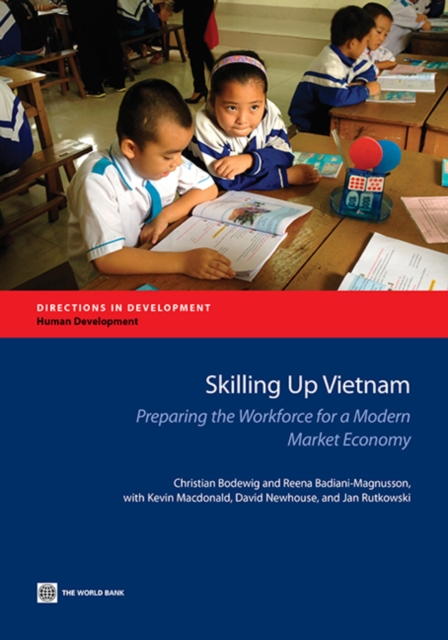
Skilling up Vietnam
Education has played an important role in making Vietnam a development success story over the last 20 years. In the 1990s and early 2000s Vietnam experienced rapid economic growth. The accelerated growth was driven predominantly by productivity increases that came in the wake of a rapid shift of employment from low-productivity agriculture to higher-productivity nonfarm jobs. Vietnam's economy began to industrialize and modernize. Poverty fell dramatically. And education played an enabling role. Vietnam's committed effort to promote access to primary education for all and to ensure its quality through centrally set minimum quality standards has contributed to the country's reputation for having a young, well-educated workforce. Results from the 2012 Program for International Student Assessment (PISA) and new evidence from an adult skills survey presented in this book show that literacy and numeracy among Vietnam's youth and young urban adult workforce are strong and exceed those of even some wealthier countries. Despite its clear progress, Vietnam is facing new challenges. The pace of economic growth and the reallocation of jobs away from agriculture have slowed in recent years. Rather than productivity improvements, capital investments have become the main source of economic growth, but this model is not sustainable for ensuring continued rapid economic growth. The size of its workforce is still expanding, but its youth population is shrinking, which means that Vietnam cannot continue to rely on the size of its workforce for continued success. Instead, it needs to focus on making its workforce more productive and on alleviating skills barriers to labor mobility.
eBook

Women’s educational attainment and sexual coercion by intimate partners: ethnic differences in Vietnam
Vietnam, a lower-middle-income nation with a strong patriarchal influence in Southeast Asia, has experienced an increase in intimate partner sexual violence. Despite its ethnic diversity and varying socio-economic status, research addressing ethnic differences in intimate partner sexual abuse within the country remains scarce. This quantitative study utilized the most recent and nationally representative dataset from the Vietnam Multiple Indicator Cluster Survey (MICS) 2020–2021 to explore the relationship between women’s educational attainment and sexual coercion by intimate partners, with a focus on ethnic differences in this relationship. The chi-square (χ²) test of independence was used for bivariate statistics, whereas a probit model with probability sampling weights was employed for multivariate analysis. The sample comprises 6,033 women of reproductive age. Findings reveal that women with upper secondary education (p < 0.05) and vocational/university education or higher (p < 0.01) are less likely to experience sexual coercion by intimate partners. Notably, women from Mong ethnicity households, women residing in the North Central, Central Coastal regions, and Central Highlands exhibit the highest likelihood of experiencing this issue (p < 0.01). Given the higher likelihood of intimate partner sexual coercion experienced by women in minority groups such as the Tay/Thai/Muong/Nung and Mong compared to the Kinh and Chinese/Hoa, prioritizing the enhancement of women’s education in these ethnic groups would be a crucial policy response to address this form of intimate partner violence.
Journal Article