
Catalogue Search | MBRL


Are you sure you want to remove the book from the shelf?

{{itemTitle}}
35,217
result(s) for
"Vocational training"
Sort by:


Career errors : straight talk about the steps and missteps of career development
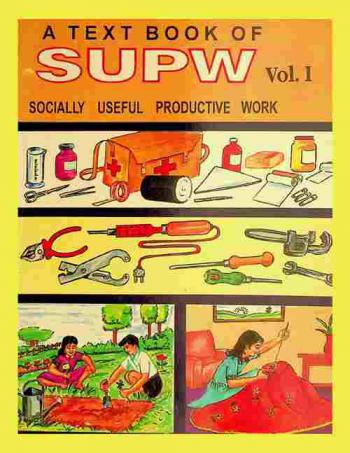
Career Errors: Straight Talk about the Steps and Missteps of Career Development examines the career development encounters that people experience across their life-span. The book begins with a comprehensive examination of the career development process and why these eight phases must be understood in order for career satisfaction and success to be achieved. This analysis is followed by a meticulous treatment of 27 things active members of the workforce “do wrong” or “don't do” in pursuit of their career ambitions. Conducting an effective job search, dealing with job loss or termination, and how best to prosper in the workplace, are among the subjects included. Throughout the book, the author sets life-work balance as a paramount goal and outlines strategies about how this illusive objective can be achieved. Career Errors is the next best thing to having a professional career counselor or recruiter in the room. While written for the individual experiencing the various life and work activities, this book is also of significant value to counselors, search and staffing professionals, educators, and others playing important roles in these transitions. -- Provided by publisher.
Book

Factors Associated with Participation in Employment for High School Leavers with Autism
This study aimed to identify the factors associated with participation in employment for high school leavers with autism. A secondary data analysis of the National Longitudinal Transition Study 2 (NLTS2) data was performed. Potential factors were assessed using a weighted multivariate logistic regression. This study found that annual household income, parental education, gender, social skills, whether the child had intellectual disability, whether the child graduated from high school, whether the child received career counseling during high school, and whether the child’s school contacted postsecondary vocational training programs or potential employers were the significant factors associated with participation in employment. These findings may have implications for professionals who provide transition services and post-secondary programs for individuals with autism.
Journal Article


In search for shared content and design in supervision training: a syllabus analysis in Sweden
PurposePrevious research has pointed to a lack of studies concerning supervision training courses. Consequently, the literature has little to suggest, and the research field is underexplored, so questions around the content and design of supervision training courses remain unanswered and need to be addressed systematically. The main aim of the present study is to explore and map whether shared content and design exist in supervisor training courses across different vocations.Design/methodology/approachA syllabus analysis is used in order to investigate characteristic features in supervisor training courses related to the professions of dentist, doctor, psychologist, police officer and teacher.FindingsThe results point to the existence of shared content in the different courses, such as an emphasis on learning and supervision theories, feedback, ethics, assessment and communication. Furthermore, the results conclude similarities in design of the courses, such as a problem-based approach, seminars, lectures and homework. Thus, there are common theoretical approaches to important supervisory competences.Practical implicationsOur results intend to offer possibilities to learn from different professions when improving supervisor training courses but may also constitute a starting point for developing a shared model of interprofessional supervisor competences. Furthermore, the results may support possible cooperation in interprofessional courses. This could include arranging interprofessional courses, where one part is shared for participants from the included professions and another part is profession-specific.Originality/valueWe seek to contribute to the research field of supervision at workplaces with knowledge and ideas about how to learn from different professions when developing and improving supervisor training courses.
Journal Article

A career as an athletic trainer
An introduction to a career as an athletic trainer who works with teams and individual athletes to help treat and prevent injuries.
Book

Vocationalising Specialized Concepts: Appropriating Meanings Through Feedback
This article is based on research about upper secondary students' experiences in vocational becoming as they develop conceptualized knowing through interactions with others. Interactions for meaning-making by vocationalising concepts also involve feedback relating to occupation-specific tasks. The aim was to understand this constructivist process of occupational identity formation - a goal of vocational education. The research reported here draws on data from participant observations and focus group interviews with 34 students in 2nd and 3rd grades in two schools, who were training to become security officers. Students vocationalise five features of security practices: (i) transforming anomaly into specialized concept; (ii) the uniform as a marker; (iii) accountability to the security industry through zero limit; (iv) modernizing the security occupation; and (v) social, study and professional conduct. The findings indicate that processual feedback supports the development of vocational conceptual knowing inferentially in the space of reasons. Teacher-led processual feedback provides more opportunities for vocationalising concepts, whereas student-led feedback during group work offers fewer such opportunities, although it does strengthen student identity. Overall, the findings show that collective meaning-making, supported by processual feedback, contributes to the construction of specialized knowledge for vocational becoming, thus leading to emergent vocational identity. However, making firm decisions about a chosen vocation takes time, and this appears challenging especially for youth with their limited life experiences (Tanggaard in
Journal of Education and Work, 20
(5), 453–466,
2007
). For many prospective security officers, their vantage point remains uncertain, as they imagine, deliberate and put expectations to a reality check during the course of their study.
Journal Article

Determinants of the Outcomes of a Household’s Decision Concerning Child Labor or Child Schooling
Child labour is an issue of global concern. It assumes more importance when it comes to developing countries like Pakistan. This study attempts to highlight this child labor issue in Mardan District of Khyber Pakhtunkhwa, a province of Pakistan. The analysis collects information through modified questionnaire by randomly interviewing households. Using Multinomial Logit model, the analysis finds that probability of child schooling is high, in case a child is already enrolled in primary school education. Similarly, child schooling is more likely when monthly income of a family head increases. However, with the increase in ‘age’ and ‘monthly income’ of a child, the probability of child labour tends to increase. Additionally, Poor financial position of a family also increases the chances for child’s labour activities. Furthermore, the analysis finds variables like “initiative of work by child himself” and “working capacity” increase the chance for a child to combine school with labour activities. That is, if a child engages himself in labour work on permanent basis, such a child is more likely to combine school with labour work to finance his educational expenses. On the contrary, a household prefers his child neither to attend school nor labour work in case of increasing family’s income. That is, in such a situation a household may prefer his child to engage in homecare activities. Finally, the analysis shows that probability of child schooling is high in case a child is living in rural areas. Based on empirical findings, the study suggests few practicable steps to the government for addressing the child labour issue. Opening more primary schools in remote areas and providing vocational training centers to children whose families cannot afford educational expenses, would be helpful in reducing child labour exclusively.
Journal Article