
Catalogue Search | MBRL


Are you sure you want to remove the book from the shelf?

{{itemTitle}}
677
result(s) for
"Volcanic hazard analysis."
Sort by:


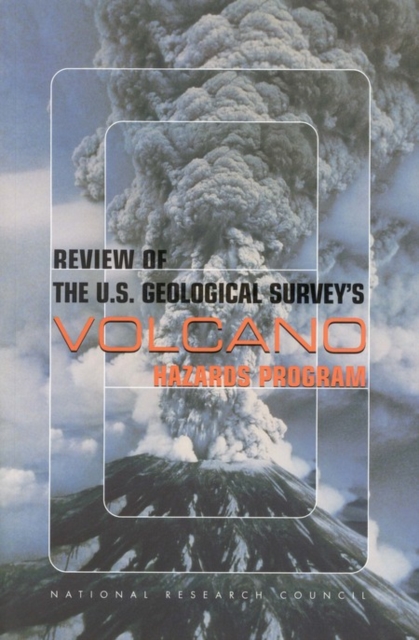
Review of the U.S. Geological Survey's Volcano Hazards Program
The United States has more than 65 active or potentially active volcanoes, more than those of all other countries except Indonesia and Japan. During the twentieth century, volcanic eruptions in Alaska, California, Hawaii, and Washington devastated thousands of square kilometers of land, caused substantial economic and societal disruption and, in some instances, loss of life. More than 50 U.S. volcanoes have erupted one or more times in the past 200 years. Recently, there have been major advances in our understanding of how volcanoes work. This is partly because of detailed studies of eruptions and partly because of advances in global communications, remote sensing, and interdisciplinary cooperation.
The mission of the Volcano Hazards Program (VHP) is to \"lessen the harmful impacts of volcanic activity by monitoring active and potentially active volcanoes, assessing their hazards, responding to volcanic crises, and conducting research on how volcanoes work.\" To provide a fresh perspective and guidance to the VHP about the future of the program, the Geologic and Water Resources Divisions of the United States Geological Survey (USGS) requested that the National Research Council conduct an independent and comprehensive review.
Review of the U. S. Geological Survey's Volcano Hazards Program is organized around the three components of hazards mitigation. Chapter 2 deals with research and hazard assessment. Chapter 3 covers monitoring and Chapter 4 discusses crisis response and other forms of outreach conducted by the VHP. Chapter 5 describes various cross-cutting programmatic issues such as staffing levels, data formats, and partnerships. Chapter 6 offers a vision for the future of the Volcano Hazards Program, and Chapter 7 summarizes the conclusions and recommendations of the preceding chapters. Throughout the report, major conclusions are printed in italics and recommendations in bold type.
The committee has written this report for several different audiences. The main audience is upper management within the USGS and the VHP. However, the committee believes that scientists within the VHP will also find the report valuable. The report is written in such a manner as to be useful to congressional staff as well.
eBook
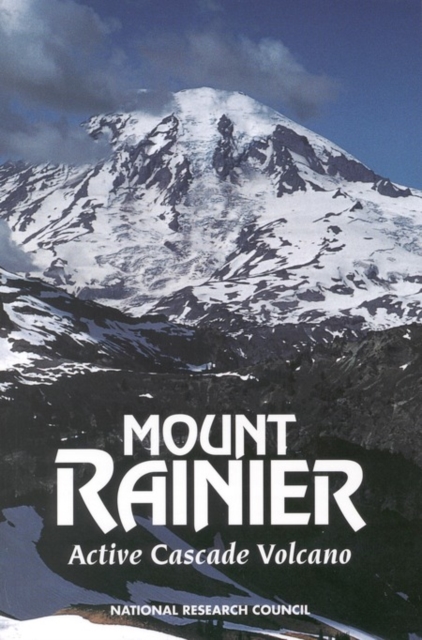
Mount Rainier : active Cascade volcano : research strategies for mitigating risk from a high, snow-clad volcano in a populous region
This volume develops a research plan to study and monitor Mount Rainier, an active Cascade volcano located about 35 km southeast of the Seattle-Tacoma metropolitan area. The book also addresses issues of communication and coordination among geoscientists, social scientists, planners, and responsible authorities, so that research results can be used to support hazard reduction efforts.
eBook
The Eruption of Nevado Del Ruiz Volcano Colombia, South America, November 13 1985
On November 13, 1985, catastrophic mudflows swept down the slopes of the erupting Nevado del Ruiz volcano, destroying structures in their paths. Various estimates of deaths ranged as high as 24,000 residents. Though the nature and extent of risk posed by the mudflows to local communities were well documented before the event and extensive efforts had been made to communicate this information to those at risk, the affected communities were caught largely unaware.This volume analyzes the disaster's many aspects: the extent, constitution, and behavior of the mudflows; the nature of damage to structures; the status of the area's disaster warning system; and the extent of the area's disaster preparedness, emergency response actions, and disaster relief efforts--both at the time of the disaster and in the first few months following the event.
eBook
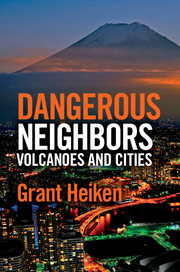
Dangerous Neighbors: Volcanoes and Cities
What are the real risks posed by a volcanic eruption near a city – what is fact and what is myth? How have volcanic eruptions affected cities in the past, and how can we learn from these events? Why do communities continue to develop in such locations, despite the obvious threat? In this fascinating book, Grant Heiken explores global examples of cities at risk from volcanoes, from Italy, the US, Mexico, Ecuador, The Philippines, Japan and New Zealand, providing historical and contemporary eruption case studies to illustrate volcanic hazards, and cities' efforts to respond to them, both good and poor. He shows that truly successful volcanic hazard mitigation cannot be accomplished without collaboration between experts in geology and natural hazards, public health, medicine, city and infrastructure planning, and civil protection. This is a topical and engaging read for anyone interested in the history and future activity of these dangerous neighbors.
eBook

Geohazards : monitoring and predication
Learn how volcanologists in Montserrat and Iceland are predicting the location, frequency and severity of future volcanic and seismic events. Get access to the very latest equipment used for deformation, seismic and environmental monitoring, from helicopters to rapid response radar trailers used to predict the location, direction and size of ash particles in Iceland. We see the type of data that can be recorded, how it is analysed and then used to predict future geo-hazards; map exclusion zones; plan for evacuations; and model ash cloud dispersal for the aviation industry.
Streaming Video

Mount Rainier
This volume develops a research plan to study and monitor Mount Rainier, an active Cascade volcano located about 35 km southeast of the Seattle-Tacoma metropolitan area. The book also addresses issues of communication and coordination among geoscientists, social scientists, planners, and responsible authorities, so that research results can be used to support hazard reduction efforts.
eBook