
Catalogue Search | MBRL


Are you sure you want to remove the book from the shelf?

{{itemTitle}}
8,527
result(s) for
"Volcanology"
Sort by:

Volcanoes : a very short introduction
Throughout our planet's history volcanoes have played a large role in shaping landscapes, the climate, and biological evolution. This text explains the fundamental mechanisms of volcanism, considering why volcanoes are essential for life on Earth, and how they interact with the Earth's other physical processes, and with human society.
Book


Adventures in volcanoland : what volcanoes tell us about the world and ourselves
'Adventures in Volcanoland' charts journeys across deserts, through jungles and up ice caps, to some of the world's most important volcanoes, from Nicaragua to Hawaii, Santorini to Ethiopia, exploring Tamsin Mather's obsession with these momentous geological formations, the cultural and religious roles they have played in the minds of those living around them at different times throughout history, and the science behind their formation and eruptions.
Book

Volcanoes : 10 things you should know
In ten short and informative essays, leading volcanologist Dr Rebecca Williams reveals everything you need to know about volcanoes. From the deadliest eruptions of all time and how to survive a volcanic eruption to why a volcano won't erupt in your back garden and volcanoes in outer space, discover all of this and much, much more!
BOOK

On impact and volcanism across the Cretaceous-Paleogene boundary
The cause of the end-Cretaceous mass extinction is vigorously debated, owing to the occurrence of a very large bolide impact and flood basalt volcanism near the boundary. Disentangling their relative importance is complicated by uncertainty regarding kill mechanisms and the relative timing of volcanogenic outgassing, impact, and extinction. We used carbon cycle modeling and paleotemperature records to constrain the timing of volcanogenic outgassing. We found support for major outgassing beginning and ending distinctly before the impact, with only the impact coinciding with mass extinction and biologically amplified carbon cycle change. Our models show that these extinction-related carbon cycle changes would have allowed the ocean to absorb massive amounts of carbon dioxide, thus limiting the global warming otherwise expected from postextinction volcanism.
Journal Article
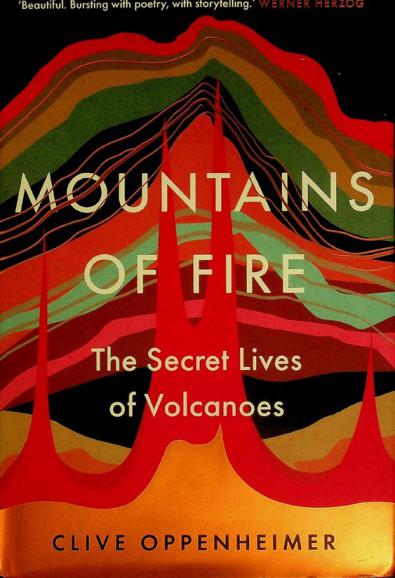
Mountains of fire : the secret lives of volcanoes
Volcanoes mean more than threat and calamity. Like our parents, they've led whole lives before we get to know them. They have inspired our imaginations, provoked pioneering explorations and shaped the path of humanity. World-renowned volcanologist Clive Oppenheimer has worked at the crater's edge in the wildest places on Earth, from remote peaks in the Sahara to mystical mountains in North Korea. He's faced down AK47s, learned from tribal elders, and watched red hot rocks shoot into the sky. More people have been into space than have set eyes on the fiery depths of Mount Erebus in Antarctica, where he has measured the Earth's powerful forces. In \"Mountains of Fire\", he paints volcanoes as otherworldly, magical places where our history is laid bare and shows us just how entangled volcanic activity is with our climate, economy, politics, culture and beliefs. In a stunning blend of science, cultural history, myth and adventure, Mountains of Fire pulls out new lines of causation and correlation stretching around the globe, and reveals how deeply our stories are intertwined.
Book


Eruptions that shook the world
\"What does it take for a volcanic eruption to really shake the world? Did volcanic eruptions extinguish the dinosaurs, or help humans to evolve, only to decimate their populations with a super-eruption 73,000 years ago? Did they contribute to the ebb and flow of ancient empires, the French Revolution and the rise of fascism in Europe in the 19th century? These are some of the claims made for volcanic cataclysm. Volcanologist Clive Oppenheimer explores rich geological, historical, archaeological and palaeoenvironmental records (such as ice cores and tree rings) to tell the stories behind some of the greatest volcanic events of the past quarter of a billion years. He shows how a forensic approach to volcanology reveals the richness and complexity behind cause and effect, and argues that important lessons for future catastrophe risk management can be drawn from understanding events that took place even at the dawn of human origins\"-- Provided by publisher.
Book