
Catalogue Search | MBRL


Are you sure you want to remove the book from the shelf?

{{itemTitle}}
44,720
result(s) for
"WESTERN PHILOSOPHY"
Sort by:

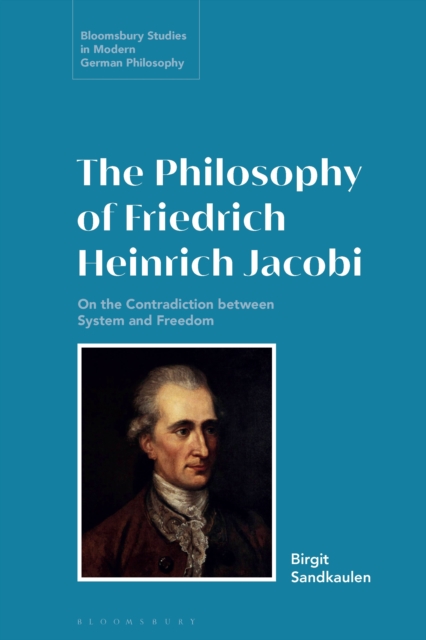
The Philosophy of Friedrich Heinrich Jacobi
The contemporaries of Friedrich Heinrich Jacobi (1743-1819) openly acknowledged his towering importance.Both Fichte and Hegel praised him in the same breath with Kant as having launched the philosophical revolution they sought to complete.
eBook

The Human Vocation in German Philosophy
In 18th-century Germany philosophers were occupied with questions of who we are and what we should be. Can the individual fulfill its vocation or is this possible only for humanity as a whole? Is significant progress towards perfection in any way possible for me or just for me as part of humanity? By following the origin and nature of these debates, this collection sheds light on the vocation of humanity in early German philosophy. Featuring translations of Spalding’s Contemplation on the Vocation of the Human Being in its first version from 1748 and an extended translation of Abbt’s and Mendelssohn’s epistolary discussion around the Doubts and the Oracle from 1767, newly-commissioned chapters cover Johann Gottfried Herder’s inherently cultural concept of the human being, Immanuel Kant’s transformative interplay of moral and natural aspects, and the notion of metempsychosis in Fichte’s work inspired by two neglected philosophers, Gotthold Ephraim Lessing and Johann Georg Schlosser. Opening further lines of inquiry, contributors address questions about the adaptations of Spalding’s work that focus on the vocation of women as wife, mother or citizen. Exploring the multitude of ways 18th-century German thinkers understand our position in the world, this volume captures major changes in metaphysics and anthropology and enriches current debates within modern philosophy.
eBook


In Contradiction
This book advocates and defends the view that there are true contradictions (dialetheism), a view that has flown in the face of orthodoxy in Western philosophy since Aristotle's time. The book has been at the centre of the controversies surrounding dialetheism ever since the first edition was published in 1987. This text contains the second edition of the book. It expands upon the original in various ways, and also contains the author's reflections on developments over the last two decades.
eBook

The end of the West and other cautionary tales
\"The End of the West is an interdisciplinary work that broaches the problem of Western ethnocentrism in contemporary social and political theory. More specifically, this book critically addresses what has recently been called the 'end' of the West in many contemporary public discourses. Meighoo argues that although this claim might appear to challenge the teleological conception implied in 'the West,' it only entrenches this concept further insofar as it presumes that there is a 'West' to begin with. This teleological concept of the West is based on the idea of a continuous tradition extending all the way from ancient Greece to modern Europe and its colonial settlements, a tradition that is distinguished from all non-Western traditions by its guiding principles of reason, progress, and freedom--a tradition, however, that is finally approaching its end, for better or worse. What the author is arguing, then, is that even the most anti-ethnocentric discourses on the end of the West continue to rely on the intrinsically ethnocentric concept of the West itself. The book thus promises to make a substantial contribution as well as a timely intervention into the academic fields of postcolonial theory, continental philosophy, cultural studies, and the history of ideas. The fields of postcolonial theory and continental philosophy in particular have been marked by a radical interrogation of Western ethnocentrism, racism, and colonialism. The book offers a critique not only of teleology but also of 'negative teleology.' For whether the West is hailed as the source of all historical progress or exposed as the root of all cultural imperialism, the discourse of negative teleology ultimately reaffirms the ethnocentrism that it is meant to overcome\"--Provided by publisher.
Book

The Problem of Yogācāra Idealism
Is Yogācāra a system of idealist metaphysics or a theory of experience without metaphysical commitments? An increasing amount of literature has argued, since the 1980s, in favor of the second answer. In this paper, I propose to review the background to the question. In fact, most of the attempts to answer the question have been made with reference to Buddhist texts and concepts. However, labels such as “idealism” emerged from Western philosophy and are reflective of specific historical situations and problems. Extending their use to other contexts requires that these specificities are taken into account. Building on an historical survey, I suggest that some essential features of Yogācāra correspond to features of an ancient Greek tradition of metaphysics that has been characterized as idealist: Neoplatonism. On this basis, I come back to the initial question and argue in favor of the idealist interpretation.
Journal Article


Post-truth
How we arrived in a post-truth era, when \"alternative facts\" replace actual facts, and feelings have more weight than evidence.Are we living in a post-truth world, where \"alternative facts\" replace actual facts and feelings have more weight than evidence? How did we get here? In this volume in the MIT Press Essential Knowledge series, Lee McIntyre traces the development of the post-truth phenomenon from science denial through the rise of \"fake news,\" from our psychological blind spots to the public's retreat into \"information silos.\"What, exactly, is post-truth? Is it wishful thinking, political spin, mass delusion, bold-faced lying? McIntyre analyzes recent examples-claims about inauguration crowd size, crime statistics, and the popular vote-and finds that post-truth is an assertion of ideological supremacy by which its practitioners try to compel someone to believe something regardless of the evidence. Yet post-truth didn't begin with the 2016 election; the denial of scientific facts about smoking, evolution, vaccines, and climate change offers a road map for more widespread fact denial. Add to this the wired-in cognitive biases that make us feel that our conclusions are based on good reasoning even when they are not, the decline of traditional media and the rise of social media, and the emergence of fake news as a political tool, and we have the ideal conditions for post-truth. McIntyre also argues provocatively that the right wing borrowed from postmodernism-specifically, the idea that there is no such thing as objective truth-in its attacks on science and facts.McIntyre argues that we can fight post-truth, and that the first step in fighting post-truth is to understand it.
eBook