
Catalogue Search | MBRL


Are you sure you want to remove the book from the shelf?

{{itemTitle}}
226,274
result(s) for
"WITNESSES"
Sort by:

Mr Slop and the lethal witness
Our man decides to get in on the medicolegal action and squares up to an old adversary.
Journal Article
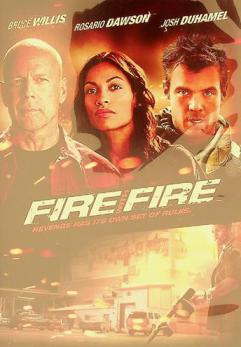
Fire with fire : revenge has its own set of rules
After witnessing the brutal murders of a convenience store owner and his son, firefighter Jeremy Coleman barely escapes with his life. As he is forced to testify against the crime lord, Hagan, he is placed in the witness protection program under the watch of the U.S. Marshalls.
DVD

NOTABLE QUOTE
\"The process of civil litigation itself subjects the memories of witnesses to powerful biases. A desire to assist, or at least not to prejudice, the party who has called the witness or that party's lawyers, as well as a natural desire to give a good impression in a public forum, can be significant motivating forces.\" -
Journal Article

On the edge
\"When Maddie Diaz witnesses the murder of a homeless man by members of a gang, she tells the cops what she saw without thinking about the repercussions of snitching, but a mysterious guy named Lobo comes to her defense and is determined to take down the gang and protect her\"-- Provided by publisher.
Book
Child Witnesses in the Uk : It's Not a 'One Size Fits All' Approach
Special measures have been introduced to improve the conditions under which children appear in court, but critics argue that the measures are still not going far enough. The aim of this thesis is to explore experiences of young people in the courtroom and the impact of procedures that have been employed to improve the conditions under which they appear as witnesses. Chapter Two provides a systematic literature review exploring the emotional victim effect and its potential influences within child witness populations. It was concluded that the emotional presentation of a child victim influences juror ratings of credibility across a range of conditions. Empirical research presented in Chapter Three examines professional perceptions of the pre-trial cross-examination method currently being implemented in England and Wales. Results suggest that overall, professionals believe pre-trial cross-examination will be helpful in reducing distress of child witnesses; but its application requires careful thought. The Bonn Test of Statement Suggestibility (BTSS, Endres, 1997) is critiqued in Chapter Four, concluding that the BTSS is useful in forensic applications when considered alongside measures of cognitive and situational factors. The main finding from this thesis is that child witnesses should be treated on an individual needs basis. However, further advancements in both research and practice are needed and options discussed.
Dissertation

Long time lost
\"Nick Miller and his team provide a unique and highly illegal service, relocating at-risk individuals across Europe with new identities and lives. Nick excels at what he does for a reason: he himself has spent years living in the shadows under an assumed name. But when Nick steps in to prevent the attempted murder of Kate Sutherland, a witness in hiding on the Isle of Man, he triggers a chain of events with devastating consequences for everyone he protects. Nick and Kate share a common enemy in Connor Lane, a man who will stop at nothing to get what he wants, even if it means tearing Nick's entire network apart\"-- Provided by publisher.
Book


Notorious
\"When things get too hot in Miami, criminal lawyer Yoshi figures she'll be safe if she goes home to Norfolk, Virginia, for a little while. But the streets there are just as mean, and a sistah needs to keep her head to avoid getting popped by a drive-by. And when Yoshi witnesses the brutal murder of a snitch by a ruthless drug dealer, she knows she'll be the next one in the gangsta's sights. Out of time and abandoned by everyone but her cousin Carmen, Yoshi's goin' to have to learn to fight back if she wants to live another day ...\"--P. [4] of cover.
Book
The Effect of Cued Memory Recognition Strategies on Word and Speaker Identification
Previous research suggests that earwitness identification is flawed due to suggestive lineup techniques, poor witness memory, and challenges presented during and after the initial voice exposure. Earwitness evidence presented during court testimony is given substantial weight by jurors (Semmler, Brewer, & Douglass, 2012). The reliability of earwitness evidence is an understudied issue compared to eyewitness identification and warrants further exploration. To address the disparity in research, this thesis explored: (1) how well witnesses remember voices, (2) does speaker identification accuracy vary with the gender of the speaker, (3) does speaker identification accuracy vary when the witness is presented with a new voice or new phrase, (4) does speaker familiarity or confidence ratings predict speaker identification accuracy, and (5) how well witnesses recall details of a crime. The overall aim of this thesis was to investigate the boundary condition for accurate recognition of voices and recall of verbal content. This was addressed in six experiments. The six experiments focused specifically on speaker identification accuracy. In Experiment 1, we evaluated how well witnesses remembered words and voices. In Experiments 3 and 4, we assessed whether exposure duration (Exp. 3) and source confusion (Exp. 4) would impact the encoding of written and auditory statements. In Experiment 5, we did not find that participants' familiarity or confidence ratings predicted speaker identification accuracy. In Experiment 2, we analyzed how well participants recognized voices associated with a criminal incident and found that overall, speaker identification accuracy was poor. The information that we gathered from our research has shown that memory for speaker identification is poor even when tested within controlled laboratory conditions. Finally, to further contribute to reducing earwitness identification inaccuracies, we created a mobile application for recording and reporting important information. In Experiment 6, we reasoned that capturing crime-related information in real-time or immediately after an event would help to reduce memory errors that tend to increase with the passage of time (Yarmey and Matthys, 1992; Öhman, Eriksson, & Granhag, 2013). Such a tool will hopefully increase public safety and reduce eyewitness errors by serving as a technological corroborator.
Dissertation