
Catalogue Search | MBRL


Are you sure you want to remove the book from the shelf?

{{itemTitle}}
72
result(s) for
"Wacquant, Loic"
Sort by:


Following Loïc Wacquant into the Field
Hancock illuminates some of the key themes of sociologist Loic Wacquant that propel qualitative sociology forward from both a theoretical and methodological perspective. Following Wacquant into the field and utilizing his distinct ethnographic approach predicated on theoretical construction and provides linking the lived body, popular culture, and racial inequality. It offers to navigate across the micro-, meso-, and macro-orders while putting the color back into the sociology of the American metropolis.
Journal Article
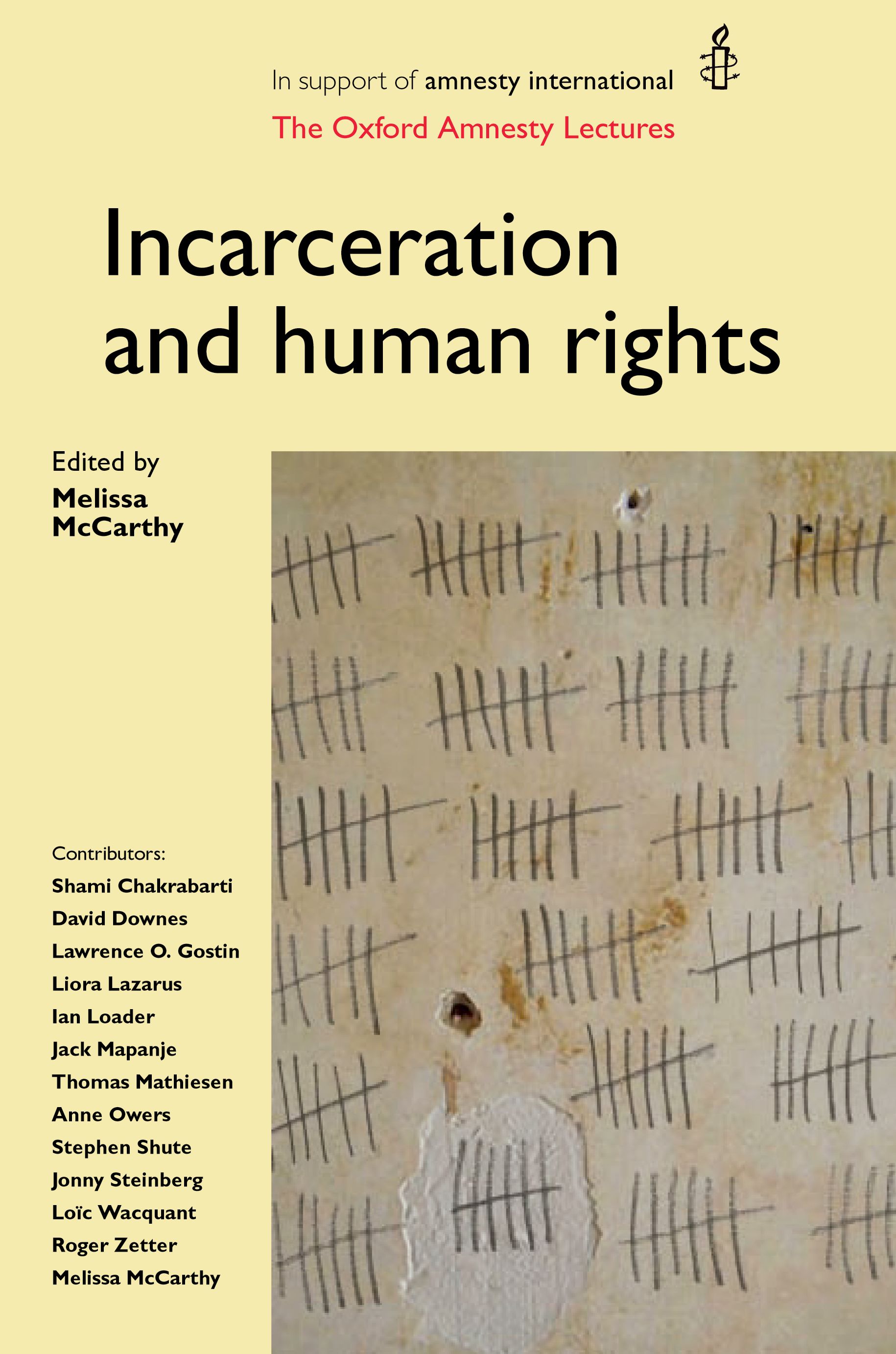
Incarceration and human rights
A collection of essays and responses from diverse contributors united in original examination of the intersection between incarceration and human rights. What do human rights concerns dictate about the practices that we tolerate in places of incarceration? And conversely, what can prisons, their hard facts and the ideas underpinning them, tell us about human rights?The book offers a diversity of voices: from the inside view of Her Majesty’s Inspector of Prisons to the words of a poet and former political prisoner; from an international policy overview of abuses of the mentally ill to a socio-economic reading of race and class in prisons. This range of approaches offers a uniquely rounded view of the topic, while each contributor’s eminence in their field gives great depth of expertise.
eBook

Collusion and Cynicism at the Urban Margins
This article examines the clandestine connections between participants in the illicit drug trade and members of state security forces to understand how they impact everyday understandings of the law. Drawing on a unique combination of long-term ethnographic fieldwork in a poor, high-crime district in Argentina and wiretapped conversations drawn from a court case involving a drug trafficking group active in the same area, we find that traffickers use illicit relationships to maintain economic control of the territory, and that collusion fosters widespread cynicism about law enforcement among residents. This article expands the literature on the covert relationships between drug trade participants and agents of the state by detailing the inner workings of collusion. Furthermore, it analyzes residents’ perceptions of police complicity as an underexplored source of legal cynicism. Finally, it offers a methodological blueprint of how to access and analyze data that capture state actions usually hidden from public view.
Este artículo examina las conexiones clandestinas entre participantes en el tráfico de drogas ilegales y miembros de las fuerzas de seguridad del estado a los efectos de entender cómo esas relaciones impactan en la manera en que la ley es entendida en la vida cotidiana. Combinando trabajo etnográfico en un barrio pobre con altos niveles de criminalidad y escuchas telefónicas registradas en un expediente judicial que involucra a un grupo de traficantes de la misma zona, encontramos que: a) los traficantes utilizan esas relaciones clandestinas para mantener control económico del territorio, y b) la colusión entre agentes del estado y traficantes alimenta un cinismo legal generalizado entre los residentes de la zona. Este artículo hace tres contribuciones. En primer lugar, expande la literatura sobre relaciones encubiertas entre participantes en el mercado de drogas ilícitas y los agentes del estado al detallar el funcionamiento de la colusión. En segundo lugar, analiza las percepciones sobre la complicidad policial como una fuente no estudiada de cinismo legal. Por último, ofrece una estrategia metodológica para acceder y analizar datos sobre acciones del estado que suelen estar ocultas.
Journal Article
The Radicalization of Race
Abstract Loïc Wacquant's “A Checkerboard of Ethnoracial Violence” offers a sharp analysis of racial violence, highlighting its varying forms, functions, and scales. We aim to enrich Wacquant's framework by unpacking the idea of cumulative radicalization. Originally developed in Holocaust studies, this concept allows one to specify connections between different forms and functions of violence by interrogating the interplay between different levels of analysis. It also sheds light on why the scale of violence sometimes shifts in destructive ways and provides mechanisms for why racialized boundaries lend themselves to mass murder. Deeper engagement with cumulative radicalization transforms checkers into simultaneous chess, as it helps us formulate a multilevel theory of violent escalation.
Journal Article
Unpacking Ethnoracial Violence
Abstract This article offers three recommendations for researchers who study comparative race and human brutality, doing so in dialogue with Loïc Wacquant's recent “A Checkerboard of Ethnoracial Violence.” The first pertains to the importance in research on ethnoracial violence of distinguishing between categorization, classification, and valuation processes. The second pertains to the importance of testing how biologized and essentialized classification schemes influence violence, in comparison to those that are more fluid and malleable. The third pertains to the process of selecting cases for comparative analyses on race and violence. Each recommendation is intended to extend Wacquant's “checkerboard” by further exploring how macro-level dynamics of racialization and violence influence micro-level cognitive, relational, and situational dynamics on the ground. Each is therefore interconnected with the other two, with the second building on the first, and third building on the first and second.
Journal Article
Body and Social Interaction—The Case of Dance. Symbolic Interactionist Perspective
The article aims at presenting the symbolic interactionism as a useful and flexible theoretical perspective in research on the human body. It shows the assumptions of symbolic interactionism in their relation to the human body, as well as explains how basic notions of this theoretical perspective are embodied—the self, social role, identity, acting, interacting. I depict the unobvious presence of the body in the classical works of George H. Mead, Anselm Strauss, Howard Becker, Erving Goffman, and in more recent ones, such as Bryan Turner, Ken Plummer, and Loïc Wacquant. I also describe the Polish contribution to the field, including research on disability, hand transplant, the identity of a disabled person, together with the influence of sport, prostitution as work, yoga, climbing, relationships between animals and humans based on gestures and bodily conduct, the socialization of young actors and actresses, non-heteronormative motherhood, and the socialization of children in sport and dance. In a case study based on the research on ballroom dancers, I show how to relate the theoretical requirements of symbolic interactionism with real human “flesh and bones.” I depict three ways of perceiving own bodies by dancers: a material, a tool, a partner; and, two processes their bodies are subjected to: sharpening and polishing a tool. I draw the link between the processual character of the body, of the symbolic interactionist theoretical perspective, and process-focused grounded theory methodology.
Journal Article

Why Does It Take a Village? The Mediation of Neighborhood Effects on Educational Achievement
The urban and educational literature has recently begun to focus on the increase of concentrated poverty in inner-city neighborhoods and the educational failure of youth often associated with living in these neighborhoods. The current study examines this issue by identifying which neighborhood characteristics influence educational achievement and what mechanisms mediate these associations. Using the National Educational Longitudinal Study of 1988 linked to 1990 census information at the neighborhood level, the current study finds not only that neighborhood characteristics predict educational outcomes but also that the strength of the predictions often rivals that associated with more commonly cited family- and school-related factors. When considering how neighborhood characteristics influence educational outcomes, theorists have proposed several mediating processes, including collective socialization, social control, social capital, perception of opportunity, and institutional characteristics. The current study reveals that these mediators account for about 40% of the neighborhood effect on educational achievement, with collective socialization having the strongest influence. Also discussed are the theoretical and policy implications of this study and directions for future research.
Journal Article

From one Out-In to another: What’s missing in Wacquant’s structural analysis
Loic Wacquant’s trenchant and much needed structural analysis owes its originality, in part, to the fact that he is an intellectual Out-In. That is, someone who observes and analyses from the perspective of both the outsider (a Frenchman who has studied ethnoracial dynamics in his native land) and an insider (a Franco-American who has studied and lived long enough in America to be able to claim true insider status). I too am an Out-In (a Jamerican who can claim equal intellectual engagement in Jamaican and American academic and social life), which is perhaps why I can better appreciate the strengths of his analysis and what is missing.
Journal Article
Changing forms of ethnicised poverty
The author examines those parts of Wacquant's (forthcoming) article where he discusses the state's rather active role in the production of the precariat or underclass, and agrees that Wilson overemphasised the role of technological and economic changes and turned little attention to the state's relative autonomy in managing these dramatic transformations. The author believes that in the countries where serious attempts have been made to establish Eastern European versions of the neo-liberal state, it is justified to speak of the underclass, ethnic ghettoes and hyperghettoes – even if in several respects they differ from what we can see in the United States.
Journal Article