
Catalogue Search | MBRL


Are you sure you want to remove the book from the shelf?

{{itemTitle}}
11,657
result(s) for
"Wages History."
Sort by:


Bound by Our Constitution
What difference does a written constitution make to public policy? How have women workers fared in a nation bound by constitutional principles, compared with those not covered by formal, written guarantees of fair procedure or equitable outcome? To investigate these questions, Vivien Hart traces the evolution of minimum wage policies in the United States and Britain from their common origins in women's politics around 1900 to their divergent outcomes in our day. She argues, contrary to common wisdom, that the advantage has been with the American constitutional system rather than the British.
Basing her analysis on primary research, Hart reconstructs legal strategies and policy decisions that revolved around the recognition of women as workers and the public definition of gender roles. Contrasting seismic shifts and expansion in American minimum wage policy with indifference and eventual abolition in Britain, she challenges preconceptions about the constraints of American constitutionalism versus British flexibility. Though constitutional requirements did block and frustrate women's attempts to gain fair wages, they also, as Hart demonstrates, created a terrain in the United States for principled debate about women, work, and the state--and a momentum for public policy--unparalleled in Britain. Hart's book should be of interest to policy, labor, women's, and legal historians, to political scientists, and to students of gender issues, law, and social policy.
eBook

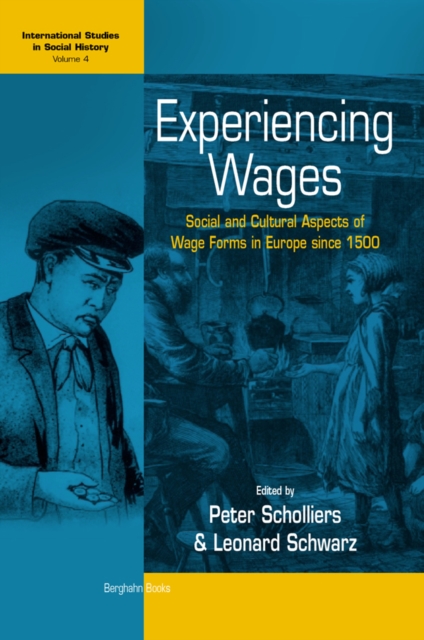
Experiencing wages
When discussing wages, historians have traditionally concentrated on the level of wages, much less on how people were paid for their work. Important aspects were thus ignored such as how frequently were wages actually paid, how much of the wage was paid in non-monetary form - whether as traditional perquisites or community relief - especially when there was often insufficient coinage available to pay wages. Covering a wide geographical area, ranging from Spain to Finland, and time span, ranging from the sixteenth century to the 1930s, this volume offers fresh perspectives on key areas in social and economic history such as the relationship between customs, moral economy, wages and the market, changing pay and wage forms and the relationship between age, gender and wages.
eBook


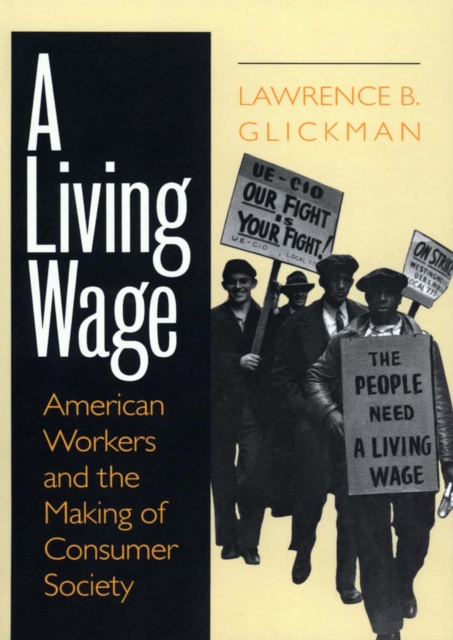
A living wage : American workers and the making of consumer society
The labor movement's response to wages shows how American workers negotiated the transition from artisan to consumer, opening up new political possibilities for organized workers and creating contradictions that continue to haunt the labor movement today.
eBook

Wages and labor markets in the United States, 1820-1860
Research by economists and economic historians has greatly expanded our knowledge of labor markets and real wages in the United States since the Civil War, but the period from 1820 to 1860 has been far less studied. Robert Margo fills this gap by collecting and analyzing the payroll records of civilians hired by the United States Army and the 1850 and 1860 manuscript federal Censuses of Social Statistics. New wage series are constructed for three occupational groups—common laborers, artisans, and white-collar workers—in each of the four major census regions—Northeast, Midwest, South Atlantic, and South Central—over the period 1820 to 1860, and also for California between 1847 and 1860. Margo uses these data, along with previously collected evidence on prices, to explore a variety of issues central to antebellum economic development. This volume makes a significant contribution to economic history by presenting a vast amount of previously unexamined data to advance the understanding of the history of wages and labor markets in the antebellum economy.
eBook