
Catalogue Search | MBRL


Are you sure you want to remove the book from the shelf?

{{itemTitle}}
52
result(s) for
"Wagner, Richard, 1813-1883 Criticism and interpretation."
Sort by:

The trouble with Wagner
In this unique and hybrid book, cultural and music historian Michael P. Steinberg combines a close analysis of Wagnerian music drama with a personal account of his work as a dramaturg on the bicentennial production of The Ring of the Nibelung for the Teatro alla Scala Milan and the Berlin State Opera. Steinberg shows how Wagner uses the power of a modern mythology to heighten music's claims to knowledge, thereby fusing not only art and politics, but truth and lies as well. Rather than attempting to separate value and violence, or \"the good from the bad,\" as much Wagner scholarship as well as popular writing have tended to do, Steinberg proposes that we confront this paradox and look to the capacity of the stage to explore its depths and implications. Drawing on decades of engagement with Wagner and of experience teaching opera across disciplines, The Trouble with Wagner is packed with novel insights for experts and interested readers alike.
BOOK
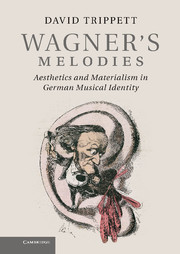
Wagner's Melodies
Since the 1840s, critics have lambasted Wagner for lacking the ability to compose melody. But for him, melody was fundamental - 'music's only form'. This incongruity testifies to the surprising difficulties during the nineteenth century of conceptualizing melody. Despite its indispensable place in opera, contemporary theorists were unable even to agree on a definition for it. In Wagner's Melodies, David Trippett re-examines Wagner's central aesthetic claims, placing the composer's ideas about melody in the context of the scientific discourse of his age: from the emergence of the natural sciences and historical linguistics to sources about music's stimulation of the body and inventions for 'automatic' composition. Interweaving a rich variety of material from the history of science, music theory, music criticism, private correspondence and court reports, Trippett uncovers a new and controversial discourse that placed melody at the apex of artistic self-consciousness and generated problems of urgent dimensions for German music aesthetics.
eBook

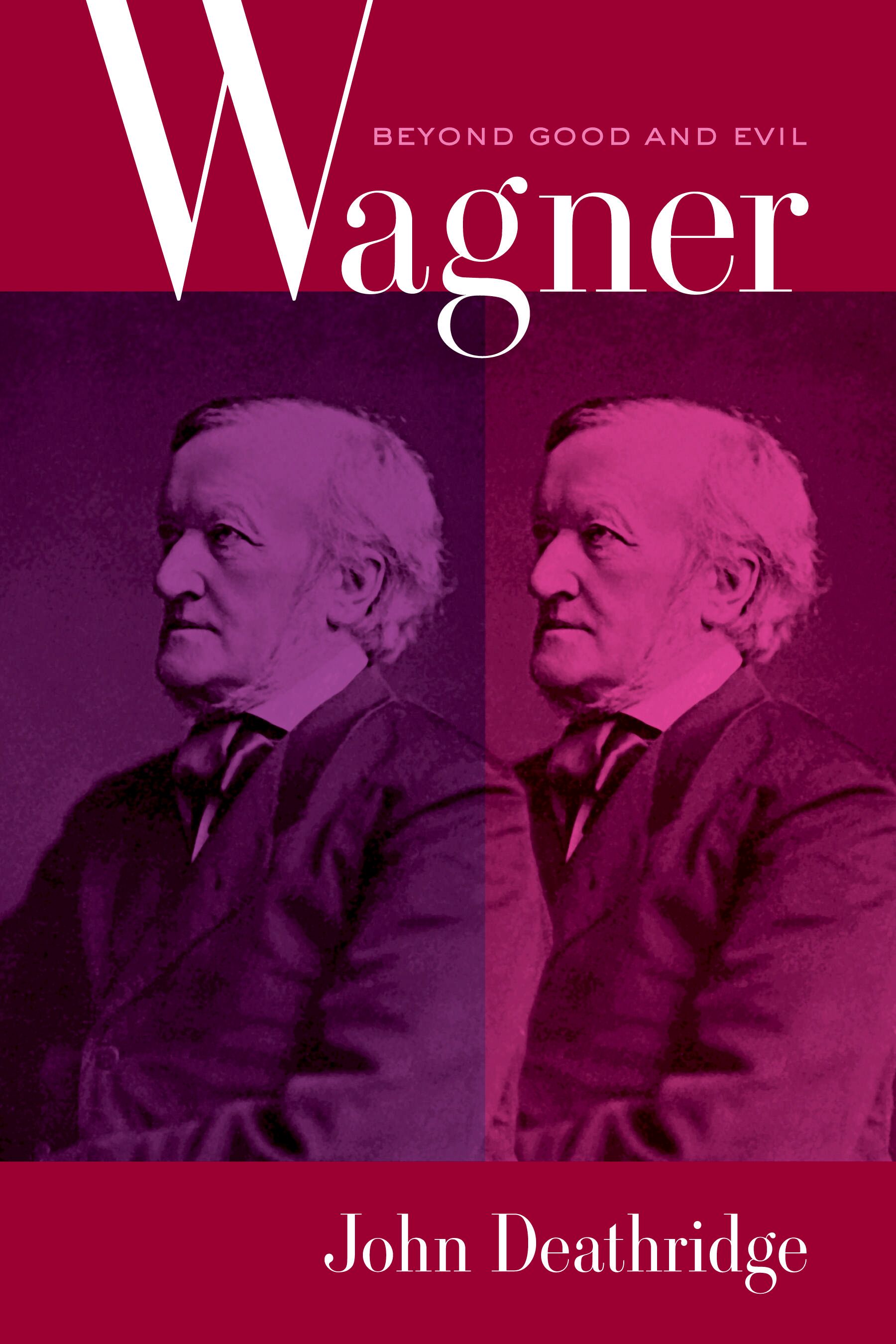
Wagner beyond good and evil
John Deathridge presents a different and critical view of Richard Wagner based on recent research that does not shy away from some unpalatable truths about this most controversial of composers in the canon of Western music. Deathridge writes authoritatively on what Wagner did, said, and wrote, drawing from abundant material already well known but also from less familiar sources, including hitherto seldom discussed letters and diaries and previously unpublished musical sketches. At the same time, Deathridge suggests that a true estimation of Wagner does not lie in an all too easy condemnation of his many provocative actions and ideas. Rather, it is to be found in the questions about the modern world and our place in it posed by the best of his stage works, among them Tristan und Isolde and Der Ring des Nibelungen. Controversy about Wagner is unlikely to go away, but rather than taking the line of least resistance by regarding him blandly as a \"classic\" in the Western art tradition, Deathridge suggests that we need to confront the debates that have raged about him and reach beyond them, toward a fresh and engaging assessment of what he ultimately achieved.
eBook

Wagner and the creation of The Ring
\"Part cultural history, part biography, this is the fascinating story of Richard Wagner's life, influences, gift for storytelling, and artistic revolution, culminating in his dramatic journey to write The Ring Cycle. The Ring Cycle is one of the most epic and compelling operas of the nineteenth century, created by a composer who was, alongside Dickens, Tolstoy, and Victor Hugo, also one of the century's master storytellers. But the story of how Richard Wagner created the work is one full of intrigue and triumphs against unlikely odds--as well as controversy, due to the composer's anti-semitic views and popularity with the Nazi party. In Wagner and the Creation of the Ring, Michael Downes combines cultural history and biography to recount the colorful, fascinating, and insightful journey behind the creation of The Ring and its mythology. He tells the story of how and why this extraordinary masterpiece came into being, why it takes the form it does, why it fascinates and obsesses so many--and horrifies others--and why it still matters today.\"
BOOK

Richard Wagner and His World
Richard Wagner (1813-1883) aimed to be more than just a composer. He set out to redefine opera as a \"total work of art\" combining the highest aspirations of drama, poetry, the symphony, the visual arts, even religion and philosophy. Equally celebrated and vilified in his own time, Wagner continues to provoke debate today regarding his political legacy as well as his music and aesthetic theories.Wagner and His Worldexamines his works in their intellectual and cultural contexts.
Seven original essays investigate such topics as music drama in light of rituals of naming in the composer's works and the politics of genre; the role of leitmotif in Wagner's reception; the urge for extinction inTristan und Isoldeas psychology and symbol; Wagner as his own stage director; his conflicted relationship with pianist-composer Franz Liszt; the anti-French satireEine Kapitulationin the context of the Franco-Prussian War; and responses of Jewish writers and musicians to Wagner's anti-Semitism. In addition to the editor, the contributors are Karol Berger, Leon Botstein, Lydia Goehr, Kenneth Hamilton, Katherine Syer, and Christian Thorau.
This book also includes translations of essays, reviews, and memoirs by champions and detractors of Wagner; glimpses into his domestic sphere in Tribschen and Bayreuth; and all of Wagner's program notes to his own works. Introductions and annotations are provided by the editor and David Breckbill, Mary A. Cicora, James Deaville, Annegret Fauser, Steven Huebner, David Trippett, and Nicholas Vazsonyi.
eBook


Wagner, Schumann, and the lessons of Beethoven’s Ninth
In this original study, Christopher Alan Reynolds examines the influence of Beethoven's Ninth Symphony on two major nineteenth-century composers, Richard Wagner and Robert Schumann. During 1845-46 the compositional styles of Schumann and Wagner changed in a common direction, toward a style that was more contrapuntal, more densely motivic, and engaged in processes of thematic transformation. Reynolds shows that the stylistic advances that both composers made in Dresden in 1845-46 stemmed from a deepened understanding of Beethoven's techniques and strategies in the Ninth Symphony. The evidence provided by their compositions from this pivotal year and the surrounding years suggests that they discussed Beethoven's Ninth with each other in the months leading up to the performance of this work, which Wagner conducted on Palm Sunday in 1846. Two primary aspects that appear to have interested them both are Beethoven's use of counterpoint involving contrary motion and his gradual development of the \"Ode to Joy\" melody through the preceding movements. Combining a novel examination of the historical record with careful readings of the music, Reynolds adds further layers to this argument, speculating that Wagner and Schumann may not have come to these discoveries entirely independently of each other. The trail of influences that Reynolds explores extends back to the music of Bach and ahead toTristan and Isolde,as well as to Brahms's First Symphony.
eBook

