
Catalogue Search | MBRL


Are you sure you want to remove the book from the shelf?

{{itemTitle}}
8,707
result(s) for
"War Economic aspects."
Sort by:


The Economic Weapon
The first international history of the emergence of
economic sanctions during the interwar period and the legacy of
this development Economic sanctions dominate the landscape
of world politics today. First developed in the early twentieth
century as a way of exploiting the flows of globalization to defend
liberal internationalism, their appeal is that they function as an
alternative to war. This view, however, ignores the dark paradox at
their core: designed to prevent war, economic sanctions are modeled
on devastating techniques of warfare. Tracing the use of economic
sanctions from the blockades of World War I to the policing of
colonial empires and the interwar confrontation with fascism,
Nicholas Mulder uses extensive archival research in a political,
economic, legal, and military history that reveals how a coercive
wartime tool was adopted as an instrument of peacekeeping by the
League of Nations. This timely study casts an overdue light on why
sanctions are widely considered a form of war, and why their
unintended consequences are so tremendous.
eBook


Public Spending and Democracy in Classical Athens
In his On the Glory of Athens, Plutarch complained that the Athenian people spent more on the production of dramatic festivals and \"the misfortunes of Medeas and Electras than they did on maintaining their empire and fighting for their liberty against the Persians.\" This view of the Athenians' misplaced priorities became orthodoxy with the publication of August Böckh's 1817 book Die Staatshaushaltung der Athener [The Public Economy of Athens], which criticized the classical Athenian dēmos for spending more on festivals than on wars and for levying unjust taxes to pay for their bloated government. But were the Athenians' priorities really as misplaced as ancient and modern historians believed?Drawing on lines of evidence not available in Böckh's time, Public Spending and Democracy in Classical Athens calculates the real costs of religion, politics, and war to settle the long-standing debate about what the ancient Athenians valued most highly. David M. Pritchard explains that, in Athenian democracy, voters had full control over public spending. When they voted for a bill, they always knew its cost and how much they normally spent on such bills. Therefore, the sums they chose to spend on festivals, politics, and the armed forces reflected the order of the priorities that they had set for their state. By calculating these sums, Pritchard convincingly demonstrates that it was not religion or politics but war that was the overriding priority of the Athenian people.
eBook

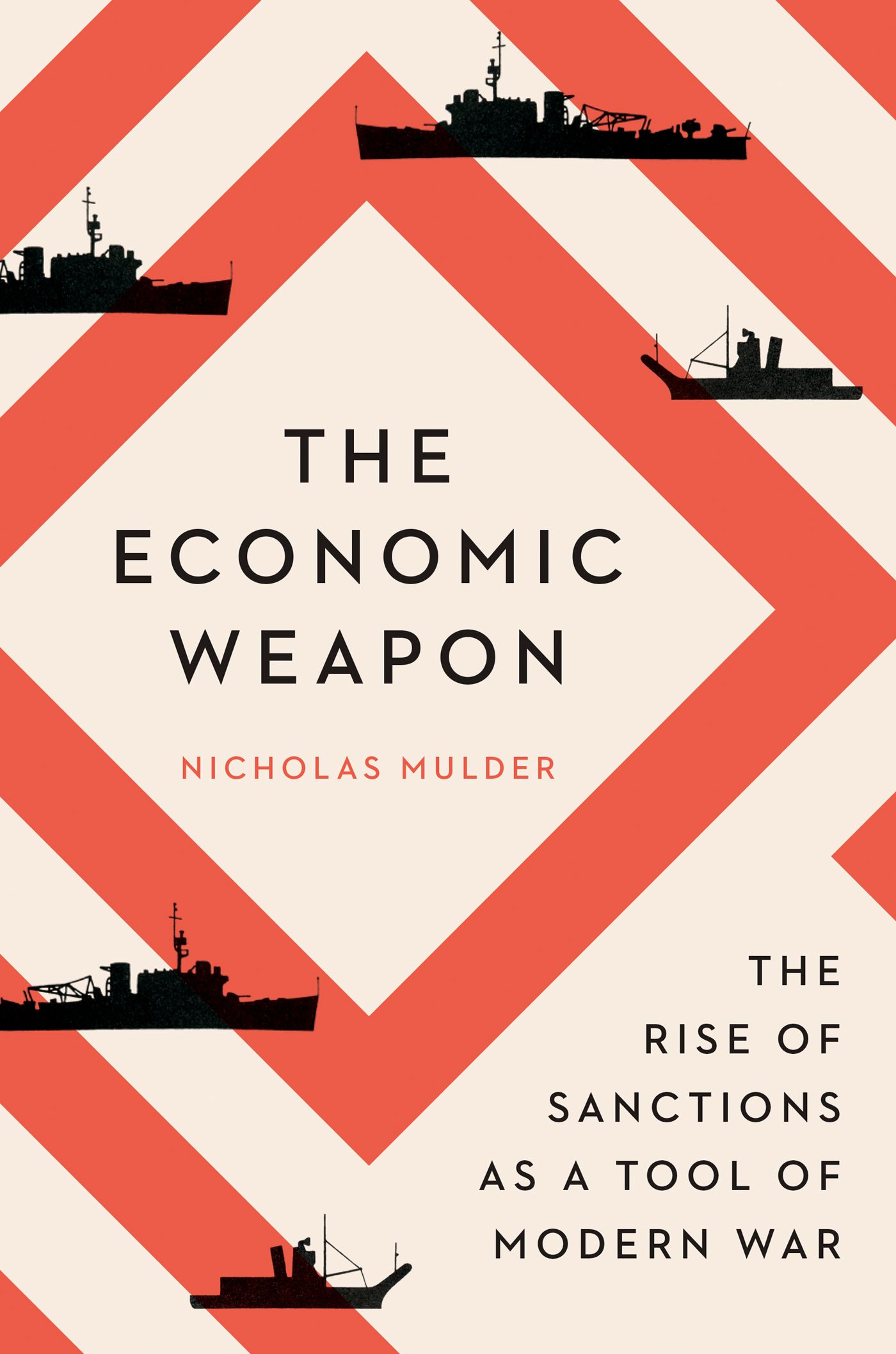
The economic weapon : the rise of sanctions as a tool of modern war
\"Tracing the history of economic sanctions from the blockades of World War I to the policing of colonial empires and the interwar confrontation with fascism, Nicholas Mulder combines political, economic, legal, and military history to reveal how a coercive wartime tool was adopted as an instrument of peacekeeping by the League of Nations.This timely study casts an overdue light on why sanctions are widely considered a form of war, and why their unintended consequences are so tremendous.\"
eBook

Taxing wars : the American way of war finance and the decline of democracy
\"Why have the wars in Afghanistan and Iraq lasted longer than any others in American history? One view is that the move to an all-volunteer force and drones have allowed the wars to continue almost unnoticed for years. Taxing Wars suggests how Americans bear the burden in treasure has also changed, with recent wars financed by debt rather than taxes. This shift has eroded accountability and contributed to the phenomenon of perpetual war\"-- Provided by publisher.
Book

Oil, the state, and war : the foreign policies of petrostates
In Oil, the State, and War, Emma Ashford explores the many potential links between domestic oil production and foreign policy behavior. By examining the behaviors of three types of petrostates-oil-dependent states, oil-wealthy states, and super-producers-Ashford sheds light on the diversity of petrostates and how they shape international affairs.
eBook


Conflict, Crime, and the State in Postcommunist Eurasia
In the years after the collapse of the Soviet Union and its zone of influence, few insurgent groups had the resources necessary to confront regular armies. At the same time, state-sponsored financial support for insurgencies dramatically decreased. The pressing need to raise funds for war and the weakness of law enforcement in conflict zones create fertile conditions for organized crime; indeed, there is a mounting body of evidence correlating armed conflict and illicit economy, though the nature of this link and its impact on regional politics has not been well understood.Conflict, Crime, and the State in Postcommunist Eurasiaexplores the relationship between ideologically motivated insurgents, profit-motivated crime, and state institutions in eight conflict zones. Through detailed case studies, the contributors demonstrate how the operations and incentives of insurgents may emerge and shift over time: for some armed groups, crime can become an end in itself beyond a financial means, but not all armed groups equally adapt to illicit commerce. They also show how the criminalization of state institutions is a lingering concerns even after armed conflicts end.Conflict, Crime, and the State in Postcommunist Eurasiaplaces the case studies along a continuum of political and criminal behavior, examining the factors that motivate insurgents to seek out criminal alliance, how this connection affects the dynamics of conflict, and what risks remain during postconflict transition. These findings will provide a better understanding of the types of challenges likely to confront peacekeeping and statebuilding endeavors in other parts of the world.Contributors:Jana Arsovska, Svante Cornell, Johan Engvall, Michael Jonsson, Alexandru Molcean, Niklas Nilsson, Murad Batal al-Shishani, Natalie Verständig.
eBook