
Catalogue Search | MBRL


Are you sure you want to remove the book from the shelf?

{{itemTitle}}
21
result(s) for
"War and society Great Britain History 19th century."
Sort by:


War, Culture and Society in Early Modern South Asia, 1740-1849
This book argues that the role of the British East India Company in transforming warfare in South Asia has been overestimated. Although it agrees with conventional wisdom that, before the British, the nature of Indian society made it difficult for central authorities to establish themselves fully and develop a monopoly over armed force, the book argues that changes to warfare in South Asia were more gradual, and the result of more complicated socio-economic forces than has been hitherto acknowledged.
The book covers the period from 1740, when the British first became a major power broker in south India, to 1849, when the British eliminated the last substantial indigenous kingdom in the sub-continent. Placing South Asian military history in a global, comparative context, it examines military innovations; armies and how they conducted themselves; navies and naval warfare; major Indian military powers - such as the Mysore and Khalsa kingdoms, the Maratha confederacy - and the British, explaining why they succeeded.
eBook

In these times : living in Britain through Napoleon's wars, 1793-1815
\"A people's history of life in Britain during the Napoleonic Wars\"-- Provided by publisher.
Book

Martial masculinities
This collection explores the role of martial masculinities in shaping nineteenth-century British culture and society in a period framed by two of the greatest wars the world had ever known. It offers a fresh, interdisciplinary perspective on an emerging field of study and draws on historical, literary, visual and musical sources to demonstrate the centrality of the military and its masculine dimensions in the shaping of Victorian and Edwardian personal and national identities. Focusing on both the experience of military service and its imaginative forms, it examines such topics as bodies and habits, families and domesticity, heroism and chivalry, religion and militarism, and youth and fantasy. This collection will be required reading for anyone interested in the cultures of war and masculinity in the long nineteenth century.
eBook


Leisure, citizenship and working-class men in Britain, 1850-1945
From the bawdy audience of a Victorian Penny Gaff to the excitable crowd of an early twentieth century football match, working-class male leisure proved to be a contentious issue for contemporary observers. For middle-class social reformers from across the political spectrum, the spectacle of popular leisure offered a view of working-class habits, and a means by which lifestyles and behaviour could be assessed. For the mid-Victorians, gingerly stepping into a new mass democratic age, the desire to create a bond between the recently enfranchised male worker and the nation was more important than ever. This trend continued as those in governance perceived that 'good' leisure and citizenship could fend off challenges to social stability such as imperial decline, the mass degenerate city, hooliganism, civic and voter apathy and fascism. Thus, between 1850 and 1945 the issue of male leisure became enmeshed with changing contemporary debates on the encroaching mass society and its implications for good citizenry. Working-class culture has often been depicted as an atomised and fragmented entity lacking any significant cultural contestation. Drawing on a wealth of primary and secondary source material, this book powerfully challenges these recent assumptions and places social class centre stage once more. Arguing that there was a remarkable continuity in male working-class culture between 1850 and 1945, Beaven contends that despite changing socio-economic contexts, male working-class culture continued to draw from a tradition of active participation and cultural contestation that was both class and gender exclusive. This lively and readable book draws from fascinating accounts from those who participated in and observed contemporary popular leisure making it of importance to students and teachers of social history, popular culture, urban history, historical geography, historical sociology and cultural studies.
eBook

Love and Romance in Britain, 1918 - 1970
The new histories of love and romance offered within this edited collection illustrate the many changes, but also the surprising continuities in understandings of love, romance, affection, intimacy and sex from the First World War until the beginning of the Women's Liberation movement.
eBook

Henry Dresser and Victorian ornithology
This book explores the life of Henry Dresser (1838-1915), one of the most productive British ornithologists of the mid-late nineteenth and early twentieth centuries, and is largely based on previously unpublished archival material. Dresser travelled widely and spent time in Texas during the American Civil War. He built enormous collections of skins and eggs of birds from Europe, North America and Asia, which formed the basis of over 100 publications, including some of the finest bird books of the late nineteenth century. Dresser was a leading figure in scientific society and in the early bird conservation movement; his correspondence and diaries reveal the inner workings, motivations, personal relationships and rivalries that existed among the leading ornithologists.
eBook
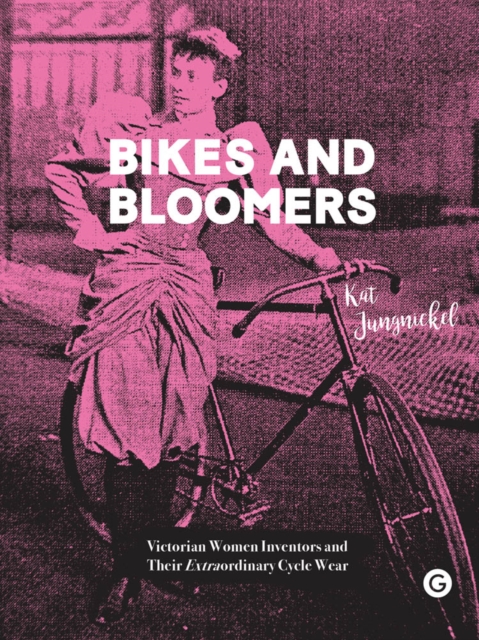
Bikes and Bloomers
The bicycle in Victorian Britain is often celebrated as a vehicle of women's liberation. Less noted is another critical technology with which women forged new and mobile public lives - cycle wear. This illustrated account of women's cycle wear brings together Victorian engineering and radical feminist invention to supply a missing chapter in the history of feminism.
eBook

United Nations and peacekeeping, 1988-95
Using more than 600 UN documents that analyse the discussions in the UN Security Council, General Assembly and Secretariat, The United Nations and peacekeeping, 1988-95 presents innovative explanations on how after the Cold War UN peacekeeping operations became the dominant response to conflicts around the globe.
eBook