Catalogue Search | MBRL


Are you sure you want to remove the book from the shelf?

{{itemTitle}}
172
result(s) for
"War and society South Asia."
Sort by:


Between War and the State
In Between War and the
State , Van Nguyen-Marshall examines an array
of voluntary activities, including mutual-help, professional,
charitable, community development, student, women's, and rights
organizations active in South Vietnam from 1954 to 1975.
By bringing focus to the public lives of South Vietnamese people,
Between War and the State challenges persistent
stereotypes of South Vietnam as a place without society or agency.
Such robust associational life underscores how an active civil
society survived despite difficulties imposed by the war,
government restrictions, economic hardship, and external political
forces. These competing political forces, which included the United
States, Western aid agencies, and Vietnamese communist agents,
created a highly competitive arena wherein the South Vietnamese
state did not have a monopoly on persuasive or coercive power. To
maintain its influence, the state sometimes needed to accommodate
groups and limit its use of violence. Civil society participants in
South Vietnam leveraged their social connections, made alliances,
appealed to the domestic and international public, and used street
protests to voice their concerns, secure their interests, and carry
out their activities.
eBook

War, Culture and Society in Early Modern South Asia, 1740-1849
This book argues that the role of the British East India Company in transforming warfare in South Asia has been overestimated. Although it agrees with conventional wisdom that, before the British, the nature of Indian society made it difficult for central authorities to establish themselves fully and develop a monopoly over armed force, the book argues that changes to warfare in South Asia were more gradual, and the result of more complicated socio-economic forces than has been hitherto acknowledged.
The book covers the period from 1740, when the British first became a major power broker in south India, to 1849, when the British eliminated the last substantial indigenous kingdom in the sub-continent. Placing South Asian military history in a global, comparative context, it examines military innovations; armies and how they conducted themselves; navies and naval warfare; major Indian military powers - such as the Mysore and Khalsa kingdoms, the Maratha confederacy - and the British, explaining why they succeeded.
eBook

East Asia Beyond the History Wars
East Asia is now the world's economic powerhouse, but ghosts of history continue to trouble relations between the key countries of the region, particularly between Japan, China and the two Koreas. Unhappy legacies of Japan's military expansion in pre-war Asia prompt on-going calls for apologies, while conflicts over ownership of cultural heritage cause friction between China and Korea, and no peace treaty has ever been signed to conclude the Korean War.
For over a decade, the region's governments and non-government groups have sought to confront the ghosts of the past by developing paths to reconciliation. Focusing particularly on popular culture and grassroots action, East Asia beyond the History Wars explores these East Asian approaches to historical reconciliation. This book examines how Korean historians from North and South exchange ideas about national history, how Chinese film-makers reframe their views of the war with Japan, and how Japanese social activists develop grassroots reconciliation projects with counterparts from Korea and elsewhere. As the volume's studies of museums, monuments and memorials show, East Asian public images of modern history are changing, but change is fragile and uncertain. This unfinished story of East Asia's search for historical reconciliation has important implications for the study of popular memory worldwide.
Presenting a fresh perspective on reconciliation which draws on both history and cultural studies, this book will be welcomed by students and scholars working in the fields of Asian history, Asian culture and society as well as those interested in war and memory studies more generally.
eBook

Locked in Place
Why were some countries able to build \"developmental states\" in the decades after World War II while others were not? Through a richly detailed examination of India's experience,Locked in Placeargues that the critical factor was the reaction of domestic capitalists to the state-building project. During the 1950s and 1960s, India launched an extremely ambitious and highly regarded program of state-led development. But it soon became clear that the Indian state lacked the institutional capacity to carry out rapid industrialization. Drawing on newly available archival sources, Vivek Chibber mounts a forceful challenge to conventional arguments by showing that the insufficient state capacity stemmed mainly from Indian industrialists' massive campaign, in the years after Independence, against a strong developmental state.
Chibber contrasts India's experience with the success of a similar program of state-building in South Korea, where political elites managed to harness domestic capitalists to their agenda. He then develops a theory of the structural conditions that can account for the different reactions of Indian and Korean capitalists as rational responses to the distinct development models adopted in each country.
Provocative and marked by clarity of prose, this book is also the first historical study of India's post-colonial industrial strategy. Emphasizing the central role of capital in the state-building process, and restoring class analysis to the core of the political economy of development,Locked in Placeis an innovative work of theoretical power that will interest development specialists, political scientists, and historians of the subcontinent.
eBook

India At War
World War II was a global catastrophe. Far broader than just the critical struggle between Allies and Axis, its ramifications were felt throughout the world. It was a time of social relocation, reorienting ideas of patriotism and geographical attachment, and forcing the movement of people across oceans and continents. In India at War, Yasmin Khan offers an account of India's role in the conflict, one that takes into consideration the social, economic, and cultural changes that occurred in South Asia between 1939 and 1945-and reveals how vital the Commonwealth's contribution was to the war effort. Khan's sweeping work centers on the lives of ordinary Indian people, exploring the ways they were affected by a cataclysmic war with origins far beyond Indian shores. In manpower alone, India's contribution was staggering; it produced the largest volunteer army in world history, with 2.5 million men. Indians were engaged in making the raw materials and food stuffs needed by the Allies, and became involved in the construction of airstrips, barracks, hospitals, internee camps, roads and railways. Their lives were also profoundly affected by the presence of the large Allied army in the region, including not only British but American, African, and Chinese troops. Madras was bombed by the Japanese and the Andaman and Nicobar Islands were occupied, while the Bengal famine of 1943-in which perhaps three million Bengalis died-was a man-made disaster precipitated by the effects of the war. This authoritative account offers a critically important look at the contributions of colonial manpower and resources essential to sustaining the war, and emphasizes the significant ways in which the conflict shaped modern India.
eBook

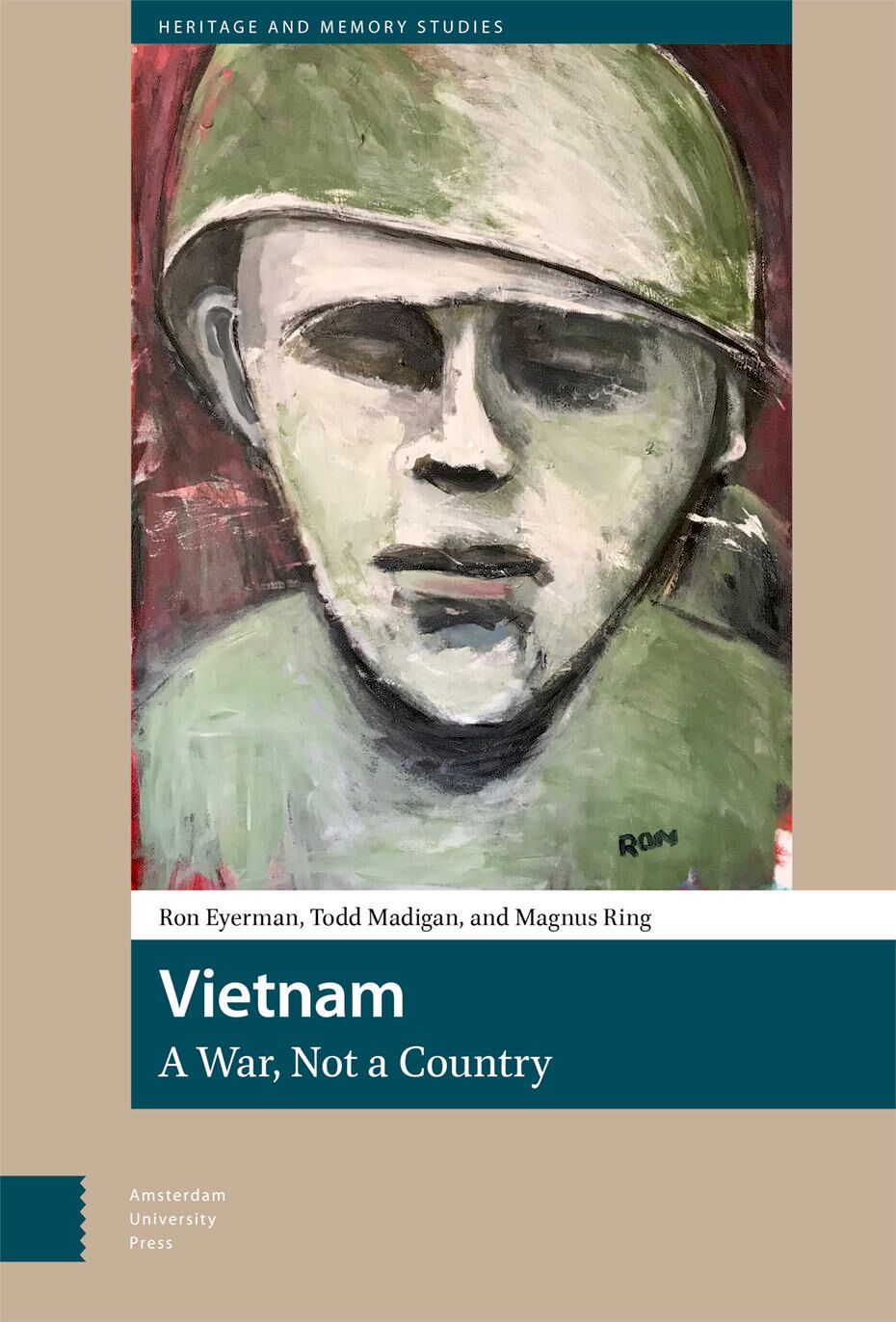
Vietnam, A War, Not a Country
Vietnam, A War, Not a Country explores the conflicting ways in which the American-Vietnamese War has been collectively remembered and represented from the perspective of the war's three primary belligerents: the Vietnamese communists, the South Vietnamese, and the Americans. The book examines how the three different collectives memorialize this traumatizing historical event. Within each of these three groups there exists a number of competing narratives, generating not only a sense of shared meaning and community, but also impassioned social conflict. In order to trace these narratives within each collectivity, the authors develop the concept of arenas of memory, distinct discourses that are tied to specific individuals, organizations, and institutions that advocate specific narratives through specific forms of media. Their analysis leads them to make the case as to whether each of these societies experienced a cultural trauma as a result of the way in which the war is remembered.
eBook

The Umbrella Movement
This volume examines the most spectacular struggle for democracy in post-handover Hong Kong. Bringing together scholars with different disciplinary focuses and comparative perspectives from mainland China, Taiwan and Macau, one common thread that stitches the chapters is the use of first-hand data collected through on-site fieldwork. This study unearths how trajectories can create favourable conditions for the spontaneous civil resistance despite the absence of political opportunities and surveys the dynamics through which the protestors, the regime and the wider public responses differently to the prolonged contentious space. The Umbrella Movement: Civil Resistance and Contentious Space in Hong Kong offers an informed analysis of the political future of Hong Kong and its relations with the authoritarian sovereignty as well as sheds light on the methodological challenges and promises in studying modern-day protests.
eBook