
Catalogue Search | MBRL


Are you sure you want to remove the book from the shelf?

{{itemTitle}}
107
result(s) for
"War on Terrorism, 2001-2009, in mass media"
Sort by:


Beyond the Checkpoint
Since the 9/11 attacks on U.S. soil, American citizenship has been redefined by the visual images associated with the Global War on Terror (GWOT). Rebecca A. Adelman contends that, in viewing images such as security footage of the 9/11 hijackers, film portrayals of the attacks and subsequent wars, memorials commemorating the attacks, and even graphics associated with increased security in airports, American citizens have been recast as militarized spectators, brought together through the production, circulation, and consumption of these visual artifacts. Beyond the Checkpoint reveals that the visual is essential to the prosecution of the GWOT domestically and abroad, and that it functions as a crucial mechanism in the ongoing formation of the U.S. state itself and an essential component of contemporary American citizenship. Tracing the connections between citizenship and spectatorship, and moving beyond the close reading of visual representations, this book focuses on the institutions and actors that create, monitor, and regulate the visual landscape of the GWOT. Adelman looks around and through common images to follow the complex patterns of practice by which institutions and audiences engage them in various contexts. In the process, she proposes a new methodology for studying visual cultures of conflict, and related phenomena like violence, terror, and suffering that are notoriously difficult to represent. Attending to previously unanalyzed dimensions of this conflict, this book illustrates the complexity of GWOT visual culture and the variegated experiences of citizenship that result as Americans navigate this terrain.
eBook

Depicting the veil : transnational sexism and the war on terror
This text exposes how gendered Orientalism is wielded to justify Western imperialism. Over the last ten years, Western governments and mainstream media have utilized concepts of white masculine supremacy and feminine helplessness, juxtaposed with Orientalist images depicting women of colour as mysterious, sinister, and dangerous to support war. Oscillating between 'Mrs. Anthrax', female suicide bombers and tragic, helpless victims, representations of 'brown women' have spawned both rescue narratives and terrorist alerts.
Book
Hijacking History
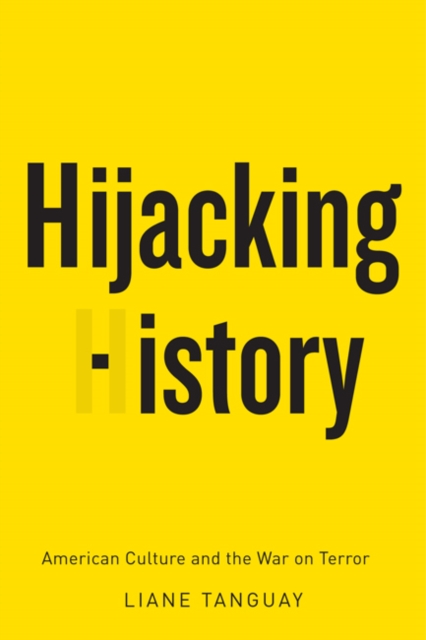
In Hijacking History, Liane Tanguay unravels the ideology behind an American enterprise unprecedented in scope, ambition, and brazen claim to global supremacy: the War on Terror. She argues that the fears, anxieties, and even the hopes encoded in American popular culture account for the public's passive acceptance of the Bush administration’s wars overseas and violation of many of the rights, privileges, and freedoms they claimed to defend. In her analysis, Tanguay critically examines the neoconservative contention that the current system of liberal-democratic capitalism represents the peak of human evolution - a claim that creates the impression of a \"post-historical\" age. Establishing a continuity between the \"post-historical\" imaginary and the attacks of 9/11, the book examines the links between shifting justifications for the war, renewed militarism, and capitalist globalization. Reviewing a wide range of media including Hollywood films, network television, and presidential rhetoric, Tanguay calls for a revival of politics in popular culture and rejects the politics of fear as disseminated by mass media. A timely retrospective on the War on Terror, Hijacking History examines popular representations of US military action and dissects both the logic and the aesthetics by which the dominant discourses strive to justify war, while revealing how some of those forces can ultimately contribute to an ideology of resistance.
eBook


Tough Sell
Like the War on Terror, the Media War rages on. More than ever, America's ability to fight and win against ISIS requires that we understand how best to communicate about war in the digital age. Tom Basile takes readers behind the scenes during his time as a civilian advisor in Iraq during the Iraq War, describing his mission and the struggle to communicate about the war as it became more deadly and less popular at home.The U.S.-led coalition wasn't merely engaged in a fight to build a more tolerant, participatory society against incredible odds. It was also in a constant clash with forces that influenced public perception about the mission. During those difficult years, it became clear that warfare was now, more than ever, a blend of policy, politics, and the business of journalism.Basile critiques the media's reporting and assesses the Bush administration's home-front communications strategy to argue that if policymakers fail to effectively articulate their strategy, manage their message, and counter misinformation, they will find themselves unable to execute that policy. That, Basile argues, places the United States at great risk.Tough Sellblends Basile's personal story with lessons from the media war in Iraq that can improve our ability to communicate about and prosecute the War on Terror.
eBook


Reframing 9/11
September 11th, 2001 remains a focal point of American consciousness, a site demanding ongoing excavation, a site at which to mark before and after “everything” changed. In ways both real and intangible the entire sequence of events of that day continues to resonate in an endlessly proliferating aftermath of meanings that continue to evolve. Presenting a collection of analyses by an international body of scholars that examines America's recent history, this book focuses on popular culture as a profound discursive site of anxiety and discussion about 9/11 and demystifies the day's events in order to contextualize them into a historically grounded series of narratives that recognizes the complex relations of a globalized world. Essays in Reframing 9/11 share a collective drive to encourage new and original approaches for understanding the issues both within and beyond the official political rhetoric of the events of the “The Global War on Terror” and issues of national security.
eBook

Hijacking history : American culture and the war on terror
\"In Hijacking History, Liane Tanguay unravels the ideology behind an American enterprise unprecedented in scope, ambition, and brazen claim to global supremacy: the War on Terror. She argues that the fears, anxieties, and even the hopes encoded in American popular culture account for the public's passive acceptance of the Bush administration's wars overseas and violation of many of the rights, privileges, and freedoms they claimed to defend. In her analysis, Tanguay critically examines the neoconservative contention that the current system of liberal-democratic capitalism represents the peak of human evolution - a claim that creates the impression of a \"post-historical\" age. Establishing a continuity between the \"post-historical\" imaginary and the attacks of 9/11, the book examines the links between shifting justifications for the war, renewed militarism, and capitalist globalization. Reviewing a wide range of media including Hollywood films, network television, and presidential rhetoric, Tanguay calls for a revival of politics in popular culture and rejects the politics of fear as disseminated by mass media. A timely retrospective on the War on Terror, Hijacking History examines popular representations of US military action and dissects both the logic and the aesthetics by which the dominant discourses strive to justify war, while revealing how some of those forces can ultimately contribute to an ideology of resistance.\"--Publisher's website.
Book

Hybrid media events : the Charlie Hebdo attacks and global circulation of terrorist violence
What are hybrid media events? And how do these events shape our lives in the present digital age? This book addresses these questions by explaining how terrorist violence makes global events. The empirical analyses are based on the case of Charlie Hebdo attacks in 2015 and the global circulation of solidarities and anger connected with the attacks.
eBook