
Catalogue Search | MBRL


Are you sure you want to remove the book from the shelf?

{{itemTitle}}
29,858
result(s) for
"War theaters"
Sort by:

The Jewel and the key
Sixteen-year-old Addie, an aspiring actress on a mission to save the historic Jewel Theater, time travels between Seattle at the beginning of the War on Terror and the Seattle of WWI, with the help of a magic mirror. In both times the existence of the Jewel is threatened, war is looming, and someone she cares about is determined to fight.
Book

Broadway Goes to War
The American theater was not ignorant of the developments brought on by World War II, and actively addressed and debated timely, controversial topics for the duration of the war, including neutrality and isolationism, racism and genocide, and heroism and battle fatigue. Productions such as Watch on the Rhine (1941), The Moon is Down (1942), Tomorrow the World (1943), and A Bell for Adano (1944) encouraged public discussion of the war's impact on daily life and raised critical questions about the conflict well before other forms of popular media. American drama of the 1940s is frequently overlooked, but the plays performed during this eventful decade provide a picture of the rich and complex experience of living in the United States during the war years. McLaughlin and Parry's work fills a significant gap in the history of theater and popular culture, showing that American society was more divided and less idealistic than the received histories of the WWII home front and the entertainment industry recognize.
eBook

Performing Trauma in Central Africa
What are the stakes of performance in a time of war? How is artistic expression prone to manipulation by the state and international humanitarian organizations? From the standpoint of empire, Laura Edmondson explores cultural production that responds to the 1994 genocide in Rwanda, the twenty-year civil war in northern Uganda, and regional conflict in the eastern part of the Democratic Republic of the Congo. She examines memorial ceremonies, plays, indigenous performance, NGO media campaigns, and contemporary dance to reveal how artists and cultural workers challenge state and humanitarian narratives in the shadow of empire and how empire, in turn, infiltrates creative capacities. Carefully contextualizing these narratives within the charged political terrain of the Great Lakes Region, Edmondson deepens our understanding of the role of creative expression and cultural agency in conflict and postconflict zones.
eBook
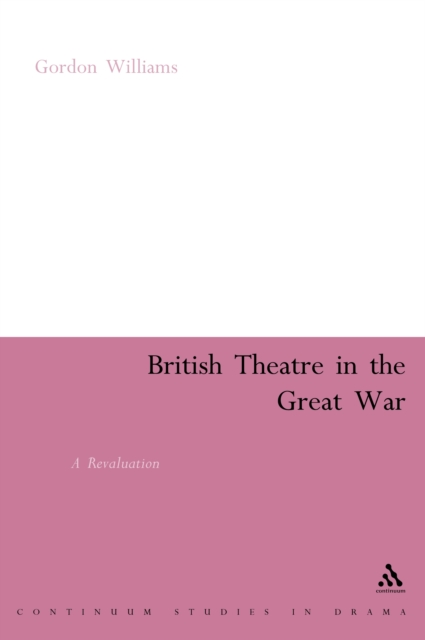
British theatre in the Great War : a revaluation
British Theatre in the Great War deals with a theatrical phase customarily dismissed by those charting twentieth-century developments. What becomes clear is that assessment by unsuitable literary criteria has masked the importance of the war years in British theatrical history. In avoiding a texts bias, the book reveals a period of unsurpassed prosperity in which the stage's substantial contribution to the war effort is only one notable feature. That it also saw the commercial theater's absorption of Continental avant-gardeism by way of revue, the last great epoch of music hall, the rise of the Old Vic with a project in opera and Shakespeare, and the unprecedented popularity of opera everywhere--this was surely the most fruitful period of Thomas Beecham's theatrical career--is compelling argument for revaluation. In his reassessment of this period, Dr. Williams extensively examines scripts and press coverage, providing a comprehensive overview from popular pantomime to the specialist work of the private stage as well as discussion of such issues as working conditions and censorship.
eBook
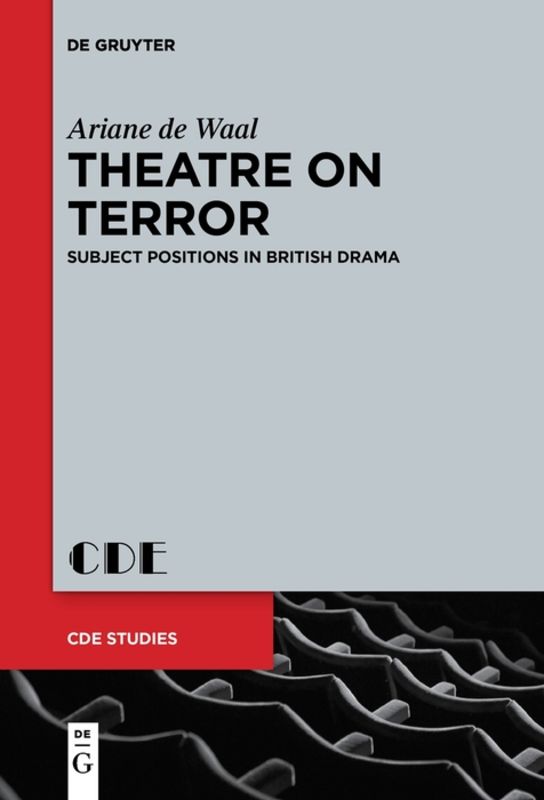
Theatre on terror : subject positions in British drama
CDE STUDIES (GENERAL EDITOR: ANETTE PANKRATZ) The book series is dedicated to contemporary anglophone playwrights and the analysis of the historical, political and aesthetic contexts of their work, thus seeking to advance the theoretical and methodological discourse on theatre and drama today.
eBook

Acting in the night
What can the performance of a single play on one specific night tell us about the world this event inhabited so briefly? Alexander Nemerov takes a performance of Macbeth in Washington, DC on October 17, 1863—with Abraham Lincoln in attendance—to explore this question and illuminate American art, politics, technology, and life as it was being lived. Nemerov’s inspiration is Wallace Stevens and his poem “Anecdote of the Jar,” in which a single object organizes the wilderness around it in the consciousness of the poet. For Nemerov, that evening’s performance of Macbeth reached across the tragedy of civil war to acknowledge the horrors and emptiness of a world it tried and ultimately failed to change.
eBook

Propaganda Performed
The first in-depth scholarly study in English of the Japanese performance medium kamishibai, Sharalyn Orbaugh's Propaganda Performed illuminates the vibrant street culture of 1930s Japan as well as the visual and narrative rhetoric of Japanese propaganda in World War II. Emerging from Japan's cities in the late 1920s, kamishibai rapidly transformed from a cheap amusement associated with poverty into the most popular form of juvenile entertainment, eclipsing even film and manga. By the time kamishibai died as a living medium in the 1970s it had left behind indelible influences on popular culture forms such as manga and anime, as well as on avant-garde cinema, theater, and art.From 1932 to 1945, however, kamishibai also became a vehicle for propaganda messages aimed not primarily at children, but at adults. A mixture of script, image, and performance, the medium was particularly suited to conveying populist, emotionally compelling messages to audiences of all classes, ages, and literacy levels, making it a crucial tool in the government's efforts to mobilize the domestic populace in Japan and to pacify the inhabitants of the empire's colonies and occupied territories. With seven complete translations of wartime plays, over 300 color illustrations from hard-to-access kamishibai play cards, and photographs of prewar performances, this study constitutes an archive of wartime history in addition to providing a detailed analysis of the rhetoric of political persuasion.
eBook

The drama of fallen France : reading la comédie sans tickets
The Drama of Fallen France examines various dramatic works written and/or produced in Paris during the four years of Nazi occupation and explains what they may have meant to their original audiences. Because of widespread financial support from the new French government at Vichy, the former French capital underwent a renaissance of theatre during this period, and both the public playhouses and the private theatres provided an amazing array of new productions and revivals. Some of the plays considered here are well known: Anouilh’s Antigone, Sartre’s The Flies, Claudel’s The Satin Slipper. Others have remained obscure, such as Cocteau’s The Typewriter, Giraudoux’s The Apollo of Marsac, and Montherlant’s Nobody’s Son; and two—André Obey’s Eight Hundred Meters and Simone Jollivet’s The Princess of Ursins—have remained virtually unread since the early 1940s. In examining French culture under the Vichy regime and the Nazis, Kenneth Krauss links the politics of gender and sexuality with the more traditional political concepts of collaboration and resistance. A final chapter on Truffaut’s 1980 film, The Last Métro, demonstrates how the present manages to rewrite and revision the complex and seemingly contradictory reality of the past.
eBook


Kabuki at the crossroads : years of crisis, 1952-1965
Samuel L. Leiter's Kabuki at the Crossroads is a thorough account of Japan's most famous traditional theatre as it struggled to survive in the maelstrom of post-Occupation Japan's rapidly changing entertainment world.
eBook