
Catalogue Search | MBRL


Are you sure you want to remove the book from the shelf?

{{itemTitle}}
26,898
result(s) for
"War work."
Sort by:

The girls next door : bringing the home front to the front lines
The emotional toll of war can be as debilitating to soldiers as hunger, disease, and injury. Beginning in World War I, in an effort to boost soldiers' morale and remind them of the stakes of victory, the American military formalized a recreation program that sent respectable young women and famous entertainers overseas. Kara Dixon Vuic builds her narrative around the young women from across the United States, many of whom had never traveled far from home, who volunteered to serve in one of the nation's most brutal work environments. From the \"Lassies\" in France and mini-skirted coeds in Vietnam to Marlene Dietrich and Marilyn Monroe, Vuic provides a fascinating glimpse into wartime gender roles and the tensions that continue to complicate American women's involvement in the military arena. The recreation-program volunteers heightened the passions of troops but also domesticated everyday life on the bases. Their presence mobilized support for the war back home, while exporting American culture abroad. Carefully recruited and selected as symbols of conventional femininity, these adventurous young women saw in the theater of war a bridge between public service and private ambition. This story of the women who talked and listened, danced and sang, adds an intimate chapter to the history of war and its ties to life in peacetime.-- Provided by publisher
Book

Beyond Rosie
More so than any war in history, World War II was a woman's war. Women, motivated by patriotism, the opportunity for new experiences, and the desire to serve, participated widely in the global conflict. Within the Allied countries, women of all ages proved to be invaluable in the fight for victory. Rosie the Riveter became the most enduring image of women's involvement in World War II. What Rosie represented, however, is only a small portion of a complex story. As wartime production workers, enlistees in auxiliary military units, members of voluntary organizations or resistance groups, wives and mothers on the home front, journalists, and USO performers, American women found ways to challenge traditional gender roles and stereotypes.Beyond Rosieoffers readers an opportunity to see the numerous contributions they made to the fight against the Axis powers and how American women's roles changed during the war. The primary documents (newspapers, propaganda posters, cartoons, excerpts from oral histories and memoirs, speeches, photographs, and editorials) collected here represent cultural, political, economic, and social perspectives on the diverse roles women played during World War II.
eBook

Women in World War I
\"World War I brought many changes for women. Some stepped into roles left vacant by men now serving overseas, while others helped the war effort as nurses, telephone operators, and more. This book explores the wartime roles of women around the world.\"--Amazon.com.
Book

American Relief Aid and the Spanish Civil War
The Spanish Civil War created a conflict for Americans who preferred that the United States remain uninvolved in foreign affairs. Despite the country's isolationist tendencies, opposition to the rise of fascism across Europe convinced many Americans that they had to act in support of the Spanish Republic. While much has been written about the war itself and its international volunteers, little attention has been paid to those who coordinated these relief efforts at home. American Relief Aid and the Spanish Civil War tells the story of the political campaigns to raise aid for the Spanish Republic as activists pushed the limits of isolationist thinking. Those concerned with Spain's fate held a range of political convictions (including anarchists, socialists, liberals, and communists) with very different understandings of what fascism was. Yet they all agreed that fascism's advance must be halted. With labor strikes, fund-raising parties, and ambulance tours, defenders of Spain in the United States sought to shift the political discussion away from isolation of Spain's elected government and toward active assistance for the faltering Republic. Examining the American political organizations affiliated with this relief effort and the political repression that resulted as many of Spain's supporters faced the early incarnations of McCarthyism's trials, Smith provides new understanding of American politics during the crucial years leading up to World War II. By also focusing on the impact the Spanish Civil War had on those of Spanish ethnicity in the United States, Smith shows how close to home the seemingly distant war really hit.
eBook


Italian Prisoners of War in Pennsylvania
During World War II 51,000 Italian prisoners of war were detained in the United States.When Italy signed an armistice with the Allies in September 1943, most of these soldiers agreed to swear allegiance to the United States and to collaborate in the fight against Germany.
eBook

The YMCA at war : collaboration and conflict during the World Wars
\"This collection examines the Young Men's Christian Association's support for soldiers and civilians during World War I and World War II. The contributors approach the topic from various angles and argue that the YMCA's efforts routinely resulted in conflict with governments, other civic organizations, and individuals.\"--Provided by publisher.
Book

The Volunteers
The long-awaited narrative history of the women who volunteered in Nova Scotia during the Second World War by award-winning journalist and author of No Place to Go.
eBook

World War I for kids : a history with 21 activities
Explores the defining conflict that involved all the world's superpowers--including how it began, what a soldier's daily life was like, the role of zeppelins, key figures, and how it ended--and features hands-on activities that illuminate both the war and the times.
Book
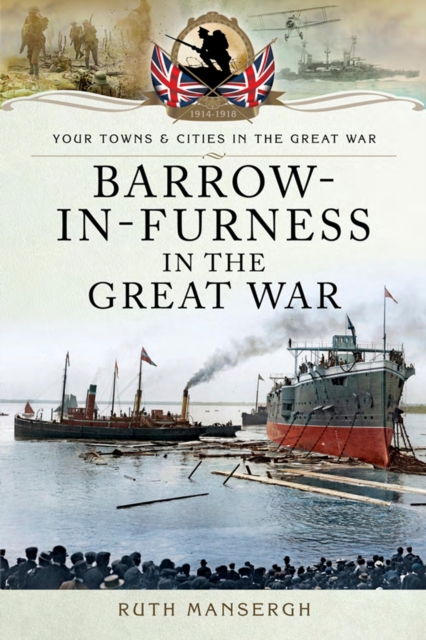
Barrow-In-Furness in the Great War
This book is about how Barrow's output of war materials was vital to the Great War effort, and it is about the Barrovians and men from the surrounding south Lakeland area - from all walks of life - who fought abroad, and the area's women war heroes.
eBook