
Catalogue Search | MBRL


Are you sure you want to remove the book from the shelf?

{{itemTitle}}
70,164
result(s) for
"Wash-out"
Sort by:

Emerald City
At the foot of the snow-capped Cascade Mountains on the forested shores of Puget Sound, Seattle is set in a location of spectacular natural beauty. Boosters of the city have long capitalized on this splendor, recently likening it to the fairytale capital of L. Frank Baum'sThe Wizard of Oz, the Emerald City. But just as Dorothy, Toto, and their traveling companions discover a darker reality upon entering the green gates of the imaginary Emerald City, those who look more closely at Seattle's landscape will find that it reveals a history marked by environmental degradation and urban inequality.
This book explores the role of nature in the development of the city of Seattle from the earliest days of its settlement to the present. Combining environmental history, urban history, and human geography, Matthew Klingle shows how attempts to reshape nature in and around Seattle have often ended not only in ecological disaster but also social inequality. The price of Seattle's centuries of growth and progress has been paid by its wildlife, including the famous Pacific salmon, and its poorest residents. Klingle proposes a bold new way of understanding the interdependence between nature and culture, and he argues for what he calls an \"ethic of place.\" Using Seattle as a compelling case study, he offers important insights for every city seeking to live in harmony with its natural landscape.
eBook

Imagining Seattle
Imagining Seattledives into some of the most pressing and compelling aspects of contemporary urban governance in the United States. Serin D. Houston uses a case study of Seattle to shed light on how ideas about environmentalism, privilege, oppression, and economic growth have become entwined in contemporary discourse and practice in American cities. Seattle has, by all accounts, been hugely successful in cultivating amenities that attract a creative class. But policies aimed at burnishing Seattle's liberal reputation often unfold in ways that further disadvantage communities of color and the poor, complicating the city's claims to progressive politics. Through ethnographic methods and a geographic perspective, Houston explores a range of recent initiatives in Seattle, including the designation of a new cultural district near downtown, the push to charge for disposable shopping bags, and the advent of training about institutional racism for municipal workers. Looking not just at what these policies say but at how they work in practice, she finds that opportunities for social justice, sustainability, and creativity are all constrained by the prevalence of market-oriented thinking and the classism and racism that seep into the architecture of many programs and policies. Houston urges us to consider how values influence actions within urban governance and emphasizes the necessity of developing effective conditions for sustainability, creativity, and social justice in this era of increasing urbanization.
eBook

Weathering change : gays and lesbians, Christian conservatives, and everyday hostilities
The Pacific Northwest is known for its diverse, unusual politics. There are thriving gay and lesbian communities and populations of staunchly conservative Christians. Both groups wield political power out of proportion to their numbers and yet both feel beleaguered. How do members of these groups—both community leaders and everyday citizens—perceive the political climates that surround them
This book tells a tale of two Northwestern cities: Seattle, well known nationally for its liberalism, and Spokane, its conservative cousin to the east. Weathering Change characterizes the ways these liberal and conservative environments translate into hostility and hospitality for the Christian conservatives, gay men, and lesbians who live within them. Linneman gives us a firsthand account of how people from both groups think about social change in relation to the media, the public, the government, their communities, and their opposition. Indeed, we gain much needed insight into why Christian conservatives view the progress of the gay and lesbian movement as such a threat.
eBook

Pan-tribal activism in the Pacific Northwest
On September 27, 1975, activist Bernie Whitebear (Sin Aikst) and Seattle Mayor Wes Uhlman broke ground on former Fort Lawton lands, just outside Seattle Washington, for the construction of the Daybreak Star Indian Cultural Center. The groundbreaking was the culmination of years of negotiations and legal wrangling between several government entities and the United Indians of All Tribes, the group that occupied the Fort lands in 1970. The peaceful event and sense of co-operation stood in marked contrast to the turbulent and sometimes violent occupation of the lands years before. Native Americans who joined the UIAT came from all parts of the Pacific Northwest and beyond. Inspired by the Civil Rights and protest era of the 1960s and 1970s, they squared off with local and federal government to demand the protection of civil and political rights and better social services. Both the scope and the purpose of this book are manifold. The first purpose is to challenge the predominant narrative of Anglo American colonization in the region and re-assert self-determination by re-defining the relationship between Pacific Northwest Native Americans, the larger population of Washington State, and government itself. The second purpose is to illustrate the growth in Pan-Indian/Pan-Tribal activism in the second half of the twentieth century in an attempt to place the Pacific Northwest Native American protests into a broader context and to amend the scholarly and popular trope which characterizes the Red Power movement of the 1960s as the creation of the American Indian Movement (AIM). In this book, casual students of history as well as academics will find that Fort Lawton represents the zone of conflict and compromise occupied by Indigenous people of the Pacific Northwest in their ongoing struggle with colonial society.
eBook

Seattle's coal legacy
In the 1880s, Seattle became a major coal port in the United States.By 1908, Puget Sound was the third-largest coal port, after New York and Baltimore.For Seattle, the major coal mines were in Issaquah, New Castle, Renton, and Black Diamond, with many other smaller mines throughout King County.
eBook

Native Seattle
Winner of the 2008 Washington State Book Award for History/Biography
In traditional scholarship, Native Americans have been conspicuously absent from urban history. Indians appear at the time of contact, are involved in fighting or treaties, and then seem to vanish, usually onto reservations. In Native Seattle, Coll Thrush explodes the commonly accepted notion that Indians and cities-and thus Indian and urban histories-are mutually exclusive, that Indians and cities cannot coexist, and that one must necessarily be eclipsed by the other. Native people and places played a vital part in the founding of Seattle and in what the city is today, just as urban changes transformed what it meant to be Native.
On the urban indigenous frontier of the 1850s, 1860s, and 1870s, Indians were central to town life. Native Americans literally made Seattle possible through their labor and their participation, even as they were made scapegoats for urban disorder. As late as 1880, Seattle was still very much a Native place. Between the 1880s and the 1930s, however, Seattle's urban and Indian histories were transformed as the town turned into a metropolis. Massive changes in the urban environment dramatically affected indigenous people's abilities to survive in traditional places. The movement of Native people and their material culture to Seattle from all across the region inspired new identities both for the migrants and for the city itself. As boosters, historians, and pioneers tried to explain Seattle's historical trajectory, they told stories about Indians: as hostile enemies, as exotic Others, and as noble symbols of a vanished wilderness. But by the beginning of World War II, a new multitribal urban Native community had begun to take shape in Seattle, even as it was overshadowed by the city's appropriation of Indian images to understand and sell itself.
After World War II, more changes in the city, combined with the agency of Native people, led to a new visibility and authority for Indians in Seattle. The descendants of Seattle's indigenous peoples capitalized on broader historical revisionism to claim new authority over urban places and narratives. At the beginning of the twenty-first century, Native people have returned to the center of civic life, not as contrived symbols of a whitewashed past but on their own terms.
In Seattle, the strands of urban and Indian history have always been intertwined. Including an atlas of indigenous Seattle created with linguist Nile Thompson, Native Seattle is a new kind of urban Indian history, a book with implications that reach far beyond the region.
Replaced by ISBN 9780295741345
eBook

Seattle and the Roots of Urban Sustainability
Seattle, often called the \"Emerald City,\" did not achieve its green, clean, and sustainable environment easily. This thriving ecotopia is the byproduct of continuing efforts by residents, businesses, and civic leaders alike. InSeattle and the Roots of Urban Sustainability,Jeffrey Craig Sanders examines the rise of environmental activism in Seattle amidst the \"urban crisis\" of the 1960s and its aftermath.
Like much activism during this period, the environmental movement began at the grassroots level-in local neighborhoods over local issues. Sanders links the rise of local environmentalism to larger movements for economic, racial, and gender equality and to a counterculture that changed the social and political landscape. He examines emblematic battles that erupted over the planned demolition of Pike Place Market, a local landmark, and environmental organizing in the Central District during the War on Poverty. Sanders also relates the story of Fort Lawton, a decommissioned army base, where Audubon Society members and Native American activists feuded over future land use.The rise and popularity of environmental consciousness among Seattle's residents came to influence everything from industry to politics, planning, and global environmental movements. Yet, as Sanders reveals, it was in the small, local struggles that urban environmental activism began.
eBook

Seattle in Black and White
Seattle was a very different city in 1960 than it is today. There were no black bus drivers, sales clerks, or bank tellers. Black children rarely attended the same schools as white children. And few black people lived outside of the Central District. In 1960, Seattle was effectively a segregated town.
Energized by the national civil rights movement, an interracial group of Seattle residents joined together to form the Seattle chapter of the Congress of Racial Equality (CORE). Operational from 1961 through 1968, CORE had a brief but powerful effect on Seattle. The chapter began by challenging one of the more blatant forms of discrimination in the city, local supermarkets. Located within the black community and dependent on black customers, these supermarkets refused to hire black employees. CORE took the supermarkets to task by organizing hundreds of volunteers into shifts of continuous picketers until stores desegregated their staffs. From this initial effort CORE, in partnership with the NAACP and other groups, launched campaigns to increase employment and housing opportunities for black Seattleites, and to address racial inequalities in Seattle public schools. The members of Seattle CORE were committed to transforming Seattle into a more integrated and just society.
Seattle was one of more than one hundred cities to support an active CORE chapter. Seattle in Black and White tells the local, Seattle story about this national movement. Authored by four active members of Seattle CORE, this book not only recounts the actions of Seattle CORE but, through their memories, also captures the emotion and intensity of this pivotal and highly charged time in America s history.
For more information visit: http://seattleinblackandwhite.org/
eBook
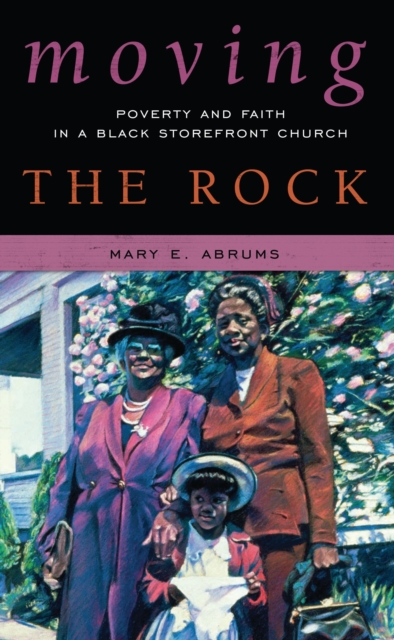
Moving the rock
Moving the Rock portrays several generations of African American women whose families migrated from the South to the Pacific Northwest in the 1940s and 1950s. As members of a small storefront church in central Seattle, these women—grandmothers, mothers, daughters—lean on their faith and church to face the challenges of poverty, racism, ignorance, and health. In the wake of Hurricane Katrina, it is painfully obvious that many of us know little about what it is like to be poor and Black in the United States. These powerful, profound stories bring this group of women and their problems, and joys, vividly and movingly to life.
eBook
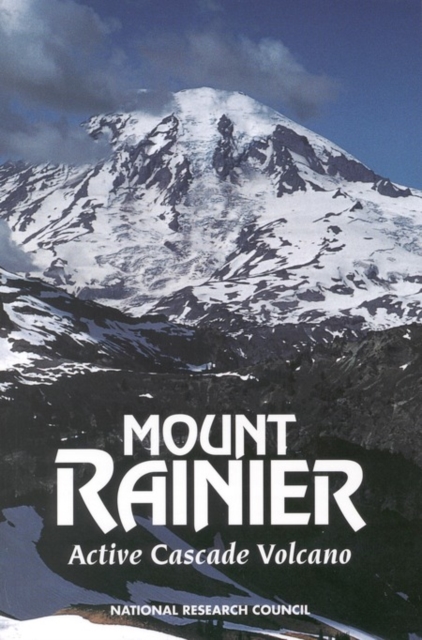
Mount Rainier : active Cascade volcano : research strategies for mitigating risk from a high, snow-clad volcano in a populous region
This volume develops a research plan to study and monitor Mount Rainier, an active Cascade volcano located about 35 km southeast of the Seattle-Tacoma metropolitan area. The book also addresses issues of communication and coordination among geoscientists, social scientists, planners, and responsible authorities, so that research results can be used to support hazard reduction efforts.
eBook