
Catalogue Search | MBRL


Are you sure you want to remove the book from the shelf?

{{itemTitle}}
14,918
result(s) for
"Washington, D.C"
Sort by:

Fodor's 25 best. Washington, D.C.
\"Top 25 Must-See Sights, Best bets for dining, lodging, sightseeing. Plus a full-color pullout map. Everything you need to experience Washington, D.C. Top lodging and dining picks for every budget; D.C.'s top attractions, from the museums of the Smithsonian Institution to the U.S. Capitol; Spectacular views of the city from the Kennedy Center and the Old Post Office Building Tower; Best itineraries covering Capitol Hill, the White House, and Dupont Circle; Excursions to Mount Vernon and Alexandria's Old Town in Virginia; Best attractions for children, from the local zoo to the National Air and Space Museum.\" -- (Source of summary not specified)
Book

The National Mall
The National Mall in Washington, D.C. is one of the most important and highly visible urban public spaces in the U.S. It is considered by many Americans to be “the nation’s front yard.” Yet few have written about the role of this public space in the twenty-first century.
In The National Mall , Lisa Benton-Short explores the critical issues that are redefining and reshaping this extraordinary public space. Her work focuses on three contemporary and interrelated debates about public space: the management challenges faced by federal authorities, increased demands for access and security post 9/11, and the role of the public in the Mall’s long-term planning and development plans. By taking a holistic view of the National Mall and analyzing the unique twenty-first century challenges it faces, Lisa Benton-Short provides a fluid, cohesive, and timely narrative that is as extraordinary as the Mall itself.
eBook


Insurrection
A profound analysis of the factors underlying the 2021 invasion of the US Capitol, arriving as the nation looks ahead to another tumultuous presidential election in 2024. Insurrection offers a profound and incisive analysis of the underlying factors that culminated in the assault on Washington, DC's Capitol Building on that fateful day: January 6th, 2021. Going far beyond mere journalistic accounts, the book delves into structural trends within the United States, providing a broader and deeper context for comprehending the magnitude of the uprising. It explores the crisis of democracy, escalating violence, widening inequality, and the prominence of conspiratorial discourse within American politics. By examining both long-term issues as well as the tumultuous events of 2020, including the pandemic, policing challenges, and the fiercely contested presidential election, this book uncovers the catalysts behind conspiracy theories and the politics of outrage. This compelling narrative is essential reading for all those interested in the contemporary face of the United States.
eBook

Washington, D.C. : our nation's capital from A-Z
\"Humorous cartoons accompany this off-beat guide to the District of Columbia. It is filled with intriguing details about important landmarks and the people who have come to the capital to run the nation's business, celebrate, protest, live in the thick of it all or just visit. From the aluminum tip of the towering Washington monument to the marble bathtubs in the Capital building's basement, this book offers a top to bottom look at Washington D.C. and its eclectic history. The end papers feature a map of the District.\"--Publisher's description.
Book

Colored No More
Home to established African American institutions and communities, Washington, D.C., offered women in the New Negro movement a unique setting for the fight against racial and gender oppression.Colored No Moretraces how African American women of the late-nineteenth and early twentieth century made significant strides toward making the nation's capital a more equal and dynamic urban center.Treva B. Lindsey presents New Negro womanhood as a multidimensional space that included race women, blues women, mothers, white collar professionals, beauticians, fortune tellers, sex workers, same-gender couples, artists, activists, and innovators. Drawing from these differing but interconnected African American women's spaces, Lindsey excavates a multifaceted urban and cultural history of struggle toward a vision of equality that could emerge and sustain itself. Upward mobility to equal citizenship for African American women encompassed challenging racial, gender, class, and sexuality status quos. Lindsey maps the intersection of these challenges and their place at the core of New Negro womanhood.
eBook

What's great about Washington, DC?
What's so great about our nation's capital? Readers will build skills to identify and summarize the top ten sites to see or things to do in the District of Columbia. The Washington, DC, by Map feature helps students locate all the places covered in the book. A special section provides key state details such as the state motto, capital, population, animals, foods, and more.
Book
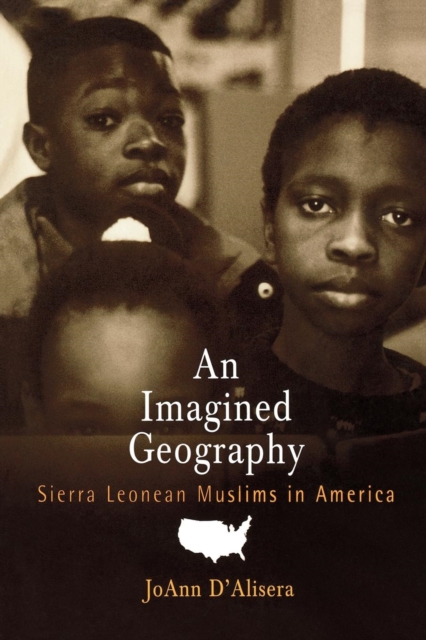
Imagined Geography: Sierra Leonean Muslims in America
In An Imagined Geography, anthropologist JoAnn D'Alisera demonstrates persuasively that the long-held anthropological paradigms of separate, bounded, and unique communities, geographically located and neatly localized, must be reconsidered in light of the range and diversity of the Sierra Leonean diaspora.
eBook

Washington : a history of our national city
\"On January 24, 1791, President George Washington chose the site for the young nation's capital: ten miles square, it stretched from the highest point of navigation on the Potomac River, and encompassed the ports of Georgetown and Alexandria. From the moment the federal government moved to the District of Columbia in December 1800, Washington has been central to American identity and life. Shaped by politics and intrigue, poverty and largess, contradictions and compromises, Washington has been, from its beginnings, the stage on which our national dramas have played out. In Washington, the historian Tom Lewis paints a sweeping portrait of the capital city whose internal conflicts and promise have mirrored those of America writ large. Breathing life into the men and women who struggled to help the city realize its full potential, he introduces us to the mercurial French artist who created an ornate plan for the city 'en grande'; members of the nearly forgotten anti-Catholic political party who halted construction of the Washington monument for a quarter century; and the cadre of congressmen who maintained segregation and blocked the city's progress for decades. In the twentieth century Washington's Mall and streets would witness a Ku Klux Klan march, the violent end to the encampment of World War I 'Bonus Army' veterans, the 1963 March on Washington for Jobs and Freedom, and the painful rebuilding of the city in the wake of Martin Luther King, Jr.'s assassination. 'It is our national center,' Frederick Douglass once said of Washington, DC; 'it belongs to us, and whether it is mean or majestic, whether arrayed in glory or covered in shame, we cannot but share its character and its destiny.' Interweaving the story of the city's physical transformation with a nuanced account of its political, economic, and social evolution, Lewis tells the powerful history of Washington, DC--the site of our nation's highest ideals and some of our deepest failures\"-- Provided by publisher.
Book

An Example for All the Land
An Example for All the Land reveals Washington, D.C. as a laboratory for social policy in the era of emancipation and the Civil War. In this panoramic study, Kate Masur provides a nuanced account of African Americans' grassroots activism, municipal politics, and the U.S. Congress. She tells the provocative story of how black men's right to vote transformed local affairs, and how, in short order, city reformers made that right virtually meaningless. Bringing the question of equality to the forefront of Reconstruction scholarship, this widely praised study explores how concerns about public and private space, civilization, and dependency informed the period's debate over rights and citizenship.
eBook