
Catalogue Search | MBRL


Are you sure you want to remove the book from the shelf?

{{itemTitle}}
3,252
result(s) for
"Washington Post"
Sort by:


THE COMMUNICATION TRENDS REFERRING TO KAZAKHSTAN’S INTERNATIONAL IMAGE (THE CASE OF THE WASHINGTON POST)
ABSTRACT The research analyzes journalistic materials published in The Washington Post that mention Kazakhstan from 1991 to 2017. Using content analysis as the primary research method, both quantitative and qualitative evaluations were conducted to gain historical insights. The study found that the highest number of publications occurred in 2013 and 2014. However, despite the increase in publications, it was observed that many articles were uninformative and did not contribute to the formation of a specific image of the country. Efforts to generate interest and build a positive narrative about Kazakhstan were not successful. The study also examined readers’ comments online and concluded that perceptions of the country are still largely influenced by stereotypes
Journal Article

Collision of power : Trump, Bezos, and The Washington Post
\"A monumental work of nonfiction that gives a first-row seat to the epic power struggle between politics, money, media, and tech -- for fans of Maggie Haberman's Confidence Man and Jane Mayer's Dark Money. Marty Baron took charge of The Washington Post newsroom in 2013, after nearly a dozen years leading The Boston Globe. Just seven months into his new job, Baron received explosive news: Jeff Bezos, the founder of Amazon, would buy the Post, marking a sudden end to control by the venerated family that had presided over the paper for 80 years. Just over two years later, Donald Trump won the presidency. Now, the capital's newspaper, owned by one of the world's richest men, was tasked with reporting on a president who had campaigned against the press as the \"lowest form of humanity.\" Pressures on Baron and his colleagues were immense and unrelenting, having to meet the demands of their new owner while contending with a president who waged a war of unprecedented vitriol and vengeance against the media. In the face of Trump's unceasing attacks, Baron steadfastly managed the Post's newsroom. Their groundbreaking and award-winning coverage included stories about Trump's purported charitable giving, misconduct by the Secret Service, and Roy Moore's troubling sexual history. At the same time, Baron managed a restive staff during a period of rapidly changing societal dynamics around gender and race. In Collision of Power, Baron recounts this with the tenacity of a reporter and the sure hand of an experienced editor. The result is elegant and revelatory-an urgent exploration of the nature of power in the 21st century\"-- Provided by publisher.
BOOK

Stigmatizing Monkeypox and COVID-19: A Comparative Framing Study of The Washington Post’s Online News
Background: Stigma relating to health can result in a broad range of vulnerabilities and risks for patients and healthcare providers. The media play a role in people’s understanding of health, and stigma is socially constructed through many communication channels, including media framing. Recent health issues affected by stigma include monkeypox and COVID-19. Objectives: This research aimed to examine how The Washington Post (WP) framed the stigma around monkeypox and COVID-19. Guided by framing theory and stigma theory, online news coverage of monkeypox and COVID-19 was analyzed to understand the construction of social stigma through media frames. Methods: This research used qualitative content analysis to compare news framings in The Washington Post’s online news coverage of monkeypox and COVID-19. Results: Using endemic, reassurance, and sexual-transmission frames, The Washington Post predominantly defined Africa as the source of monkeypox outbreaks, indirectly labeled gays as a specific group more likely to be infected with monkeypox, and emphasized that there was no need to worry about the spread of the monkeypox virus. In its COVID-19 coverage, The Washington Post adopted endemic and panic frames to describe China as the source of the coronavirus and to construct an image of panic regarding the spread of the virus. Conclusions: These stigma discourses are essentially manifestations of racism, xenophobia, and sexism in public health issues. This research confirms that the media reinforces the stigma phenomenon in relation to health through framing and provides suggestions for the media to mitigate this issue from a framing perspective.
Journal Article

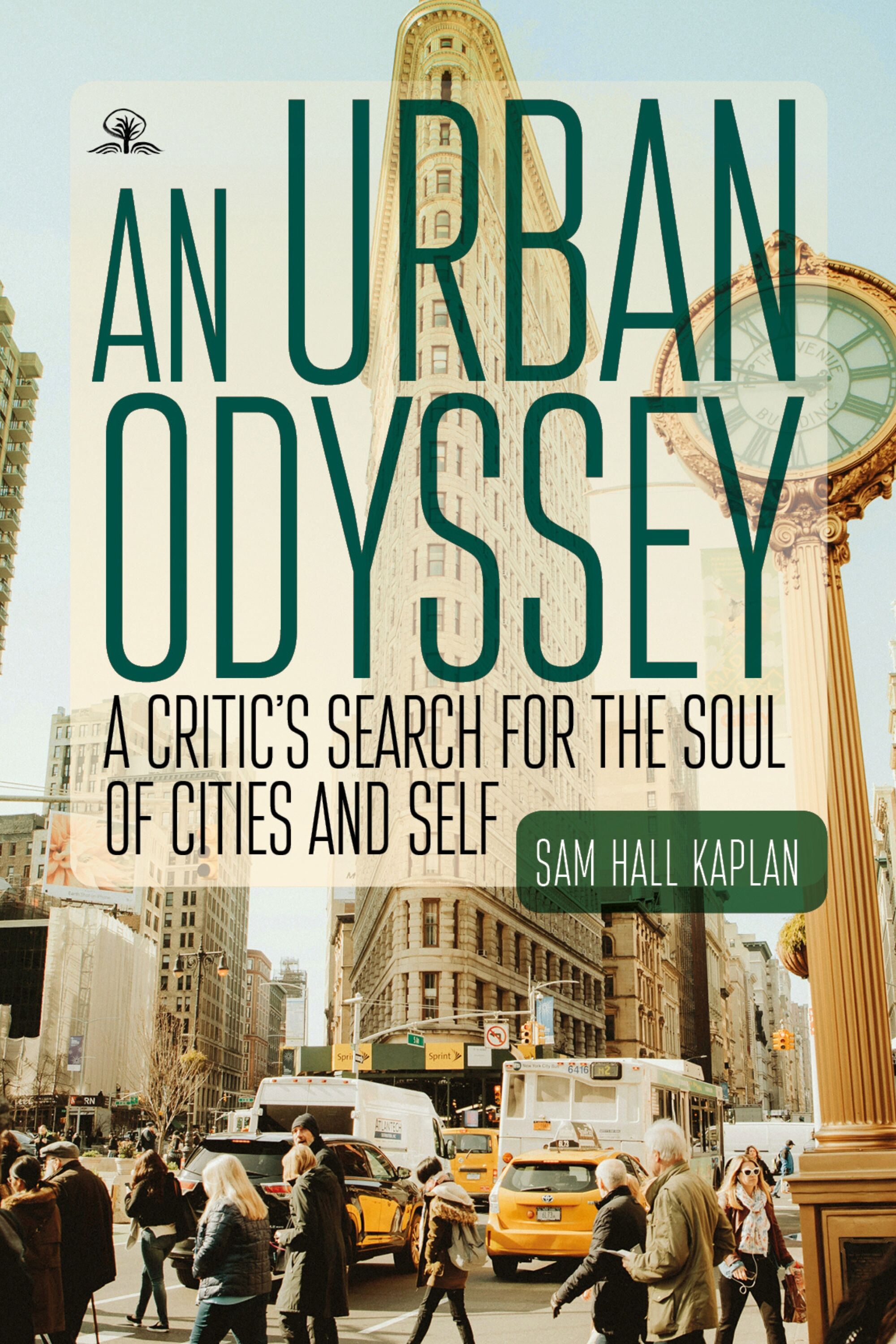
An Urban Odyssey
An evocative, candid reveal of the media and design worlds by an award-winning journalist and activist urban planner in search of the soul of cities and himself.
From the stoops of Brooklyn and the streets of East Harlem to the newsrooms of New York and Los Angeles, from the freeways of Southern California to the shores of Malibu,
An Urban Odyssey traverses the award-winning author’s seven decades in the media and the public and private sectors, as well as his time teaching and advocating for a more, equitable, livable city. Here, Sam Hall Kaplan regales readers with personal tales of his time at the
New York Times , the
Los Angeles Times , the
Washington Post , and Fox Television, among others, interspersed with anecdotes of a host of the famed and ill-famed. A rollicking reveal of the vainglorious media and design worlds, candid and compelling.
eBook


Yakama Rising
The Yakama Nation of present-day Washington State has responded to more than a century of historical trauma with a resurgence of grassroots activism and cultural revitalization. This pathbreaking ethnography shifts the conversation from one of victimhood to one of ongoing resistance and resilience as a means of healing the soul wounds of settler colonialism.Yakama Rising: Indigenous Cultural Revitalization, Activism, and Healingargues that Indigenous communities themselves have the answers to the persistent social problems they face. This book contributes to discourses of Indigenous social change by articulating a Yakama decolonizing praxis that advances the premise that grassroots activism and cultural revitalization are powerful examples of decolonization.Michelle M. Jacob employs ethnographic case studies to demonstrate the tension between reclaiming traditional cultural practices and adapting to change. Through interviewees' narratives, she carefully tacks back and forth between the atrocities of colonization and the remarkable actions of individuals committed to sustaining Yakama heritage. Focusing on three domains of Indigenous revitalization-dance, language, and foods-Jacob carefully elucidates the philosophy underlying and unifying each domain while also illustrating the importance of these practices for Indigenous self-determination, healing, and survival.In the impassioned voice of a member of the Yakama Nation, Jacob presents a volume that is at once intimate and specific to her home community and that also advances theories of Indigenous decolonization, feminism, and cultural revitalization. Jacob's theoretical and methodological contributions make this work valuable to a range of students, academics, tribal community members, and professionals, and an essential read for anyone interested in the ways that grassroots activism can transform individual lives, communities, and society.
eBook

Junctures in Women's Leadership
The news industry is still dominated by men.Yet women have exercised leadership in journalism and related media professions in a variety of ways, from moral leadership to experimenting with structural and technological innovations and pioneering new formats to serve new audiences.
eBook

Aid for Trade and African agriculture: the bittersweet case of Swazi sugar
In 2006, the European Union reformed its sugar regime, reducing the price for sugar by 36%. To cushion the impact on traditional overseas suppliers, an 'Aid for Trade' programme called the Accompanying Measures for Sugar Protocol countries (AMSP) was implemented. This paper explores the impacts of the AMSP in Swaziland. The authors discuss emergent agrarian class differentiation and argue that the benefits experienced by farmers are jeopardised by ongoing processes of liberalisation. The paper concludes by suggesting that donors must consider market stabilisation and corporate regulation if they are to make 'Aid for Trade' work for the poor.
Journal Article