
Catalogue Search | MBRL


Are you sure you want to remove the book from the shelf?

{{itemTitle}}
5,537
result(s) for
"Water Purification Oxidation."
Sort by:

Advanced oxidation technologies : sustainable solutions for environmental treatments
Providing a state-of-the-art overview on environmental applications of Advanced Oxidation Technologies (AOTs) as sustainable, low-cost and low-energy consuming treatments of water, air, and soil. It includes information on innovative research and development on TiO2 photocatalytic redox processes, Fenton, Photo-Fenton processes, zerovalent iron technology, etc highlighting possible applications of ATOs in developing and industrialized countries around the world in the framework of 'A crosscutting and comprehensive look at environmental problems'.
Book
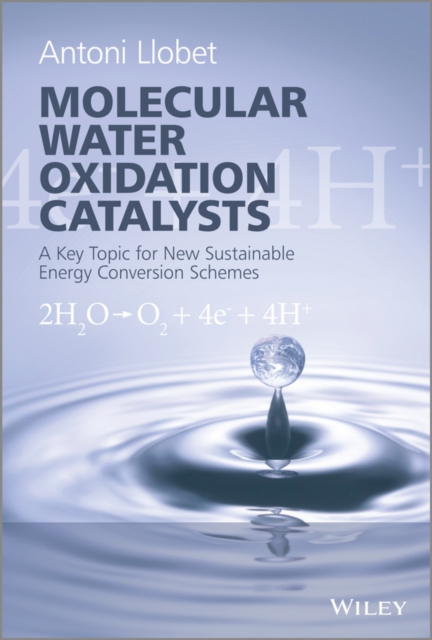
Molecular water oxidation catalysis : a key topic for new sustainable energy conversion schemes
Photocatalytic water splitting is a promising strategy for capturing energy from the sun by coupling light harvesting and the oxidation of water, in order to create clean hydrogen fuel. Thus a deep knowledge of the water oxidation catalysis field is essential to be able to come up with useful energy conversion devices based on sunlight and water splitting.
Molecular Water Oxidation Catalysis: A Key Topic for New Sustainable Energy Conversion Schemes presents a comprehensive and state-of-the-art overview of water oxidation catalysis in homogeneous phase, describing in detail the most important catalysts discovered today based on first and second row transition metals. A strong emphasis is placed on the description of their performance, as well as how they work from a mechanistic perspective. In addition, a theoretical description of some of the most relevant catalysts based on DFT are presented, as well as a description of related natural systems, such as the oxygen evolving system of photosystem II and the heme chlorite-dismutase.
This book is a valuable resource for researchers working on water oxidation catalysis, solar energy conversion and artificial photosynthesis, as well as for chemists and materials scientists with a broad interest in new sustainable energy conversion schemes.
eBook

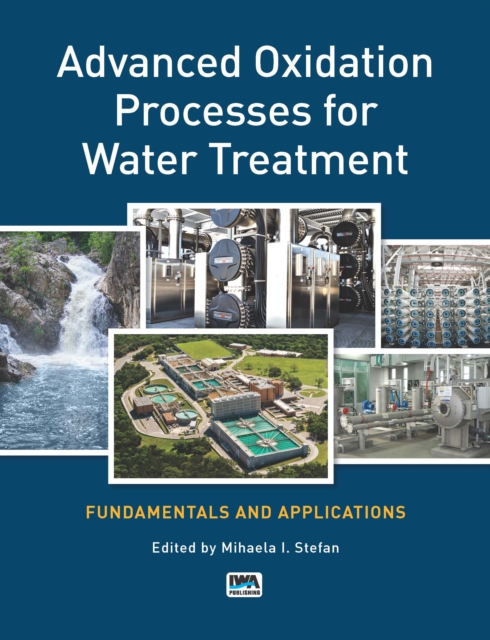
Advanced Oxidation Processes for Water Treatment
Advanced Oxidation Processes (AOPs) rely on the efficient generation of reactive radical species and are increasingly attractive options for water remediation from a wide variety of organic micropollutants of human health and/or environmental concern.Advanced Oxidation Processes for Water Treatment covers the key advanced oxidation processes.
eBook

Photocatalysis and water purification : from fundamentals to recent applications
Water is one of the essential resources on our planet.Therefore, fresh water and the recycling of waste-water are very important topics in various areas.Energy-saving green technologies are a demand in this area of research.Photocatalysis comprises a class of reactions which use a catalyst activated by light.
eBook
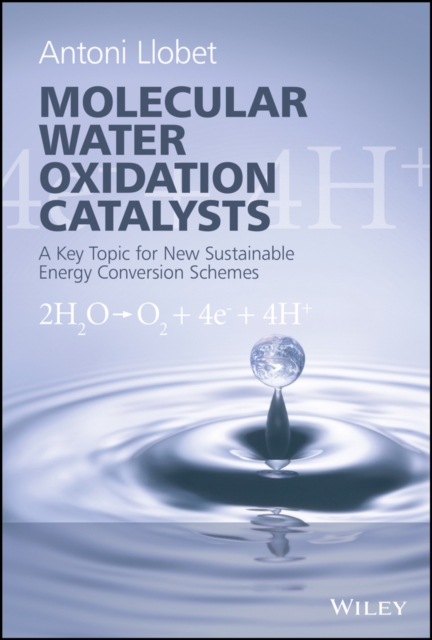
Molecular water oxidation catalysis
Photocatalytic water splitting is a promising strategy for capturing energy from the sun by coupling light harvesting and the oxidation of water, in order to create clean hydrogen fuel. Thus a deep knowledge of the water oxidation catalysis field is essential to be able to come up with useful energy conversion devices based on sunlight and water splitting. Molecular Water Oxidation Catalysis: A Key Topic for New Sustainable Energy Conversion Schemes presents a comprehensive and state-of-the-art overview of water oxidation catalysis in homogeneous phase, describing in detail the most important catalysts discovered today based on first and second row transition metals. A strong emphasis is placed on the description of their performance, as well as how they work from a mechanistic perspective. In addition, a theoretical description of some of the most relevant catalysts based on DFT are presented, as well as a description of related natural systems, such as the oxygen evolving system of photosystem II and the heme chlorite-dismutase. This book is a valuable resource for researchers working on water oxidation catalysis, solar energy conversion and artificial photosynthesis, as well as for chemists and materials scientists with a broad interest in new sustainable energy conversion schemes.
eBook

Photocatalytic Purification of Water and Air over Nanoparticulate TiO2
This chapter contains sections titled:
Introduction
General Information
Deep Photocatalytic Oxidation of Organic Compounds: Use of Photocatalysis for Water Purification
Photocatalysis at TiO
2
/Gas Phase Interphase
Concluding Remarks and Future Outlook
References
Problems
Answers
Book Chapter

Facilely tuning the intrinsic catalytic sites of the spinel oxide for peroxymonosulfate activation
Heterogeneous peroxymonosulfate (PMS)–based advanced oxidation processes (AOPs) have shown a great potential for pollutant degradation, but their feasibility for largescale water treatment application has not been demonstrated. Herein, we develop a facile coprecipitation method for the scalable production (∼10 kg) of the Cu-Fe-Mn spinel oxide (CuFeMnO). Such a catalyst has rich oxygen vacancies and symmetry-breaking sites, which endorse it with a superior PMS-catalytic capacity. We find that the working reactive species and their contributions are highly dependent on the properties of target organic pollutants. For the organics with electron-donating group (e.g., -OH), high-valent metal species are mainly responsible for the pollutant degradation, whereas for the organics with electron-withdrawing group (e.g., -COOH and -NO₂), hydroxyl radical (•OH) as the secondary oxidant also plays an important role.We demonstrate that the CuFeMnO–PMS system is able to achieve efficient and stable removal of the pollutants in the secondary effluent from a municipal wastewater plant at both bench and pilot scales. Moreover, we explore the application prospect of this PMS-based AOP process for large-scale wastewater treatment. This work describes an opportunity to scalably prepare robust spinel oxide catalysts for water purification and is beneficial to the practical applications of the heterogeneous PMS-AOPs.
Journal Article

Advanced Oxidation Processes for the Removal of Antibiotics from Water. An Overview
In this work, the application of advanced oxidation processes (AOPs) for the removal of antibiotics from water has been reviewed. The present concern about water has been exposed, and the main problems derived from the presence of emerging pollutants have been analyzed. Photolysis processes, ozone-based AOPs including ozonation, O3/UV, O3/H2O2, and O3/H2O2/UV, hydrogen peroxide-based methods (i.e., H2O2/UV, Fenton, Fenton-like, hetero-Fenton, and photo-Fenton), heterogeneous photocatalysis (TiO2/UV and TiO2/H2O2/UV systems), and sonochemical and electrooxidative AOPs have been reviewed. The main challenges and prospects of AOPs, as well as some recommendations for the improvement of AOPs aimed at the removal of antibiotics from wastewaters, are pointed out.
Journal Article

Electrochemical advanced oxidation processes: today and tomorrow. A review
In recent years, new advanced oxidation processes based on the electrochemical technology, the so-called electrochemical advanced oxidation processes (EAOPs), have been developed for the prevention and remediation of environmental pollution, especially focusing on water streams. These methods are based on the electrochemical generation of a very powerful oxidizing agent, such as the hydroxyl radical (•OH) in solution, which is then able to destroy organics up to their mineralization. EAOPs include heterogeneous processes like anodic oxidation and photoelectrocatalysis methods, in which •OH are generated at the anode surface either electrochemically or photochemically, and homogeneous processes like electro-Fenton, photoelectro-Fenton, and sonoelectrolysis, in which •OH are produced in the bulk solution. This paper presents a general overview of the application of EAOPs on the removal of aqueous organic pollutants, first reviewing the most recent works and then looking to the future. A global perspective on the fundamentals and experimental setups is offered, and laboratory-scale and pilot-scale experiments are examined and discussed.
Journal Article