
Catalogue Search | MBRL


Are you sure you want to remove the book from the shelf?

{{itemTitle}}
15
result(s) for
"Water resources development -- Gaza Strip"
Sort by:

Water for the Future
This book is the result of a joint research effort led by the U.S. National Academy of Sciences and involving the Royal Scientific Society of Jordan, the Israel Academy of Sciences and Humanities, and the Palestine Health Council. It discusses opportunities for enhancement of water supplies and avoidance of overexploitation of water resources in the Middle East. Based on the concept that ecosystem goods and services are essential to maintaining water quality and quantity, the book emphasizes conservation, improved use of current technologies, and water management approaches that are compatible with environmental quality.
eBook
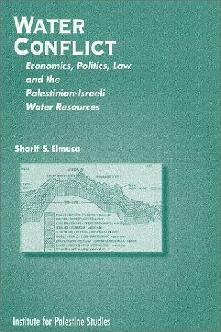
Water conflict : economics, politics, law and Palestinian-Israeli water resources
A study of the conflict over the natural water resources of geographic Palestine. The author focuses on both the scarcity and commonality of the water resources in order to demonstrate why water has become one of the most contentious issues between Israel and the Palestinians. He discusses how the principles of equitable utilization and joint management of common water resources can be achieved and can enhance the prospects for reducing conflict over water, and may ultimately contribute to overall Israeli-Palestinian cooperation. Includes several maps and charts which detail the area's water resources. Annotation copyrighted by Book News, Inc., Portland, OR.
Book

Transforming the Water‐Energy Nexus in Gaza: A Systems Approach
The acute water and electricity shortages in Gaza necessitate comprehensive solutions that recognize the interconnected nature of these vital resources. This article presents pragmatic solutions to align supply with fundamental needs in both domains, offering viable pathways for achieving strategic water‐energy security in Gaza. Baseline data reveals a deficit in the current water supply, falling below the international minimum of 100 L per capita per day, while the reported 137–189 MW per day electricity supply significantly lags behind the estimated 390 MW per day peak demand. To meet projected 2024 residential, commercial, and industrial demands, this study proposes actionable measures including expanding wastewater treatment to enable over 150 MCM per year tertiary effluents for agricultural reuse and adopting energy‐efficient forward osmosis‐reverse osmosis and osmotically assisted reverse osmosis desalination methods to increase potable water supply to 150 MCM per year. Electricity supply strategies include scaling renewable capacity towards 110 MW per day, exploring regional cooperation to unlock over 360 MW of power per day, and potentially recovering up to 60 MW per day through system efficiencies. These recommendations aim to prevent exacerbated scarcity and alleviate hardships in Gaza. This article introduces forward‐looking solutions for Gaza's water and energy future. Following a data‐diven systems approach, the study analyzes both current and anticipated water and energy requirements, while assessing the feasibility of diverse supply alternatives. The insights significantly contribute to the understanding of the water‐energy nexus for policymakers, researchers, and practitioners engaged in the domains of enery and water resource management.
Journal Article

Identifying most influencing input parameters for predicting chloride concentration in groundwater using an ANN approach
Assessment of groundwater quality at a specific location is an important step to provide adequate information about water management and sustainable development. Several variables affect groundwater salinity, expressed by chloride concentration, prediction; therefore, identification of the most significant parameters for accurate prediction is an important research area. In the present study, artificial neural network (ANN) models with various combinations of input parameters were developed to determine the most significant parameters that influence chloride concentration prediction. To achieve this, the variables affecting chloride concentration (recharge rate (RR), abstraction (A), abstraction average rate (AVR), lifetime (LT), groundwater level (GWL), aquifer thickness (AT), depth from the surface to well screen (DSWS), distance from sea shoreline (DSSL)) and climate parameters (total rainfall (R), relative humidity (RH), minimum temperature (Tmin), maximum temperature (Tmax), average temperature (Tavg), average wind speed (W), minimum wind speed (Wmin), and maximum wind speed (Wmax)), in addition to initial chloride concentration (ICC), were considered as input variables. The output variable was the final chloride concentration (FCC). 17 ANN models were developed by varying the identified input parameters. Additionally, the coefficient of determination (R2) and root mean squared error (RMSE) were used to select the best predictive model. The results demonstrate that the ANN 5 model with the combinations of [ICC, RR, A, AVR, LT, GWL, DSWS, AT, DSSL, W] produced excellent estimation in predicting the value of final chloride concentration with reported values of 0.977 and 0.022 for R2 and RMSE respectively. The proposed approach illustrates how the ANN modeling technique can be used to identify the key variables required for the most significant parameters affecting chloride concentration.
Journal Article

Factors Influencing Post-disaster Reconstruction Project Management for Housing Provision in the Gaza Strip, Occupied Palestinian Territories
In the Occupied Palestinian Territories, the Gaza Strip has suffered regular cycles of reconstruction due to systematic destruction during Israeli military operations, as in 2006, 2008–2009, 2012, and 2014. In this context of ongoing conflict this article aims to identify, rank, and discuss the most important factors influencing post-disaster reconstruction project management (PDRPM) for housing in the Gaza Strip. A set of key factors that influence PDRPM were assembled as a result of a global literature review. A questionnaire survey was conducted, and the obtained data were analyzed using a relative importance index for each PDRPM factor. Findings are presented in six groups: housing approaches, organizational behavior, project funding, supply chain and logistics, communication and coordination, and PDRPM context. Findings indicate that the most significant factors that influence PDRPM for housing provision in the Gaza Strip are related to issues associated with financial resources. It is critical that sufficient funding should be available in order to allow organizations to undertake housing projects in an effective and efficient way. Joint efforts are required from international donors and local organizations in order to effectively manage financial resources with the ultimate goal of improving PDRPM for housing provision.
Journal Article

Household drinking water safety among the population of Gaza Strip, Palestine: knowledge, attitudes, practices, and satisfaction
A descriptive cross-sectional study employing a structured questionnaire was employed to assess knowledge, attitude, practice, and satisfaction (KAPS) of Gaza's community on issues related to household drinking water safety. The results showed that of 1,857 household heads, 1,621 (87.3%) were males, with the majority (967, 52.1%) having a university educational level. Of surveyed households, 744 (40.1%) consisted of 5–7 persons and 885 (47.7%) of the households resided in refugee camps. Mean percentages for KAPS were 82 ± 15.5%, 64.9 ± 39.7%, 53.2 ± 14.1%, and 37.3 ± 26.56%, respectively. There were statistically significant associations between some sociodemographic variables and mean percentage of KAPS scores. Educational level was the only variable significantly associated (p < 0.05) with all mean KAPS scores. There was a significant positive linear correlation between knowledge-attitude (r = 0.362, p < 0.05), but a significant negative linear correlation between knowledge-practice (r = −0.070, p < 0.05) was also observed. Therefore, the Local Government Authority (LGA) should arrange community awareness campaigns on the importance of safety and hygiene measures of drinking water storage. Furthermore, and due to the poor financial capabilities of the LGA in Gaza, it is highly recommended that LGA contact relevant international donors in order to support programs aiming at improving household water supply.
Journal Article

Analysis of Key Performance Indicators of Water Service Providers in the Gaza Strip to Achieve UN Sustainable Development Goal 6
This article addresses the causes of instability and non-sustainability of municipal water and wastewater by the 25 Service Providers (SPs) in the Gaza Strip (GS), Palestine. The analysis of Key Performance Indicators (KPIs) of municipal water and wastewater SPs in the GS shows a serious deficiency in the administrative, financial, and operational dimensions; such deficiency affects efforts to achieve the UN Sustainable Development Goal 6 (SDG 6). The deficiencies include inappropriate planning, lack of comprehensive capacity-building programmes, very high levels of Non-Revenue Water, and distortions in the tariff structures of almost all service providers, where the average selling price per m3 of water was less than the average unit cost of m3 of water sold. Moreover, levels of collection efficiency were very low, which resulted in a serious cash flow problem for the SPs'. The study has found a lack or absence of accurate or completed customer complaint, satisfaction, and inquiry logs; this is clearly reflected in customer behaviour related to reluctance to pay bills and high levels of illegal connections.
Journal Article

Area C and the future of the Palestinian economy
Restrictions on economic activity in area C of the West Bank have been particularly detrimental to the Palestinian economy. Area C constitutes about 61 percent of the West Bank territory. Area C is richly endowed with natural resources and it is contiguous, whereas areas A and B are smaller territorial islands. Mobilizing the area C potential will help a faltering Palestinian economy. Since area C is where the majority of the West Bank's natural resources laid, the impact of these restrictions on the Palestinian economy has been considerable. Thus, the key to Palestinian prosperity continues to lie in the removal of these restrictions with due regard for Israel's security. This report shows that rolling back the restrictions will bring substantial benefits to the Palestinian economy and can usher in a new period of increasing Palestinian gross domestic product (GDP) and substantially improve prospects for sustained growth. This report examines the economic benefits of lifting the restrictions on movement and access as well as other administrative obstacles to Palestinian investment and economic activity in area C. It focuses on the economic potential of area C and does not prejudge the status of any territory which may be subject to negotiations between Palestinians and Israelis. The authors examine potential direct, sector-specific benefits, but also indirect benefits related to improvements in physical and institutional infrastructure, as well as spillover effects to other sectors of the Palestinian economy. Realizing the full potential of such investments requires other changes as well - first, the rolling back of the movement and access restrictions in force outside area C, which prevent the easy export of Palestinian products and inhibit tourists and investors from accessing area C; and second, further reforms by the Palestinian authority to better enable potential investors to register businesses, enforce contracts, and acquire finance.
eBook

water crisis in the Gaza Strip: prospects for resolution
Israel and the Palestinian Authority share the southern Mediterranean coastal aquifer. Long‐term overexploitation in the Gaza Strip has resulted in a decreasing water table, accompanied by the degradation of its water quality. Due to high levels of salinity and nitrate and boron pollution, most of the ground water is inadequate for both domestic and agricultural consumption. The rapid rate of population growth in the Gaza Strip and dependence upon ground water as a single water source present a serious challenge for future political stability and economic development. Here, we integrate the results of geochemical studies and numerical modeling to postulate different management scenarios for joint management between Israel and the Palestinian Authority. The chemical and isotopic data show that most of the salinity phenomena in the Gaza Strip are derived from the natural flow of saline ground water from Israel toward the Gaza Strip. As a result, the southern coastal aquifer does not resemble a classic “upstream‐downstream” dispute because Israel's pumping of the saline ground water reduces the salinization rates of ground water in the Gaza Strip. Simulation of different pumping scenarios using a monolayer, hydrodynamic, two‐dimensional model (MARTHE) confirms the hypothesis that increasing pumping along the Gaza Strip border combined with a moderate reduction of pumping within the Gaza Strip would improve ground water quality within the Gaza Strip. We find that pumping the saline ground water for a source of reverse‐osmosis desalination and then supplying the desalinated water to the Gaza Strip should be an essential component of a future joint management strategy between Israel and the Palestinian Authority.
Journal Article