
Catalogue Search | MBRL


Are you sure you want to remove the book from the shelf?

{{itemTitle}}
46
result(s) for
"Water resources development Jordan River Valley."
Sort by:

Cooperating Rivals
This book examines the politics of water scarcity in the Middle East's Jordan River Basin (Syria, Lebanon, Jordan, Israel, and the Palestinian Authority) between 1920 and 2006. Jeffrey K. Sosland demonstrates that while water scarcity might generate political tension, it does not by itself precipitate war, nor is it likely to do so. At the same time, efforts to promote water cooperation, such as those initiated by the United States, have an identifiable political benefit by creating rules, building confidence, and reducing tensions among adversaries. Sosland concludes that while this alone might not resolve the overall conflict, it does create positive long-term value in achieving peace.
eBook
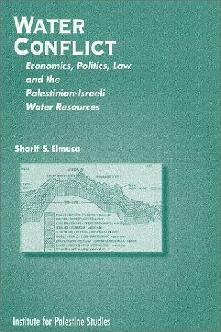
Water conflict : economics, politics, law and Palestinian-Israeli water resources
A study of the conflict over the natural water resources of geographic Palestine. The author focuses on both the scarcity and commonality of the water resources in order to demonstrate why water has become one of the most contentious issues between Israel and the Palestinians. He discusses how the principles of equitable utilization and joint management of common water resources can be achieved and can enhance the prospects for reducing conflict over water, and may ultimately contribute to overall Israeli-Palestinian cooperation. Includes several maps and charts which detail the area's water resources. Annotation copyrighted by Book News, Inc., Portland, OR.
Book

Liquid Assets
Liquid Assets shows that the common view of water as an inevitable cause of future wars is neither rational nor necessary. Typically, two or more parties with claim to the same water sources are thought to play a zero-sum game with each side placing a high emotional and political value over the ownership of the water. However, Franklin Fisher and his coauthors demonstrate that when disputes in ownership are expressed as disputes about money values, in most cases, the benefits of ownership will be surprisingly small. By assigning an economic value to water and treating water as a tradable resource, parties see that the gains from cooperation exceed the costs resulting from the change in ownership. A zero-sum game becomes a win-win situation. To support this new approach, Liquid Assets presents an innovative water allocation model that can be used to assist water management, the cost-benefit analysis of water infrastructure, and the resolution of disputes. The model takes system-wide effects into account and is the first to overcome the failure of actual water markets to cope with the divergence between social and private benefits (as implied by agricultural subsidies), permitting the model-user to impose his or her own values or policies. Liquid Assets applies its methodology to Israel, Jordan, and Palestine, a region where water is scarce and water conflicts are often thought to be explosive. Indeed, this book is the result of a joint effort of Israeli, Jordanian, Palestinian, American, and Dutch experts. But the book's message and methods are not restricted to the Middle East. They are applicable to water management and water disputes around the globe.
eBook


Hydropolitics Along the Jordan River
Intro -- Contents -- 1 Introduction 1 -- 2 Hydrography and history 7 -- Hydrography 7 -- History - Water con.ict and cooperation 12 -- 3 Towards an interdisciplinary approach to water basin analysis and the resolution of international water disputes 86 -- Introduction 86 -- The nature of water conflicts 87 -- Paradigms for analysis of international water con.icts 89 -- An interdisciplinary approach to water basin analysis and conflict resolution 126 -- 4 Interdisciplinary analysis and the Jordan River watershed 139 -- Introduction 139 -- Preliminary watershed analysis 140 -- Evaluation framework 144 -- Cooperation-inducing implementation: Three examples 153 -- Conclusions: Water basin analysis and the Jordan River watershed 170 -- 5 Summary and conclusions 172 -- Afterword: Parting the waters 181 -- Appendices 185 -- Appendix I: Maps 187 -- Appendix II: Zionist boundaries, 1919 221 -- Appendix III: Hydronationalism 231 -- Appendix IV: PRINCE Political Accounting System 241 -- Appendix V: JRDNRVR. BAS projection model 247 -- Appendix VI: Med-Dead/Red-Dead desalination project 253 -- Sources 257 -- Interviews 259 -- Bibliography 260
eBook

Water, Life and Civilisation
A unique interdisciplinary study of the relationships between climate, hydrology and human society from 20,000 years ago to the present day within the Jordan Valley. It describes how state-of-the-art models can simulate the past, present and future climates of the Near East, reviews and provides new evidence for environmental change from geological deposits, builds hydrological models for the River Jordan and associated wadis and explains how present day urban and rural communities manage their water supply. The volume provides a new approach and new methods that can be applied for exploring the relationships between climate, hydrology and human society in arid and semi-arid regions throughout the world. It is an invaluable reference for researchers and advanced students concerned with the impacts of climate change and hydrology on human society, especially in the Near East.
eBook

The Politics of Water
This authoritative reference work gives timely information on the global politics of water. Readers will find case studies on a variety of complex water situations, from the Okavango River that flows through Angola, Namibia and Botswana, to the Euphrates-Tigris of the Upper Persian Gulf.
With the current threat of climate change and increasing demand on water resources, the book gives valuable insight into an increasingly politicized topic. Politics of Water is a welcome addition to Routledge’s extensive The Politics of … reference series.
Readers will benefit from:
essays on major topics in water politics from a variety of contributors (thirteen in all), including Is water politics? Towards international water relations and The politics of water and mining in South Africa
sensitive debate on gender issues, reflecting the fact that in many cultures men are responsible for the supply of water, and women as cultivators and house keepers are the major users
an A-Z glossary of key terms, issues, organizations, etc. in water politics
information on selected major river basins of the world, including maps detailing water consumption and resources.
The Politics of Water is a useful guide to the politics surrounding the availability and provision of water on a world-wide scale. It will prove to be a useful reference source for anyone interested in, or studying, the politics of water and climate change.
Is water politics? Towards international water relations
JEROEN WARNER AND KAI WEGERICH
The politics of sharing water: International law, sovereignty and
transboundary rivers and aquifers
STEPHEN C. MCCAFFREY AND KATE J. NEVILLE
The multi-level governance of water and state-building processes: A
longue durée perspective
JEREMY ALLOUCHE
Hydrosolidarity as water security in the Okavango River Basin
PÅL ARNE DAVIDSEN
Transboundary water interaction: Reconsidering conflict and
co-operation
MARK ZEITOUN AND NAHO MIRUMACHI
Hydro-hegemonic politics: A crossroads on the Euphrates-Tigris?
JEROEN WARNER
The politics of water and mining in South Africa
ANTHONY TURTON
Water rights politics
RUTGERD BOELENS
The politics of gender in water and the gender of water politics
MARGREET Z. ZWARTEVEEN
Rural poverty reduction: What’s irrigation got to do with it?
KAI WEGERICH
A–Z GLOSSARY
JENS TREFFNER, VINCENT MIOC AND KAI WEGERICH
INTERNATIONAL RIVER BASINS
JENS TREFFNER, VINCENT MIOC AND KAI WEGERICH
Aral Sea (Amu Darya and Syr Darya)
Colorado-Rio Grande-Tijuana
Danube
Euphrates-Tigris
Ganges, Brahmaputra and Meghna basins
Indus
Jordan basin
La Plata
Mekong
Murray-Darling
Nile basin
Okavango
Rhine
‘Anyone involved in water politics, theoretically or practically, will gain much from this book. There is a lot here setting out a better framework for the study and practice of the politics of water.’ - John Goodier, Reference Reviews
eBook

Cooperating rivals : the riparian politics of the Jordan River Basin / Jeffrey K. Sosland
\"This book examines the politics of water scarcity in the Middle East's Jordan River Basin (Syria, Lebanon, Jordan, Israel, and the Palestinian Authority) between 1920 and 2006. Jeffrey K. Sosland demonstrates that while water scarcity might generate political tension, it does not by itself precipitate war, nor is it likely to do so. At the same time, efforts to promote water cooperation, such as those initiated by the United States have an identifiable political benefit by creating rules, building confidence, and reducing tensions among adversaries. Sosland concludes that while this alone might not resolve the overall conflict, it does create positive long-term value in achieving peace.\"--Jacket.
eBook

Replacing saline-sodic irrigation water with treated wastewater: effects on saturated hydraulic conductivity, slaking, and swelling
Irrigation with saline-sodic water imposes sodic conditions on the soil and reduces the soil's productivity. We hypothesized that replacing saline-sodic irrigation water with lesser saline-sodic treated waste water (TWW), albeit with higher loads of organic matter and suspended solids, might help sodic soils regain their structure and hydraulic conductivity. We studied hydraulic conductivity (HC), aggregate stability and clay swelling of a soil from the Bet She'an Valley, Israel using samples taken from a non-cultivated field (control), and plots irrigated with TWW, saline-sodic Jordan River (JR) water, and moderately saline-sodic spring (SP) water. Soil samples were taken at the end of the irrigation season (autumn 2005) and at the end of the subsequent rainy season (spring 2006). In the HC and the aggregate stability determinations, for both sampling seasons, the TWW-irrigated samples gave significantly higher values than the SP- and JR-irrigated samples, but lower than the samples from the control plot. The autumn samples exhibited, generally, higher HC and lower swelling levels compared with the spring samples. Conversely, aggregate stability of the spring samples was higher than that of the autumn samples. These seasonal changes in the results of the three tests were associated with seasonal changes in the salinity and sodicity of the soils.
Journal Article